Museo Nacional de Bellas Artes
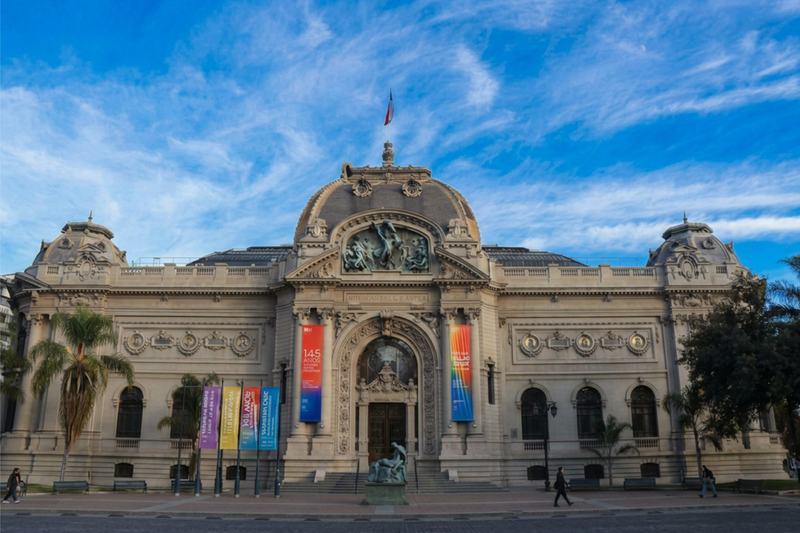
The institution's main areas are: 15th Century to Modern, and Contemporary Art
About The Museo Nacional de Bellas Artes
Located in the heart of Santiago’s Parque Forestal, the Museo Nacional de Bellas Artes is one of Latin America’s oldest and most important art museums. Founded in 1880, its mission is to contribute to the understanding and dissemination of artistic practices within the visual arts, in accordance with the codes, periods, and contexts in which they developed. It looks for preserving, protecting, researching, restoring, and promoting the national artistic heritage in the field of the visual arts; for providing aesthetic education to the public through new methodologies for engaging with and interpreting art from the past and the present; for organizing exhibitions of national and international artistic heritage in its various forms and periods; and for safeguarding the museum’s architectural heritage.
Its collections trace the evolution of Chilean artistic identity from the colonial period to the contemporary era, while also situating local production within broader Latin American and European traditions. The museum has been especially important in fostering dialogue around modernity, national memory, social change, and contemporary cultural debates through exhibitions, artist retrospectives, and interdisciplinary programming. The institution is deeply embedded in Santiago’s intellectual and artistic life, serving as both a civic landmark and a gathering space for diverse communities. Today, through free public access, educational initiatives, and an increasingly inclusive curatorial approach, the museum continues to position itself as a dynamic platform for critical reflection, cultural participation, and the preservation of Chile’s artistic heritage.
Connect with the Director, Curatorial, and Collection staff by browsing CIMAM’s Membership Directory in the Members Only section.
Useful links:
June 2026
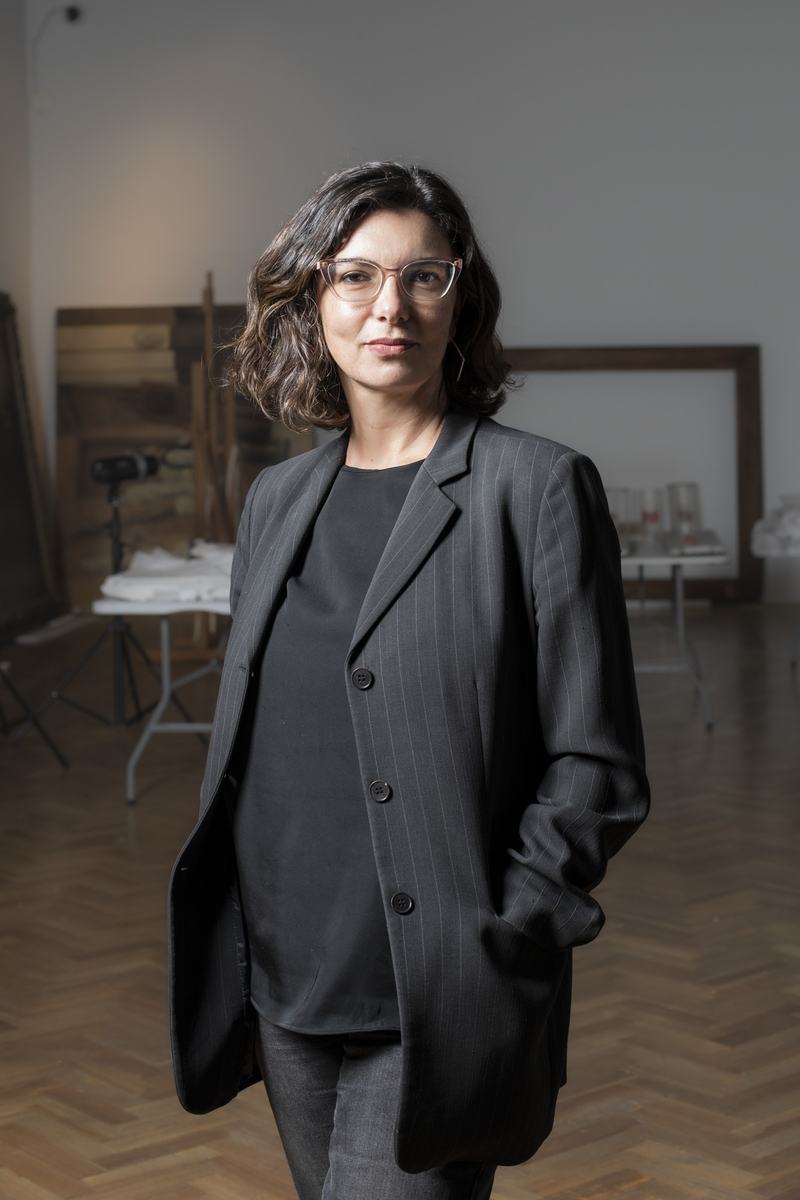
Interview with Varinia Brodsky Zimmermann, Director of Museo Nacional de Bellas Artes
Can you provide a brief description of the mission and vision of the Museo Nacional de Bellas Artes?
Museo Nacional de Bellas Artes is a national public institution dedicated to the preservation, research, and dissemination of Chile’s artistic and cultural heritage. Our mission is to promote knowledge, appreciation, and enjoyment of visual arts and artistic practices, actively contributing to the country’s cultural, educational, and scientific development, and helping to foster an active and reflective citizenry.
Our vision is to establish an open, pluralistic national museum capable of combining heritage conservation with critical reflection on the contemporary society in which it operates, serving as a space where different generations, regions, and communities can come together. As a state museum, we view this task as an ongoing responsibility toward the country’s memory, cultural diversity, and democratic development. Thus, through our work, we seek to strengthen ties with regions and communities, viewing cultural expressions and contemporary artistic practices as fundamental tools for building a more diverse, inclusive, equitable, supportive, and sustainable society, from a rights-based perspective.
What makes your museum's collection unique, and how does it contribute to the cultural landscape?
The uniqueness of the National Museum of Fine Arts’ collection lies both in its origins and in its scope, which is constantly expanding. Our collection chronicles the evolution of the visual arts in Chile from the beginnings of the republic’s cultural institutions in the late 19th century to the present day, reflecting the cultural, social, and political processes that have shaped the country’s history, establishing itself as a fundamental legacy for understanding our visual culture.
This collection embodies the State’s sustained commitment to the preservation, research, and dissemination of artistic heritage as a public good. At the same time, it is a living collection that engages with the present through new acquisitions, research, and curatorial interpretations that critically reexamine inherited narratives to incorporate historically less visible perspectives, experiences, and voices.
Its contribution to the cultural landscape lies precisely in this ability to bridge memory and the present. MNBA’s collection—which also includes a significant body of documentary and audiovisual materials—enables us to understand how a community represents itself, how it constructs its imaginaries, and how it envisions its future.
How does your museum participate in educational initiatives, and what programs does it offer to enhance the public's understanding of art?
Education is a fundamental aspect of the National Museum of Fine Arts, forming an essential part of its public mission. From its earliest days, the museum has been associated with significant educational initiatives, notably through figures such as Laura Rodig, who recognized early on the potential of museums as spaces for learning, participation, and social transformation.
Today, the museum offers a variety of programs aimed at a broad and diverse audience, with a particular emphasis on educational communities. Through agreements and collaborations with formal educational institutions, the museum seeks to strengthen the bond between the museum and schools, integrating artistic heritage into teaching and learning processes.
Alongside this, the museum has expanded its forms of outreach and participation, promoting experiences that enable new ways of engaging with artworks and exhibitions—through more active, reflective, and context-specific approaches that center direct experience with art as a tool for understanding and critical thinking.
Furthermore, the museum has strengthened its regional outreach by developing educational experiences in different parts of the country and in schools from diverse social contexts, including communities outside the Metropolitan Region. This initiative seeks to decentralize access to the artistic experience and contribute to a more equitable relationship with cultural heritage, understanding education as a cultural right and a key aspect of the museum’s public life.
Could you share information about any ongoing research initiatives or collaborations that your museum is currently involved in?
Research is an inherent part of the Museum’s work. We are currently developing a range of research and collaborative initiatives aimed at strengthening knowledge about the collection and expanding the ways in which artistic heritage can be understood, interpreted, and shared.
One of our main lines of work consists of reviewing and updating the historical narratives associated with the collections, incorporating new research perspectives that make visible cultural agents, territories, and experiences that have occupied more marginal positions in traditional art historical accounts, with a particular emphasis on highlighting women artists. This process is developed through curatorial projects, publications, collection studies, and archival work, in collaboration with researchers, universities, and other cultural institutions.
In parallel, we maintain an active agenda of cooperation with museums, professional networks, and international organizations, understanding that the challenges we face today—from conservation and documentation to access and public engagement—require responses built on the exchange of experiences and knowledge.
We are also promoting initiatives related to the digitization, cataloguing, and conservation of the collections, with the aim of broadening public access to heritage and strengthening both current and future research capacities. For us, knowledge production is not a separate task from the museum’s social function, but a fundamental tool to ensure that collections remain active, relevant, and available for critical reflection by the communities to which they belong.
In this sense, we understand research as a public responsibility, a way of producing knowledge that not only deepens the understanding of heritage but also contributes to strengthening the link between cultural memory, citizenship, and contemporary challenges.
How does your institution prioritize sustainability in its operations and practices?
Sustainability is one of the most significant challenges facing contemporary museums. As a public institution, we understand that this commitment involves both the responsible management of resources and the building of collaborative relationships within the cultural ecosystem.
We are making progress in implementing practices that optimize the use of resources, strengthen cooperation among institutions, and contribute to the sustainability goals promoted by the government’s public policies. We recognize that this is an ongoing process that requires innovation, collaboration, and a long-term vision to ensure the preservation of our heritage, the well-being of future generations, and their continued engagement.
In what ways does your museum actively engage with and contribute to the local community through its programs?
We view the Museo Nacional de Bellas Artes as an expanding institution that builds connections with diverse communities and regions, fostering mutually beneficial relationships. Although our headquarters are located in Santiago, our status as a national museum entails a responsibility to the entire country.
For this reason, we develop initiatives focused on decentralization and regional collaboration, including residency programs with professionals from regional cultural heritage institutions, traveling exhibitions, and outreach and participatory projects in various local contexts. Experiences carried out in other locations have allowed us to strengthen dialogue with diverse communities and generate new ways of circulating knowledge and artistic creation, promoting meaningful exchanges between art, the region, and the community.
Can you suggest a song to be included in CIMAM's Spotify playlist?
My proposal is “Maldigo del Alto Cielo” by Violeta Parra.
Violeta Parra is one of the key figures in Chilean culture, whose work spans music, poetry, and visual arts, blending a creative vision deeply rooted in folk traditions with remarkable poetic and critical power.
“Maldigo del alto cielo” is a piece that condenses an extreme expression of pain, heartbreak, and lucidity. Its direct yet deeply symbolic writing allows us to access an intense dimension of human experience, in which the music and lyrics become a space of tension between denunciation, loss, and dignity. Violeta Parra pushes the expressive capacity of the popular song to its limits, transforming it into a radical poetic gesture where the intimate and the collective, the biographical and the social, coexist. It is this power that keeps her work relevant to this day.