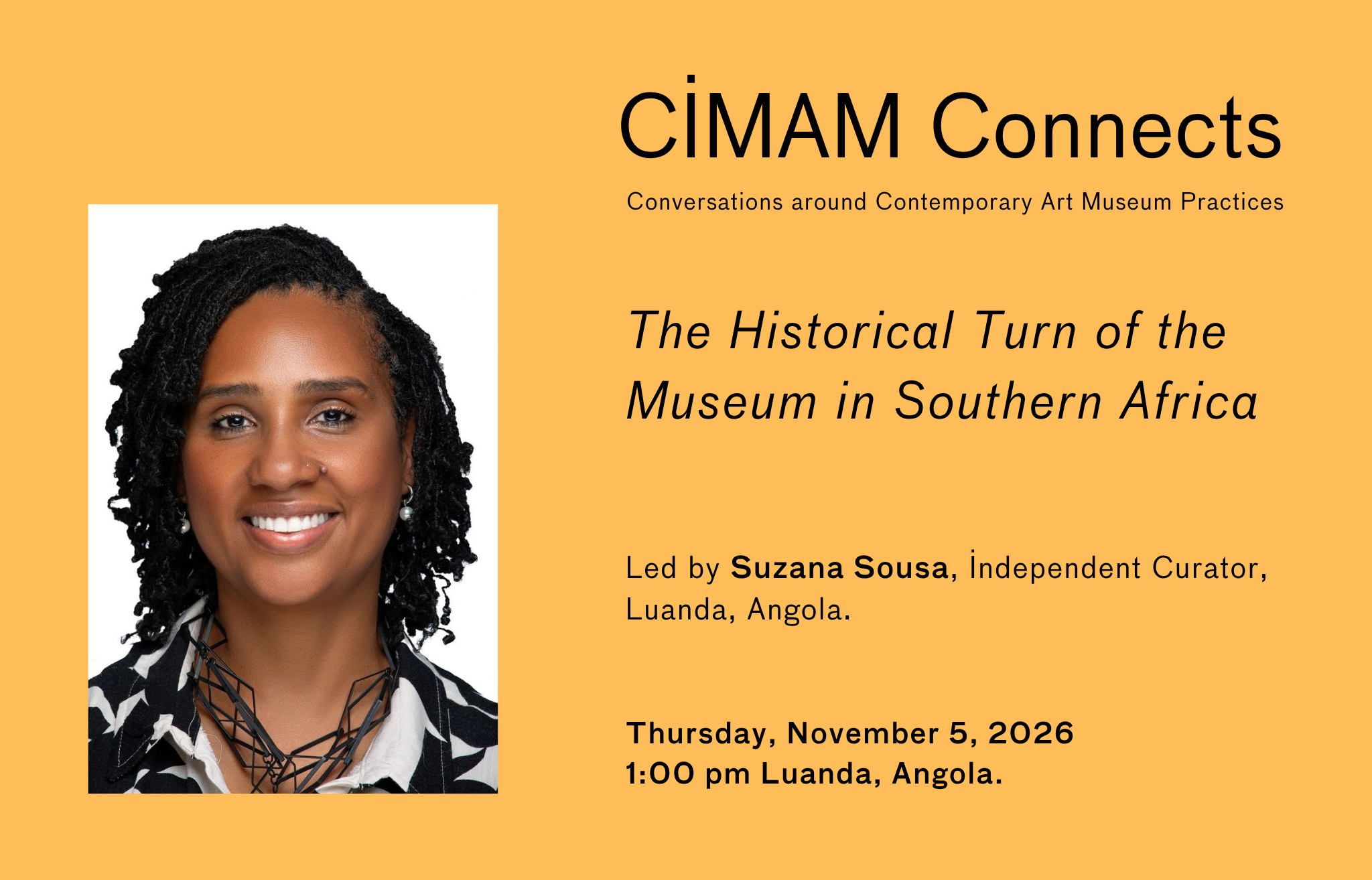
The Historical Turn of the Museum in Southern Africa
The Historical Turn of the Museum in Southern Africa
Led by Suzana Sousa, Independent Curator, Luanda, Angola, and 2025 CIMAM Travel Grant Beneficiary.
📅 Thursday, November 5, 2026
- 1:00 pm (Luanda, Angola)
- 1:00 pm (Paris, France)
- 2:00 pm (Johannesburg, South Africa)
- 4:00 pm (Dubai, UAE)
- 5:30 pm (Mumbai, India)
- 8:00 pm (Singapore)
- 9:00 pm (Tokyo, Japan)
- 9:00 am (São Paulo, Brazil)
- 7:00 am (New York, USA)
→ Log in to the CIMAM Members Only section to register for this session.
Abstract:
Since the late 1990s, the museum landscape in Southern Africa has undergone a "historical turn," transitioning from colonial-era repositories to dynamic sites of memory-work and social repair. This period, catalyzed by the fall of apartheid in South Africa and the maturation of post-independence narratives across the broader region, marked a shift in how institutions handle the past. No longer content with the "anthropological gaze" that once froze indigenous cultures in a timeless, ethnographic present, Southern African museums have increasingly embraced history as a contested, living process.
In the late 1990s and early 2000s, the emergence of "site-specific" memory projects—such as the District Six Museum and the Robben Island Museum—redefined the museum’s role. These spaces moved away from the traditional "temple of objects" toward a model of community-centered "living archives." They prioritized oral histories and the lived experiences of the marginalized, effectively turning the museum into a tool for reconciliation and nation-building.
The historical turn has also been driven by contemporary artists. Working within and against the museum, artists have utilized the "archive" not as a source of truth, but as a site of interrogation. Through installation, lens-based media, and performance, figures in the region have challenged the silences of the colonial record. This artistic intervention has forced museums to confront their own past legacies, leading to current debates on repatriation and restitution, and the questioning of Western curatorial and archival models.
This turn faces new challenges: the commercialization of trauma, the digital divide in archiving, and the tension between state-led narratives and grassroots memory. And, takes the museum from the role of building pasts making it a laboratory for the future. By re-examining the "historical turn," we can better understand how museums in the Global South are not merely adapting to international standards but are actively redefining what a museum can be in a post-colonial world.
Focusing in Angola I hope to interrogate the current ‘historical turn’ in the country through monuments and museums in the last 15 years and the current reshape of its social role within contemporary art and social histories.
Recommended readings:
Ball, J. (2019). ‘From Cabinda to Cunene’: Monuments and the Construction of Angolan Nationalism since 1975. Journal of Southern African Studies, 45(5), 821–840. https://doi.org/10.1080/03057070.2019.1674025.
de Grassi, Aharon. "Monumental Relations: Connecting Memorials and Conversations in Rural and Urban Malanje, Angola." Kronos: Southern African Histories, vol. 45, n.º 1, 2019, pp. 17–45, https://doi.org/10.17159/2309-9585/2019/v45a2.
Peterson, Derek R., Kodzo Gavua, and Ciraj Rassool, editors. The Politics of Heritage in Africa: Economies, Histories, and Infrastructures. Cambridge University Press, 2015.
Karp, Ivan, et al., editors. Museum Frictions: Public Cultures/Global Transformations. Duke University Press, 2006.
Witz, Leslie. Museum Times: Changing Histories in South Africa. Berghahn Books, 2022.
Witz, Leslie, Gary Minkley, and Ciraj Rassool. Unsettled History: Making South African Public Pasts. University of Michigan Press, 2017.
Biography:
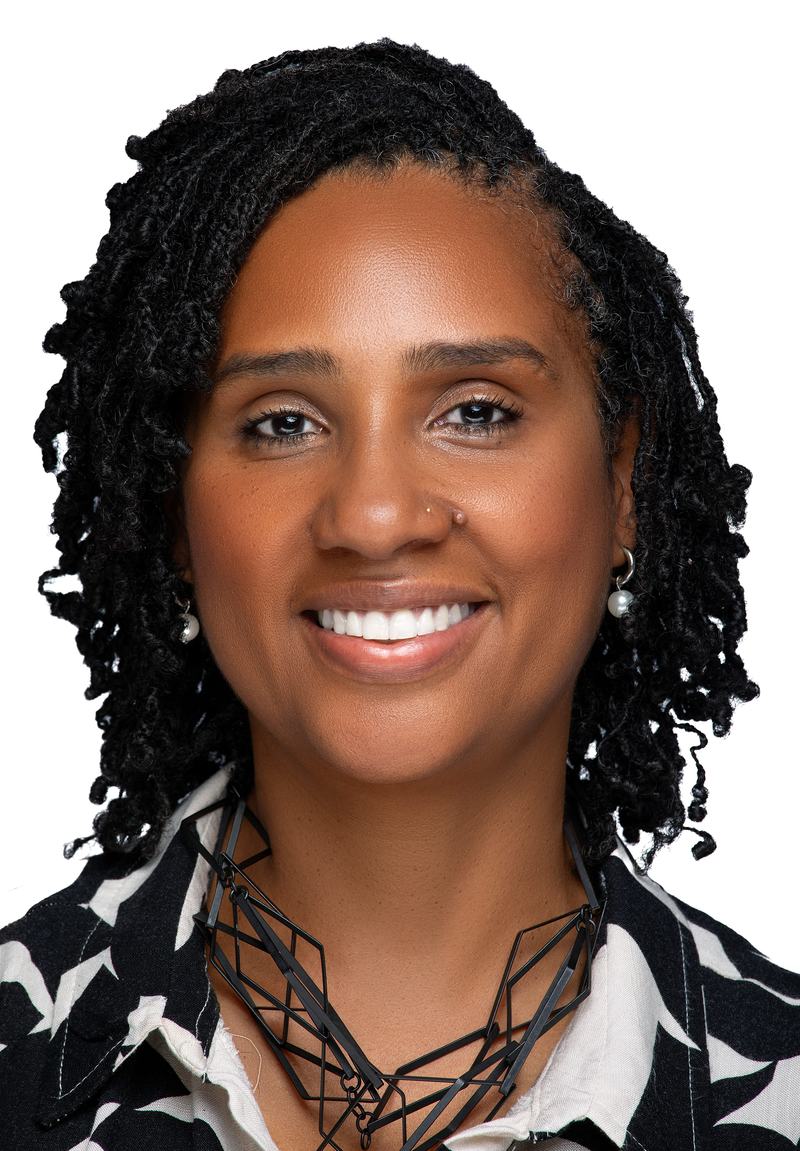
Suzana Sousa is an art curator and researcher interested in developing narratives and producing knowledge from through collaboration and experimentation. Over the past decade, her work has explored themes of contemporary African art, cultural politics, and the construction of nationalisms and national discourses through culture and the visual arts. She is a lecture at the faculty of the arts, at the University of Luanda in Angola and is currently completing a PhD at the University of the Western Cape in South Africa, focusing on nation-building processes in Angola within the context of museums and the visual arts since 1975.
Recently she curated the exhibition The Power of My Hands with Odile Burluraux that was shown at the Modern Art Museum in Paris, the Natural History Museum in Luanda and last year at SESC São Paulo.
Suzana Sousa is a member of CIMAM’s 2026 Content Steering Committee and was awarded a CIMAM Travel Grant in 2025.