"Museums have acted as hunter-gatherers, while Inhotim also wants to plant and cultivate."
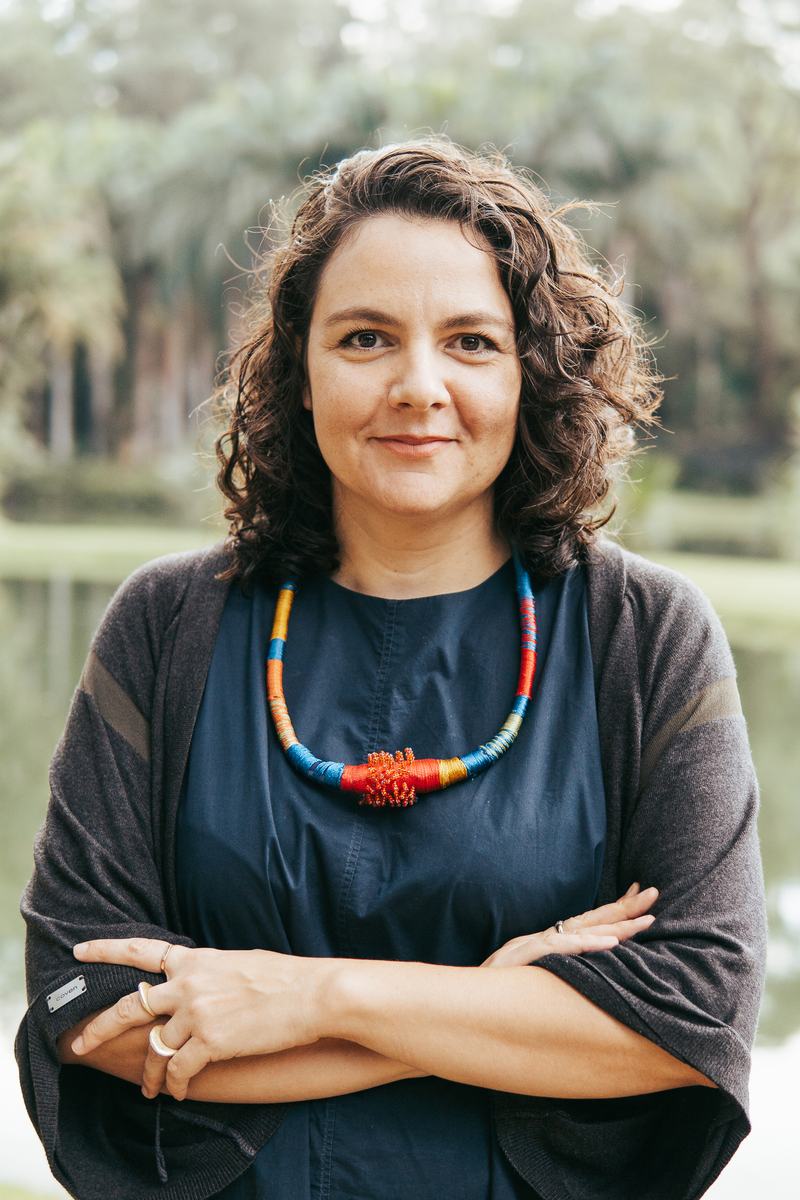
CIMAM interviews Júlia Rebouças, Artistic Director of Instituto INHOTIM, a CIMAM Institutional Member, on the occasion of the museum's 20th anniversary since opening to the public in Brumadinho, Brazil. In this conversation, Rebouças reflects on the transformations that have shaped the institution from its founding vision integrating art and nature, to the 2022 governance transition, when Inhotim became a non-profit association responsible for stewarding the museum's long-term mission and public interest. She also discusses how commissioning, long-term curatorial planning, and a broader understanding of sustainability continue to shape Inhotim's program, and what these experiences can contribute to broader conversations in the field of modern and contemporary art museums.
1) Inhotim celebrates its 20th anniversary in 2026. Looking back, what do you consider the institution's most significant transformation over these two decades, and what principles have guided its mission during this time?
Júlia Rebouças - Looking back, among several milestones, two moments strike me as defining in Inhotim's history: 2006 and 2022. The first is, of course, the opening to the public. If we consider that the private collection that gave rise to Inhotim began taking shape in the early 2000s, initiated by the entrepreneur Bernardo Paz, it is very significant that by 2006 its founder had already opened the museum as a permanent public institution. This gives us a telling indication: from the very beginning, more than building a private collection, Paz's interest was in building a museum. That open, accessible character would be developed and consolidated over the years that followed. In programmatic terms, Inhotim was founded on the idea of integrating art and nature in the territory of Brumadinho. Its location in the interior of Minas Gerais, in a rural area shaped by mining activity, gives Inhotim a very particular character and a strong a sense of community.
In 2022, we lived through the other decisive moment, in an arc that comes full circle beautifully. After more than twenty years as the museum's principal funder, making the project possible, Bernardo Paz donated the institution — the whole property, the 140 hectares, the buildings, a substantial part of his art collection, the botanical collection, the brand and the very name — to a non-profit association, which became its steward, responsible for the project's continuity and now focused on its financial sustainability and its longevity. This new governance is a profoundly transformative milestone: it consolidates every movement set in motion in 2006 and raises Inhotim to a new condition. A museum that remains private, but with its public interest renewed, strengthened and expanded.
From this process emerge the principles that guide our mission today: art, nature and education, anchored by the idea of territory. It is no longer a matter of thinking in sectors (the "botanical," the "educational," the "community") but of articulating these three axes in a program that is necessarily cross-area and transdisciplinary. In the end, this is what Inhotim offers those who visit: a transformative experience, in which there is no rupture or hierarchy between collections and forms of expression.
![Dan Graham, Bisected triangle, Interior curve, 2002, [vista aérea]. Foto: Brendon Campos](/media/images/Dan_Graham_Bisected_triangle_Interior_curve_2.width-2480.jpg)
2) Inhotim goes beyond conventional definitions of what a museum can be, combining contemporary art, botanical heritage, biodiversity conservation, education, and community engagement. How has this integrated vision influenced your curatorial practice, and what examples of museum practices could inspire the museum field today?
JR- Inhotim is a very singular museum, one that has no true equivalent. This stems above all from a choice made at its origin: besides being a museum that collects, preserves and disseminates material and immaterial heritage, basic premises of any museum, Inhotim has always embedded creation itself into its mission. This means that the museum works, alongside artists, researchers, scientists to create conditions for new work to emerge within the museum itself: time, space, exchange, references, research. We refute the idea that creation happens elsewhere, only in artists' studios or in academia, and that the museum's role would be merely to gather the ready-made findings of society. I like to say that museums, as a rule, have acted as hunter-gatherers, while Inhotim also wants to plant and cultivate.
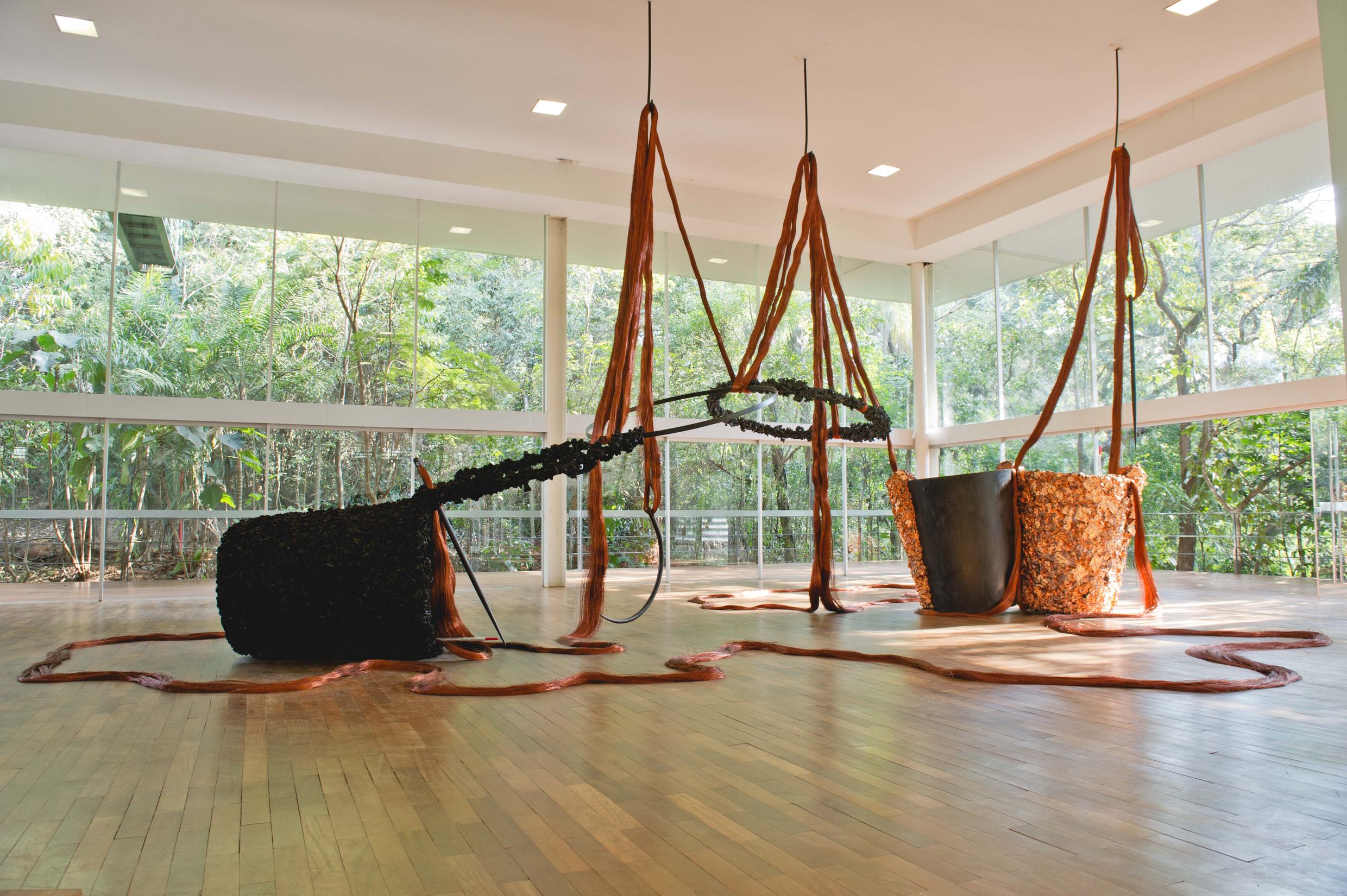
This cultivation takes shape in very concrete ways: in the workshops and ateliers (carpentry, metalwork, visual arts studio), in the master craftspeople who have worked here for two decades and have developed an unparalleled body of expertise, and in the founding methodology of commissioning: the work commissioned specifically for this museum, which seeks pertinence not only to the physical space, but to the cultural context, to the community and to the very process of its making.
The result is a collection that, today, especially after the change in governance, interests us less and less as a numerous collection and more and more as an absolutely significant one. This collection must have a strong exhibition potential, in long-term or permanent displays, or retain that potential even when not on view. The curatorial practice that follows from this is integrated with the botanical collections, the landscape, the seasons, the community, and historical, political and social questions, and responds to our time with a pertinence and a singularity that make this collection an updated, renewed and active one, even when we work with historical pieces. Inhotim's purpose, which may be of interest to the field, can thus be defined by its experimental quality, by creation as concept and practice, which reverberates in the content of its program, but also in the institutional system that sustains the museum. I am interested in challenging the museum's management and governance, recognizing that practices are never neutral, and bringing them into closer alignment with the values expressed through our artistic program.
3) Many of Inhotim's commissions are conceived specifically for the site through long-term collaboration between artists and multidisciplinary teams. What have these processes taught the institution about commissioning, caring for and sustaining ambitious site-specific works over time?
JR- Commissioning lies at the heart of Inhotim's vocation, and long-term collaboration is equally fundamental to who we are, because what interests us here is an experience that overcomes immediacy, instant consumption, the incessant overlapping of information. The very experience of being at Inhotim calls the visitor to an extended time, to a relationship of the body in space. You are in a gallery dedicated to a single artist; then you are outside, in contact with the landscape, with the lake, with the forest, with different biomes; after paths and walks, you find yourself once again in an exhibition space, now in contact with other poetic and creative repertoires. Inhotim is also a destination: it lies outside the capital, requires preparation, requires at least a full day, often two days for a visit. There is in this experience an inherent openness and dedication against which any desire for quick consumption is frustrated.
This same horizon guides our commissioning practice. We are interested in imagining works, exhibitions and projects that will not be on view for ninety or a hundred days, but for years, decades, or in a condition of permanence. A repertoire the public can return to at any moment, and this idea of the collection as repertoire is very relevant in contexts such as Brazil's. And planning for a long temporality impacts the very moment of creation: a more responsible use of materials, with greater durability; a greater density and depth of research; pertinence to the space; and the capacity of that project to renew itself and respond to different contexts over the years. All of this happens alongside a multiple and highly qualified team, which includes curators, producers, architects, engineers, landscape designers, carpenters, metalworkers, gardeners, master craftspeople, with whom artists come to Inhotim to give shape and form to what does not yet exist.
This density of creation is very close to what we aim for when we speak of experimentation, a fundamental concept for understanding the experience of art and the very role of a museum. Through commissioning, creation and long-term perspective, we go on cultivating fertile ground for artists and the public to find in Inhotim a place of challenge and innovation, something that remains in constant transformation. This is what we understand to be the role of art and of a museum like Inhotim, which has been a sounding board for new practices, new ideas, new concepts and images.
4) Since 2024, Inhotim has organised its program around long-term strategic planning extending several years into the future. How do you balance institutional planning with the flexibility and openness that curatorial experimentation requires?
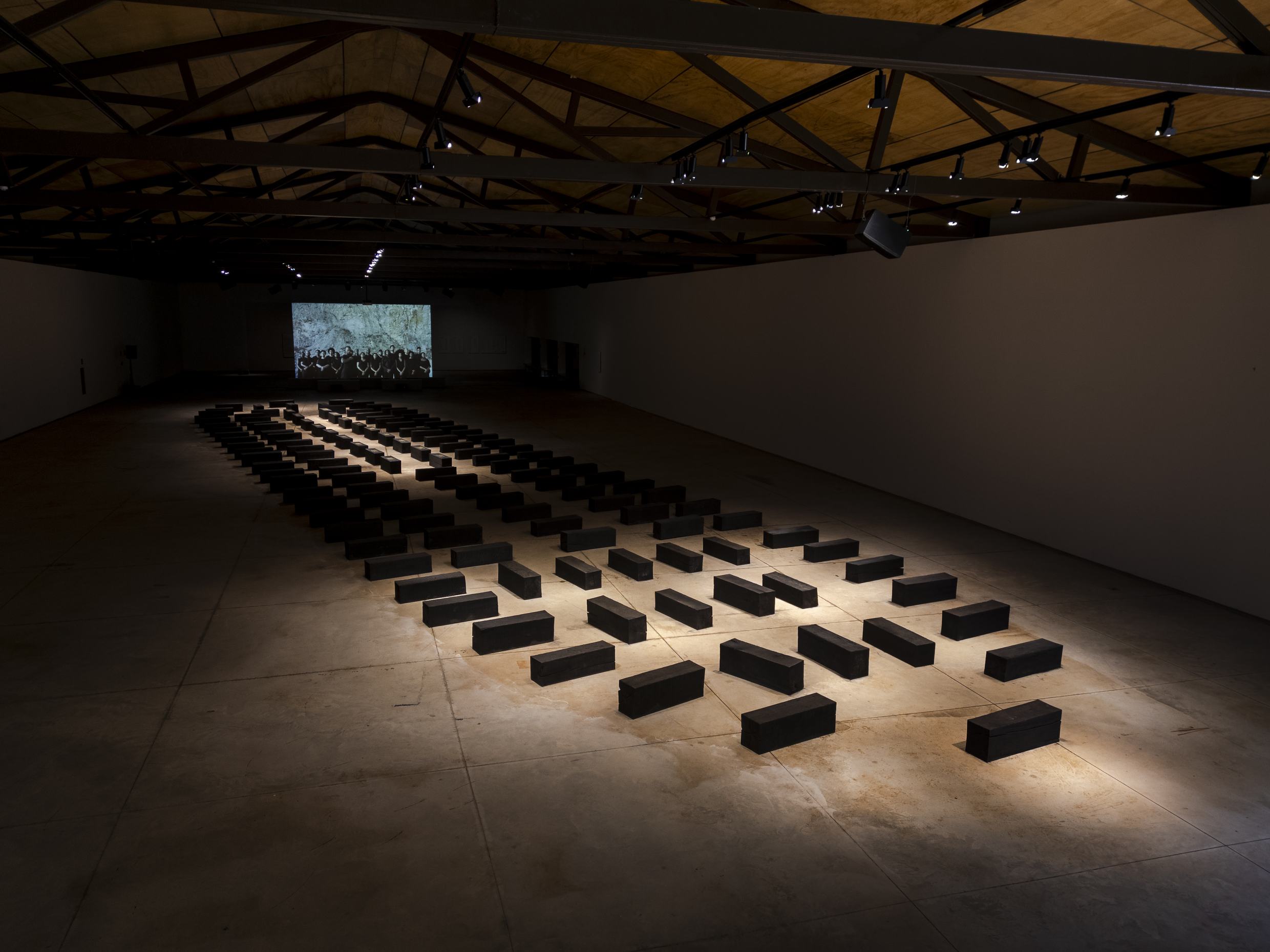
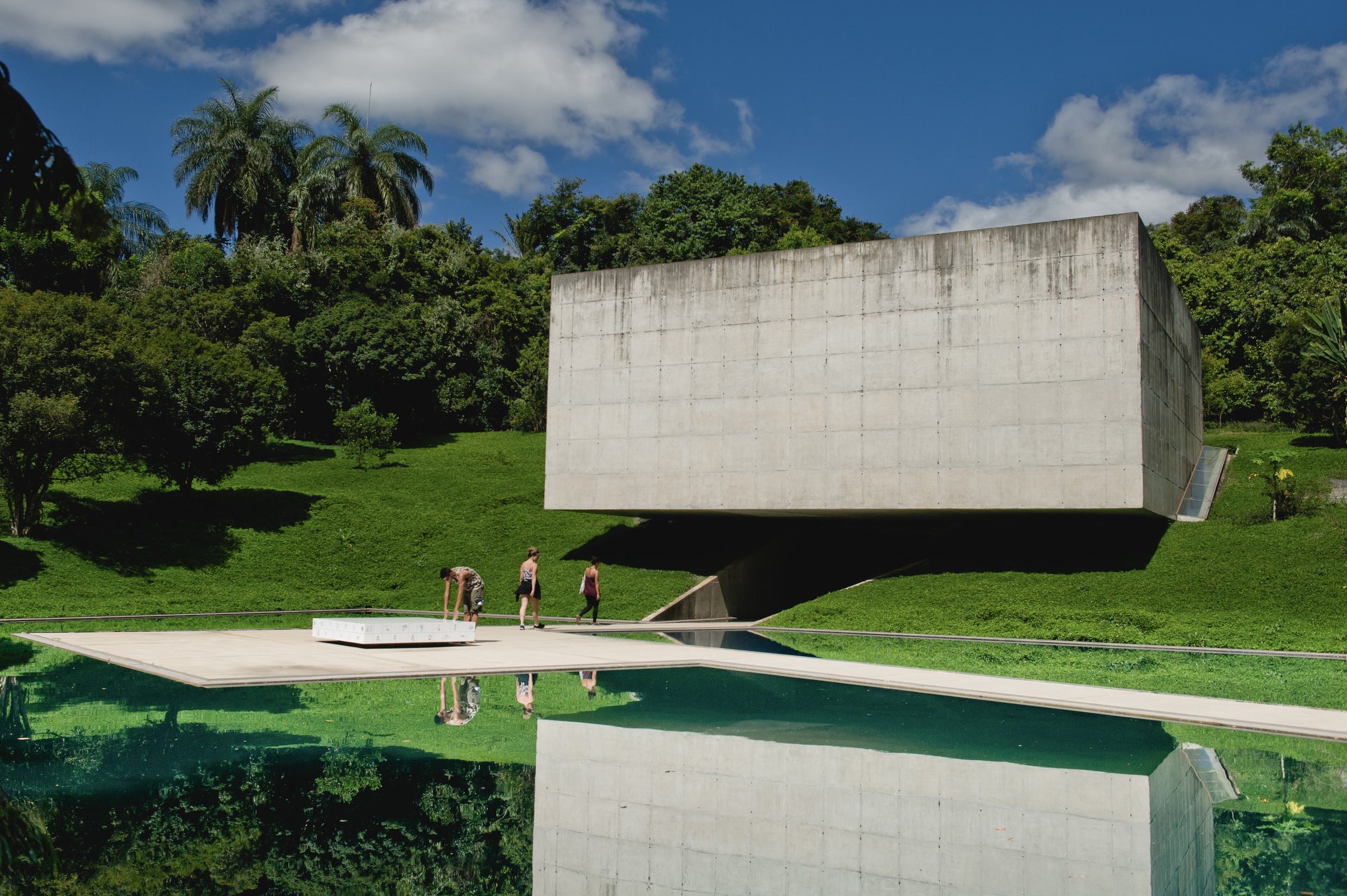
JR- In its early years, Inhotim’s collection was structured around the idea of permanent pavilions dedicated to individual artists. It proved to be a very successful model, resulting in a rich collection, closely aligned to the museum's vocation. Today, however, we recognize that this model is no longer viable for the present or for the future. It requires a significant time for development and construction, as well as substantial resources, because we are talking about new buildings that are often museums in themselves. It also runs against our commitment to environmental and financial sustainability and limits our curatorial standpoint.
Instead of always thinking of new permanent galleries, today we work from the existing buildings (there are more than thirty dedicated to the exhibition of works of art) with long-term projects: a minimum of two years, and up to ten, fifteen years. In this way, we guarantee depth and research; we guarantee the process that leads to experimentation and, at the same time, we respond to the need for feasibility, coherence and sustainability over time.
From the programming standpoint, this means that Inhotim now works with two openings per year, one in April and another in October. In each of them, we occupy an existing space with a new long-term exhibition, or we revise and update the monographic galleries in their concepts, or we inaugurate open-air projects. In 2025, we updated the Claudia Andujar gallery ten years after its inauguration, inviting Indigenous artists from South America to occupy the space and establish a dialogue with Claudia's body of work. In 2026, we are updating the Cildo Meireles gallery, adding to the existing set of works a masterpiece, the large installation Missão/Missões (Como Construir Catedrais) [Mission/Missions (How to Build Cathedrals)]. The idea is to do the same in 2027 with the Tunga gallery and, in 2028, with the Adriana Varejão gallery, and so on. We understand that this management model responds to Inhotim's artistic vocation, but carries with it an ethical, environmental and financial coherence.
5) Sustainability at Inhotim appears to extend beyond environmental concerns to include governance, collections care, knowledge preservation, and community engagement. How do you define institutional sustainability today, and what lessons from Inhotim's experience could be valuable for other modern and contemporary art museums around the world?
JR- Inhotim is a young museum, celebrating the 20th anniversary of its opening to the public in 2026, yet it emerged already challenging the existing models of modern and contemporary art museums. It rejected the idea of the museum as a single building and of an experience confined to a sequence of galleries. Instead, it was conceived around the landscape, the territory and the forest as intrinsic dimensions of the museum experience. It also grew alongside the communities that shape it, responding to questions that lie at the very heart of its existence. Inhotim is located in Brumadinho, an area of intense mining activity, an economic activity that generates many impacts on its communities and its immediate territory, but Brumadinho is also a municipality of agricultural producers, of ecological tourism, of quilombola communities of great importance to the culture of Minas Gerais, of Indigenous communities. And the museum sits in a region that brings together two very rich biomes, the Cerrado and the Atlantic Forest. Nature and territory, therefore, are neither themes nor externalities this museum deals with, they are constitutive characteristics of Inhotim.
At the same time, since 2022, with the new governance, the museum also had to aim at an idea of financial sustainability. We migrated, very successfully over the last four years, from a model that depended mostly on the founder to a model fully autonomous from him, supported by tax incentive laws, private donations and sponsorships, membership programs and the generation of operating revenue. Our concern today is to diversify these revenue sources as much as possible and, at the same time, to position ourselves as an incubator of ideas and projects that think of other ways of generating resources for museum activity.
We know this is a challenge all over the world, regardless of funding models. It is well known that no generation of operating revenue (ticketing, services, shop) can match the budget of an institution like a museum. We understand that this is a crucial moment, not only for Inhotim or for Brazil, but for the world, to reassess the parameters and models that organize the funding of institutional, cultural and museum activity. For us, it has been very challenging, but stimulating, to imagine how this museum, which has always invented new ways of being a museum, now places itself in the position of speculating on renewed ways of being financially sustainable and lasting, as a value and a richness belonging to an entire community.
6) How has being part of the CIMAM network contributed to this dialogue between local realities and global museum practice, and why do you consider international collaboration essential for museums today?
JR- Networks like CIMAM serve as catalysts of experiences and solutions for tackling challenges such as managing contemporary collections, how to develop more democratic and community-centred institutional practices, challenges of governance, and new models of sustainability. In the same way, they are fundamental in generating security and support when there are threats to the existence of museums or to artistic practice. The idea of a network strengthens the field as a whole, and I believe the network helps, above all, to preserve the unique identity of each member.
It is from this exchange of different perspectives, experiences and models that we are able to learn from one another and challenge ourselves to build constructions that are more enduring, stronger and more consistent over time, across the museums we are committed to. Inhotim was born from a very specific local reality, a territory, two biomes, the communities that constitute it, and from the beginning it has been in dialogue with the international art field. This circulation between the local and the global lies at the museum's origin, and networks like CIMAM are fertile spaces for its renewal.