S.M.A.K.
S.M.A.K. — Communal Museum For Contemporary Art — is one of Belgium's leading museums of contemporary art, located in Ghent. Founded in 1975 by curator Jan Hoet, it still remains one of the most significant institutions of its kind in the country.
The collection holds over 4,000 works spanning the post-war period to the present day, encompassing painting, sculpture, installation, video, photography, and performance. It brings together key movements — CoBrA, Pop Art, Minimal Art, Conceptual Art, and Arte Povera — alongside internationally recognised artists such as Marina Abramović, Joseph Beuys, Marcel Broodthaers, Francis Bacon, Bruce Nauman, Gerhard Richter, Marlene Dumas, Luc Tuymans, and Panamarenko. The collection is complemented by the Matthys-Colle Collection, further extending its international reach.
S.M.A.K. presents established and emerging artists of international relevance. It operates at regional, national, and international scale, with a long tradition of working beyond its walls — from the landmark city-wide exhibitions Chambres d'Amis (1986) and Over the Edges (2000) to T.R.A.C.K. (2012) — always placing the living artist and the city in direct dialogue.
Collection management is central to the museum's operations, encompassing conservation, preventive care, depot management, provenance research, publications, and knowledge-sharing with partner institutions worldwide.
S.M.A.K.'s founding mission — to make contemporary art accessible to the broadest possible audience — is not a statement of intent but a daily practice. The museum explicitly refuses to be a niche institution for experts. That refusal is what makes S.M.A.K.MOVES not an addition to what S.M.A.K. does, but the expression of what it has always been.
Name of the director of the institution: Philippe Van Cauteren
Name of the practice, initiative or program nominated: S.M.A.K.MOVES
Name and position of the professional who leads the practice: Peter Aerts, head of audience, experience & education
Describe the practice, program, or project, what innovative approach is proposed, and in which core museum activities it applies: conservation, education, collection, exhibition programs, publications, research, accessibility, communication, governance, and sustainability.
S.M.A.K.MOVES is a lab without walls: a live, evolving experiment in what quality and impact a contemporary art museum can offer when it refuses to choose between artistic rigour and accessibility. It began in 2015 with specific urgencies — a city where more than half of its citizens aren’t of European origin, where prisons are overcrowded, where schools face a staffing crisis, and where communities feel excluded. The museum responded not with a programme but with a question: where do our worlds overlap?
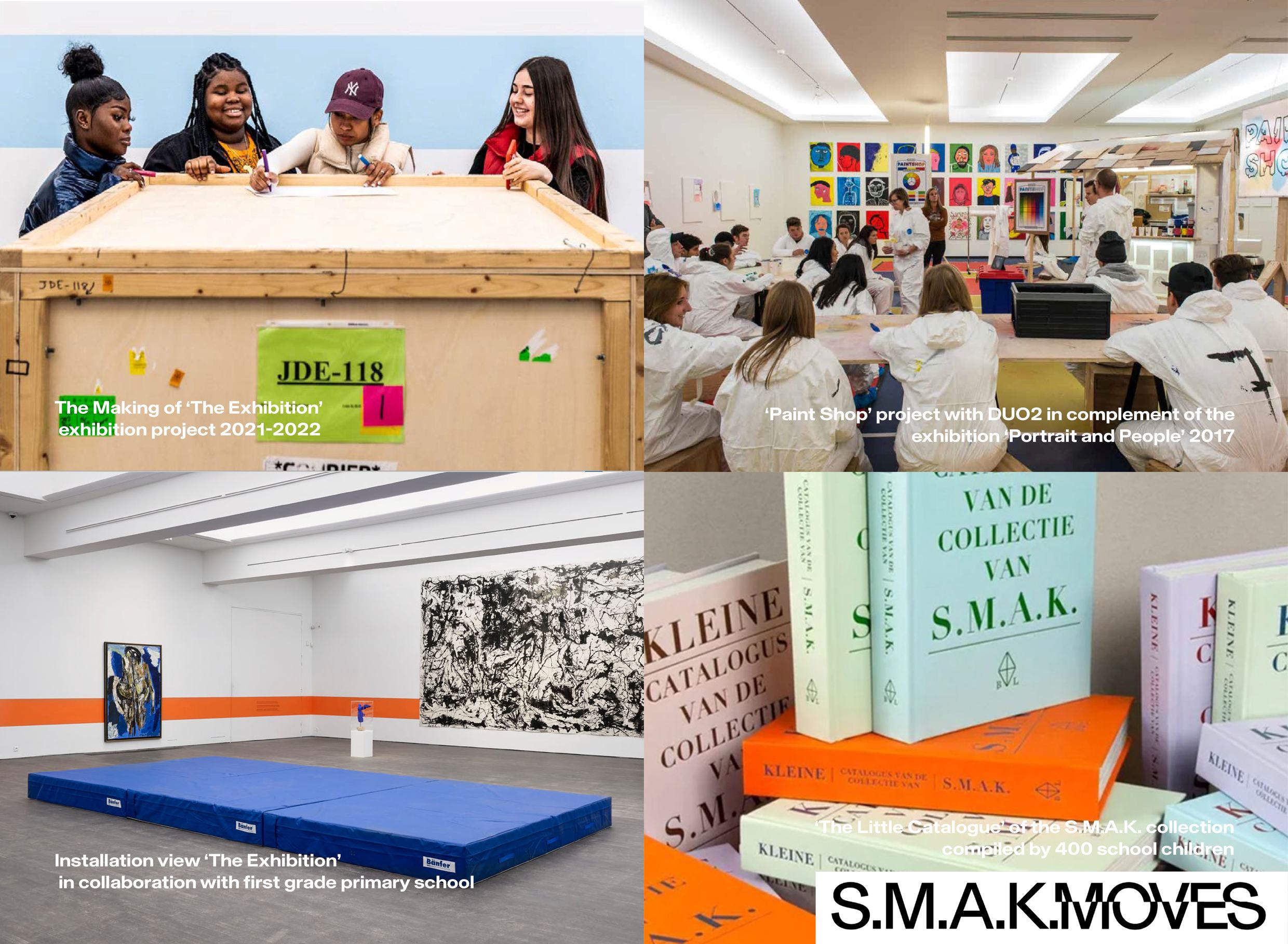
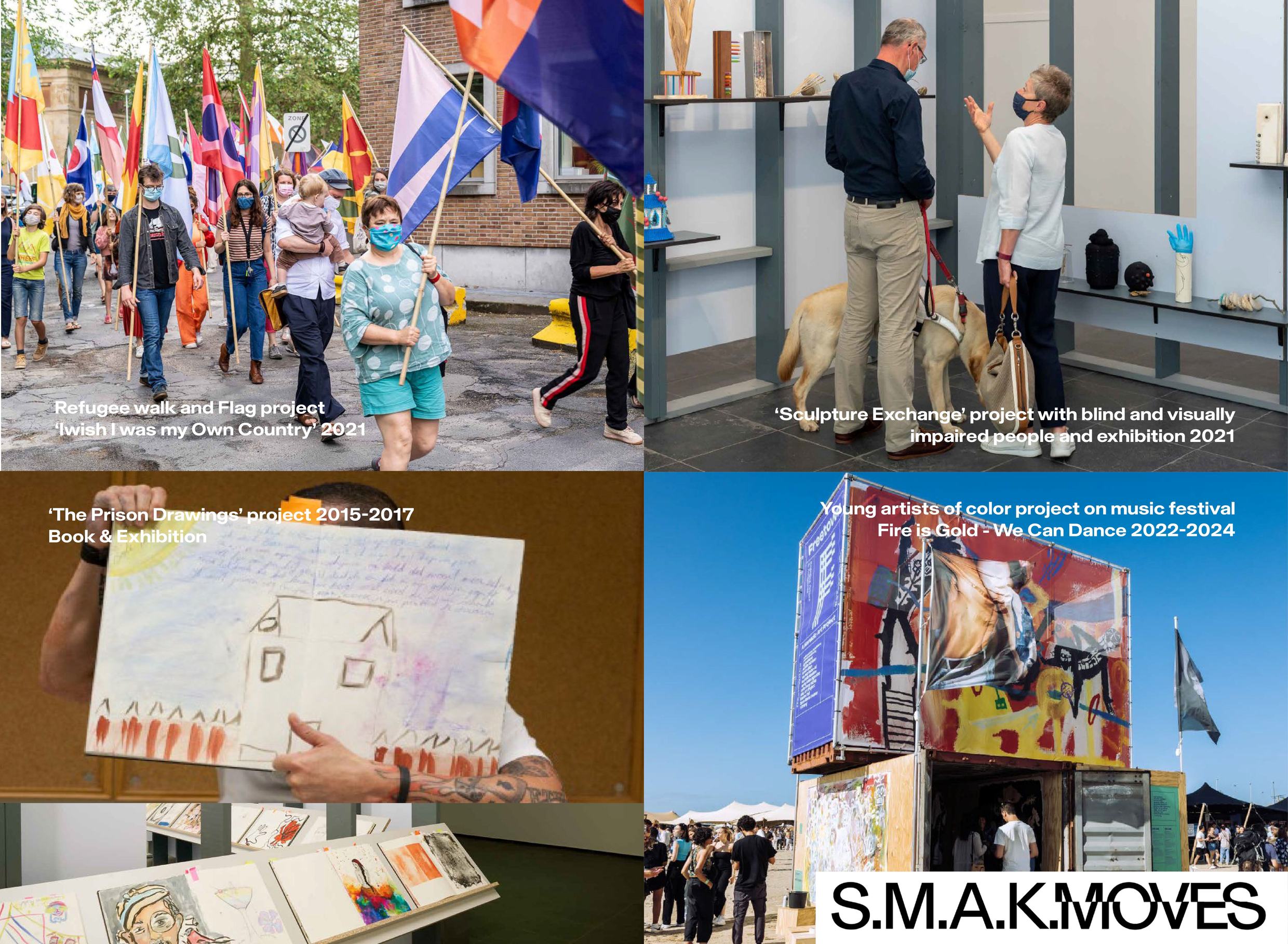
What followed were encounters with refugees, detainees, visually impaired visitors, youth on the margins. The conviction that emerged is inspired by artists: doing is a form of knowing. The methodology crystallised into a universal entry pathway: Encounter → Reflect → Create → Present, that any museum, in any city, with any collection, can adapt to its own context. Its innovation lies in treating contemporary art not as an instrument of outreach, but as a shared language for connection, reflection, and co-creation. Partners like DUO2, OKAN, Dr. Guislain Mental Hospital, and Ghent Prison are not service providers but co-creators, bringing knowledge the museum cannot possess alone. The results are simultaneously social and artistic acts, never one at the expense of the other. Teenagers curating a full floor collection exhibition. Detainees co-producing ZineZine, artistic publications sold in the museum shop, proceeds supporting art programmes in prison. Newcomers creating personal alphabets inspired by Marcel Broodthaers, displayed on the museum walls. Children authoring The LittleCollectionCatalogue, the museum's own collection catalogue, written by the city's youngest residents.
Four principles guide every project: Action, Connection, Curiosity, Impact. Participants engage with exhibitions and the collection, develop artistic responses with artists, and re-enter the museum as visible contributors rather than passive visitors. This logic runs through every core activity: education, collection, exhibitions, accessibility, research, and governance.
S.M.A.K.MOVES is a blueprint to be replicated. It requires no exceptional budget, no unique collection, no particular city — only one question, trusted partners, and the willingness to build from their needs rather than your programme. Any museum can begin from here.
Explain in one sentence why you think the project you nominate is outstanding and could serve as an example for the entire community of modern and contemporary art museums.
At a time when museums are under pressure to justify their existence, S.M.A.K.MOVES proves that with a decade of evidence and verified structural institutional change, a contemporary art museum can be both artistically uncompromising and radically open to all, offering a replicable model to interpret in different contexts.
Explain why this practice or program is relevant and sustainable in creating meaningful and lasting connections with people, communities, and the museum context with a medium to long-term vision.
S.M.A.K.MOVES responds to one of the defining challenges for contemporary art museums: how to remain artistically on the edge while becoming genuinely accessible to all.
Its sustainability rests on three foundations. First, a humble attitude: S.M.A.K. arrives not with a ready-made programme but with a question to find the place where the community's world and the museum's world genuinely overlap. Partners like DUO2, Dr. Guislain Mental Hospital, and Ghent Prison have been active collaborators for nearly a decade — not because contracts bind them, but because the relationships generate real value for both sides. Second, structural embedding: S.M.A.K.MOVES is written into the City of Ghent's structural subsidy agreement, a verifiable institutional commitment that no budget cycle can dissolve. Third, the methodology: the Encounter → Reflect → Create → Present cycle is repeatable, adaptable, and growing more refined.
S.M.A.K.MOVES doesn’t merely respond. It moves with society, and in doing so, rebuilds the museum from the inside as a more porous, inclusive, and socially grounded institution, a model for social agency.
What are the outcomes of the practice you are most proud of?
We have proven that artistic integrity and social responsibility are not in conflict when they become part of the museum’s governance.
When 500 children and teenagers curated an entire floor of the S.M.A.K. collection in ‘The Exhibition’ the collection was not diminished or dumbed down. It was renewed. The museum saw its own collection through fresh eyes, those of the city. When children authored the ‘Little Collection Catalog’, the museum handed them the authority to define what the collection means. When detainees co-produced PrisonDrawings and ZineZine, the museum created archives of lives that would otherwise go unrecorded. These are acts of cultural memory, not social service.
This is the consistent evolution of a conviction running from Chambres d'Amis and OverTheEdges to T.R.A.C.K. and now S.M.A.K.MOVES — always with artist and community at the centre, audience growing into the third institutional pillar alongside collection and artistic programming.
Making contemporary art accessible to all is not a concession to relevance through popularity. It is the reason for being.
How has the nominated practice changed your methods and ways of working?
S.M.A.K.MOVES has fundamentally changed how the museum works from the inside. What began as a dedicated outreach programme has become a shared institutional reflex — a collaborative practice cutting across education, curatorial, communication, collection, and governance into a single integrated movement.
At the heart of this shift is a new key skill: listening. Not as a courtesy, but as a professional discipline — the genuine willingness to hear what communities, partners, and artists need before proposing anything. Curators now involve S.M.A.K.MOVES partners in the early stages of exhibition development — not as consultants but as co-thinkers, shaping how exhibitions are conceived, not merely mediated after the fact. Visitor needs and artist vision are no longer treated separately but as equally valuable starting points. Artistic integrity is not compromised by this — it is deepened.
Making contemporary art accessible does not mean simplifying the artist's vision. It means creating the conditions for that vision to be encountered with greater openness, by more people.
The integration is ongoing and never finished. The museum of tomorrow is not built by one department, but by everyone, together, in motion. In close connection to society.
https://www.youtube.com/playlist?list=PL9nrBJ-gh9vXGH-iDJFEsTw0Gt8BSGvCA https://smak.be/en/smak-moves