Seoul Museum of Art
The Seoul Museum of Art (SeMA) that opened in 1988 is ‘Seoul’s Network Museum’ in which eight branches throughout intersect in response to changes in the times and art, and where users, producers, and mediators come together. In particular, SeMA has recently opened the Photography Seoul Museum of Art, the first public photography museum in Korea, and the Seo-Seoul Museum of Art, which specializes in new media and interdisciplinary practices.
SeMA began collecting artworks in 1985 with the goal of forming a collection that looks at the flow of Korean art since the 1950s, and currently holds a collection of about 6,000 works. In particular, since the 2000s, works by major Korean artists are being collected as part of the museum’s main strategy of specializing in contemporary art, with the majority of the overall collection consisting of works created after the 2000s. In addition, it also holds specialized collections of high art-historical value through large-scale acquisition, such as the Chun Kyung-ja Collection, the Kwon Jin Kyu Collection, and the Choi Min Collection. SeMA continues to form collections that both reflect the museum's identity and actively embrace the trend of contemporary art.
Name of the director of the institution: Choi, Eunju
Name of the practice, initiative or program nominated: Parallel Views: Art in Conversation
Name and position of the professional who leads the practice: Kim Somyeong, Curator, Buk-Seoul Museum of Art
Describe the practice, program, or project, what innovative approach is proposed, and in which core museum activities it applies: conservation, education, collection, exhibition programs, publications, research, accessibility, communication, governance, and sustainability.
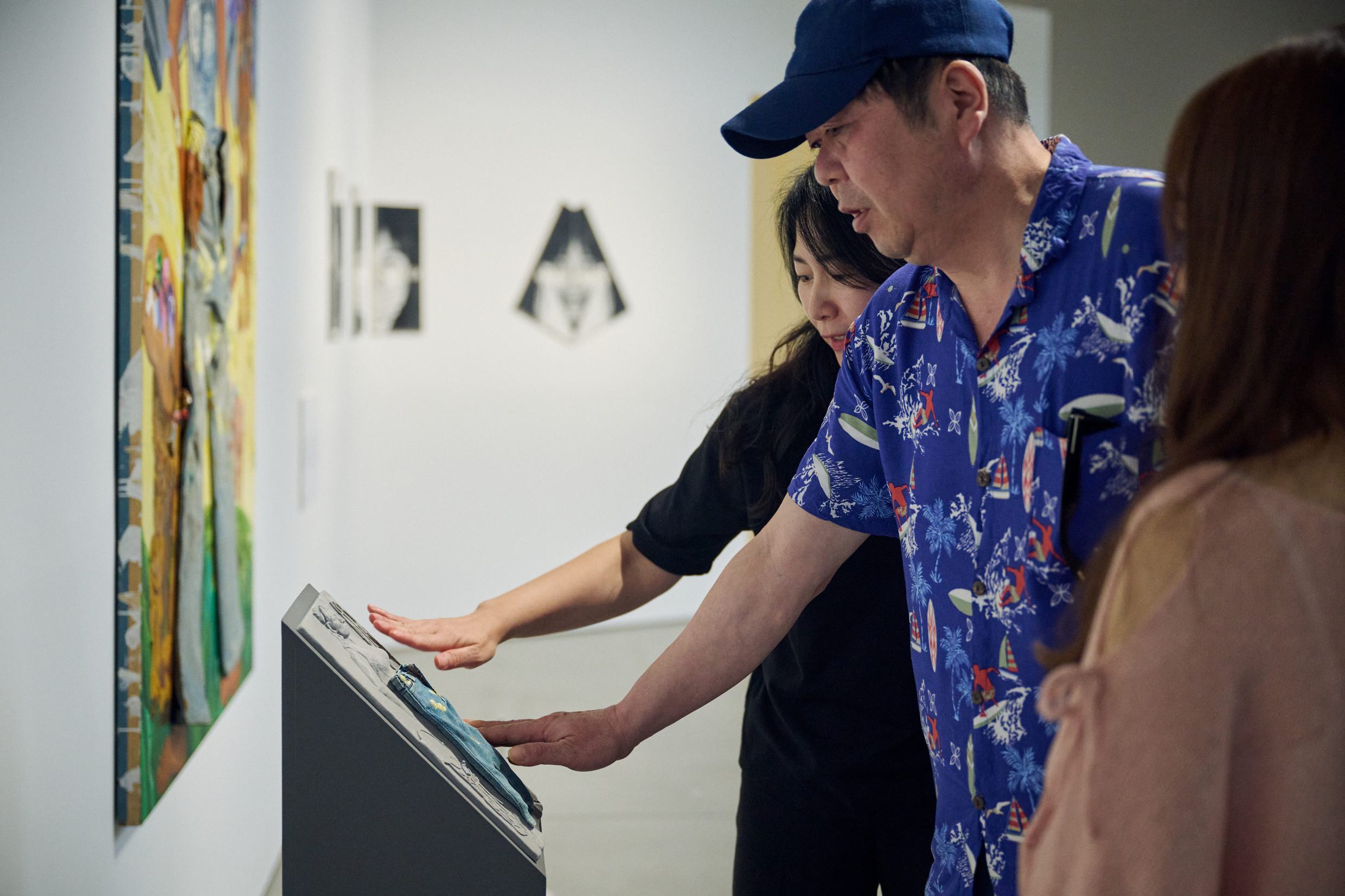
The first and largest branch of Seoul Museum of Art (SeMA), the Buk SeMA―“Buk” in Korean means “northeastern”―has made genuine efforts to elaborate the form and content of its exhibitions and public programs in terms of raising inclusivity and diversity. "Parallel Views: Art in Conversation" at the Buk SeMA is an educational initiative in this respect, launched in 2024 out of the awareness that visually-centered art museums have quite a while strived to increase accessibility, but they still identify the visually-impaired people only as someone who needs help.
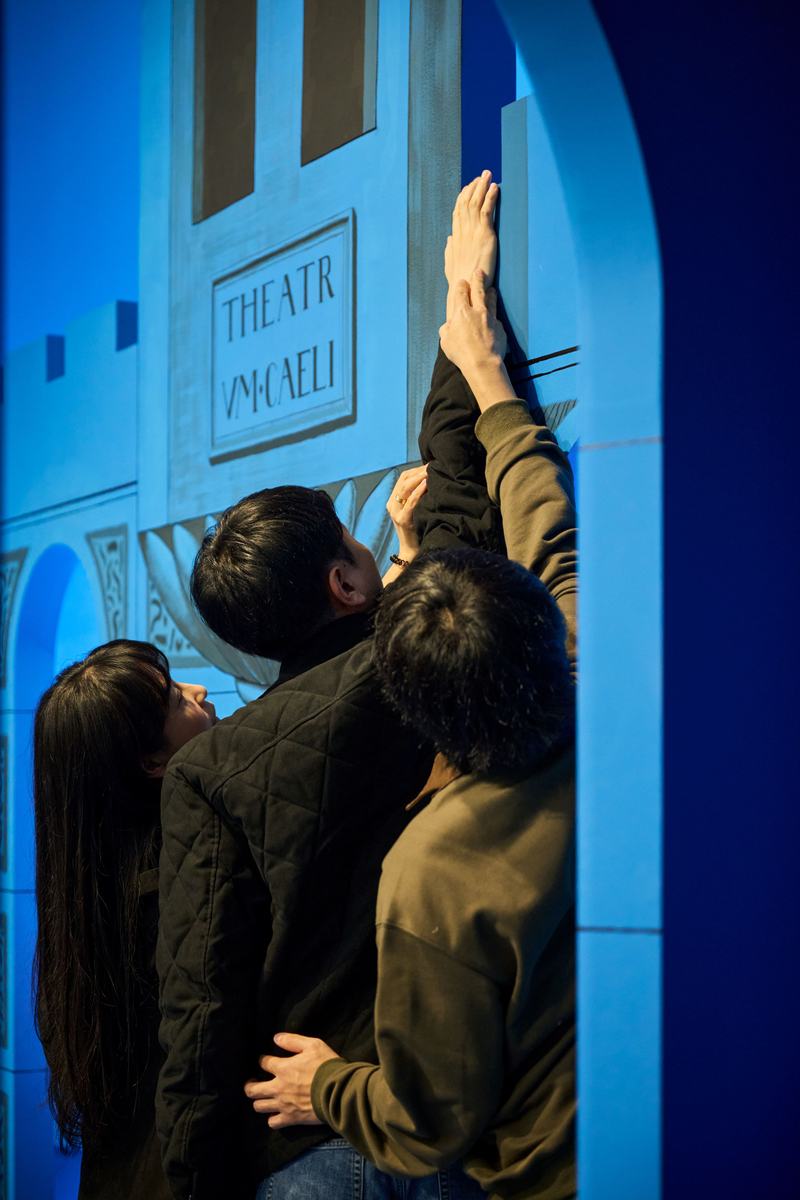
In the Buk SeMA’s "Parallel Views," two are paired up: one with visual impairment to varying extents of disability, and the non-disabled other, most of whom rarely have a chance to meet with the disabled. What the pair is invited to do is not to “view” an exhibition but to “explore” it together in conversation. Curators develop accessible materials specific to each exhibition in cooperation with artists, educators and specialist instructors, such as audio descriptions, tactile models, 3D leaflets and dialogue tips. But the driving force of this program is the “togetherness” of participants who bring their own sensation and imagination to each other.
In 2026, the Buk SeMA intended to extend the reach of "Parallel Views" and began to work with the Purme Foundation, a non-profit organization established in 2005 and dedicated to the independence and rehabilitation of disabled people. By the mediation of the Purme Foundation, this year’s "Parallel Views" was joined by Volvo Cars Korea and the Guide Run Project, a citizens’ running community. This can be said to form a new “coalition” that could interweave potential ties of solidarity in and out of the museum’s realm.
Explain in one sentence why you think the project you nominate is outstanding and could serve as an example for the entire community of modern and contemporary art museums.
"Parallel Views: Art in Conversation" transforms the notion of accessibility by removing physical and informational barriers, into the very museological methodology of relationship building, by bringing in different worldviews and thereby catalyzing self-reflexive institutional learning of the museum for a better practice that could constantly revise a sense of otherness and a mode of social engagement.
Explain why this practice or program is relevant and sustainable in creating meaningful and lasting connections with people, communities, and the museum context with a medium to long-term vision.
The dialogue-driven approach of "Parallel Views" enables participants to tell their own stories vis-à-vis exhibitions. They are prompted to link the experience of being in the museum to that of their everyday lives. Fostering mutual understanding among participants, this inevitably leads to questions as to who “we” are. Rather than simply trying to discover certain minorities out there, it seeks to reach those who are not, and cannot be, defined and categorized within a single collective identity, such as disability, gender, ethnicity, and age: i.e., those who reside beyond the conventional canons. "Parallel Views" in light of who actually takes part, has evolved from engaging mainly with local welfare centers to the activities of corporate patronage and civic organizations. This demonstrates that the museum is able to play a centripetal role of attracting similar social imperatives.
What are the outcomes of the practice you are most proud of?
In scarcity of museum programs for the visually-impaired in Korea, "Parallel Views" at the earlier stage had difficulties in drawing participants in. The number of potential participants interested in or willing to join was very small as opportunities for the museum experience itself were by and large limited for those with visual impairment. Most participants in the first sessions of "Parallel Views" were those who never visited the museum before. After two years of institutional efforts of the Buk SeMA with "Parallel Views," the ratio of the disabled people coming back to the museum has increased, and as many participants state, what is most valuable they gained is a new understanding that the museum is a place where people with diverse senses and conditions can get along. The general number of visitors to the Buk SeMA with disabilities also doubled from 7,900 in 2024 to 13,123 in 2025.
How has the nominated practice changed your methods and ways of working?
The programming of "Parallel Views" varies depending on exhibitions featuring a wide range of artistic mediums, and it has consolidated itself in a versatile way to the formats and subject matters of exhibitions. Through the curatorial progress of "Parallel Views," the matter of physical accessibility has been turned into relational and experiential accessibility, which means that it is regarded not as something to do additionally, but as something built in the institutional workings. Also, leveraging the influence of "Parallel Views," there emerges an internal consensus that the museum should address the critical need of measuring its social impact, not bound by mere visitor numbers. Alongside the Purme Foundation, the collaborative networks will be broadened, and its sophistication and sustainability, heightened. Accordingly the Buk SeMA will set out to develop qualitative indicators of the museum’s power in creating social nexus, not only responsive to but also generative of social values.
https://sema.seoul.go.kr/kr/knowledge_research/publish_detail?museumDataNo=1415045