CAM - Centro de Arte Moderna Gulbenkian
CAM is an art and culture centre with a collection of contemporary and modern art which includes the largest representation of Portuguese artists to date.
The brainchild of Fundação Calouste Gulbenkian’s founding President José de Azeredo Perdigão and its board, CAM opened its doors in its original guise in July 1983, designed by Sir Leslie Martin and associates. A fully redesigned building by Kengo Kuma and associates was inaugurated in September 2024.
Envisioned as a venue to house a collection of modern and contemporary art in 1956, CAM holds the largest representation of 20th and 21st Century Portuguese artists gathered to date. It was also meant to be a site where the work of emerging artists in all forms was to be presented; hence its name: Centro de Arte Moderna. CAM naturally became the home of ACARTE, an avant-garde multidisciplinary programme launched in 1984 by Madalena de Azeredo Perdigão.
Nested in a new garden designed by Vladimir Djurovic, the new CAM hosts numerous presentations of its collection, as well as temporary exhibitions by emerging and confirmed artists, some being exhibited for the first time in Portugal. In addition to its classic exhibition spaces, CAM also features a gallery dedicated to sound art. With this launch, CAM is also proud to offer a comprehensive Live Arts programme, reflecting the eclectic artistic production of our times, as well as a Learning Space and many participatory projects.
Name of the director of the institution: Ana Botella (interim director)
Name of the practice, initiative or program nominated: Institution(ing)s
Name and position of the professional who leads the practice: Luísa Santos, artistic director
Describe the practice, program, or project, what innovative approach is proposed, and in which core museum activities it applies: conservation, education, collection, exhibition programs, publications, research, accessibility, communication, governance, and sustainability.
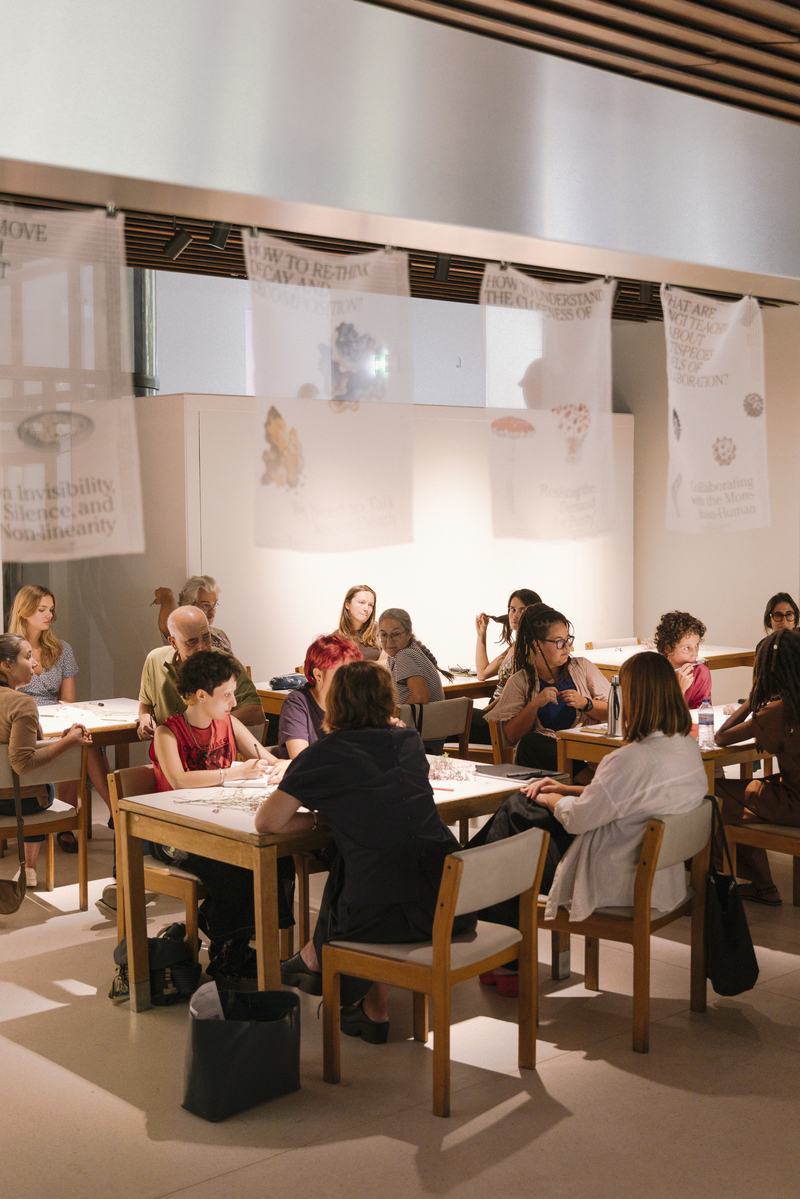
Institution(ing)s is an embedded, experimental platform hosted at CAM – Centro de Arte Moderna Gulbenkian, operating as a “good parasite” that cultivates internal critique and institutional reflection. The project transforms the engawa, a 600 m² transitional space between garden and exhibition hall, into a liminal site for collaborative research, residencies, workshops, performances, and assemblies. Its ethos, inspired by Madalena Perdigão’s motto “vamos correr riscos / let’s take risks,” encourages experimentation and risk-taking within institutional frameworks.
The innovative approach lies in combining embeddedness with autonomy: institution(ing)s inhabits the host institution, drawing on its resources while simultaneously introducing alternative methodologies, temporalities, and operational logics. The platform fosters moments of role inversion, as seen in the Listening Academy, where external partners temporarily assume host responsibilities, prompting self-reflection and procedural reconfiguration. By negotiating compromises—such as adapting artistic production to conservation constraints—the project illustrates how critique can reshape exhibition practices in real time.
Institution(ing)s engages multiple core museum activities. In **exhibitions**, it creates dynamic, evolving displays integrating artistic processes and interpretive materials. In **research and education**, it generates collaborative knowledge through residencies and workshops. In **collection management**, it negotiates interaction with existing works, respecting preservation while experimenting with display methods. The project also enhances **accessibility and communication**, connecting diverse audiences through participatory practices and collaborative networks. Finally, it contributes to **governance and sustainability**, fostering shared capacities, internal critique mechanisms, and long-term institutional transformation.
By operating as a “good parasite,” institution(ing)s demonstrates that sustainable, meaningful critique emerges most effectively from within institutions, bridging difference, experimentation, and reflection to redefine what a contemporary museum can be.
Explain in one sentence why you think the project you nominate is outstanding and could serve as an example for the entire community of modern and contemporary art museums.
Institution(ing)s is outstanding in demonstrating how a museum can host embedded, self-critical structures that—through reciprocity, experimentation, and shared governance—transform institutional practice from within, offering a replicable model for adaptive, socially engaged museums such as Centro de Arte Moderna Gulbenkian.
Explain why this practice or program is relevant and sustainable in creating meaningful and lasting connections with people, communities, and the museum context with a medium to long-term vision.
The relevance of institution(ing)s lies in its capacity to operate from within the museum, embedding critique as an ongoing, situated practice rather than an external gesture. By inhabiting the liminal engawa space at Centro de Arte Moderna Gulbenkian, it creates conditions for sustained dialogue between artists, researchers, students, and institutional actors. Its “good parasite” model fosters reciprocal exchange: drawing on institutional resources while generating new methodologies, networks, and forms of engagement that transform the host.
Sustainability emerges through this reciprocity and through its consortium-based structure, which connects diverse local and international partners, enabling continuity beyond single events. By embracing negotiation, friction, and shared authorship, institution(ing)s builds lasting relationships and adaptive institutional practices, ensuring that its impact extends into the medium and long term.
What are the outcomes of the practice you are most proud of?
Among the outcomes I am most proud of is the creation of a functioning, shared space for institutional self-critique within Centro de Arte Moderna Gulbenkian, where experimentation is not peripheral but embedded in daily operations. This has enabled tangible shifts in how projects are produced—through collaborative authorship, evolving formats, and negotiated processes, as seen in residencies and programmes such as the Listening Academy.
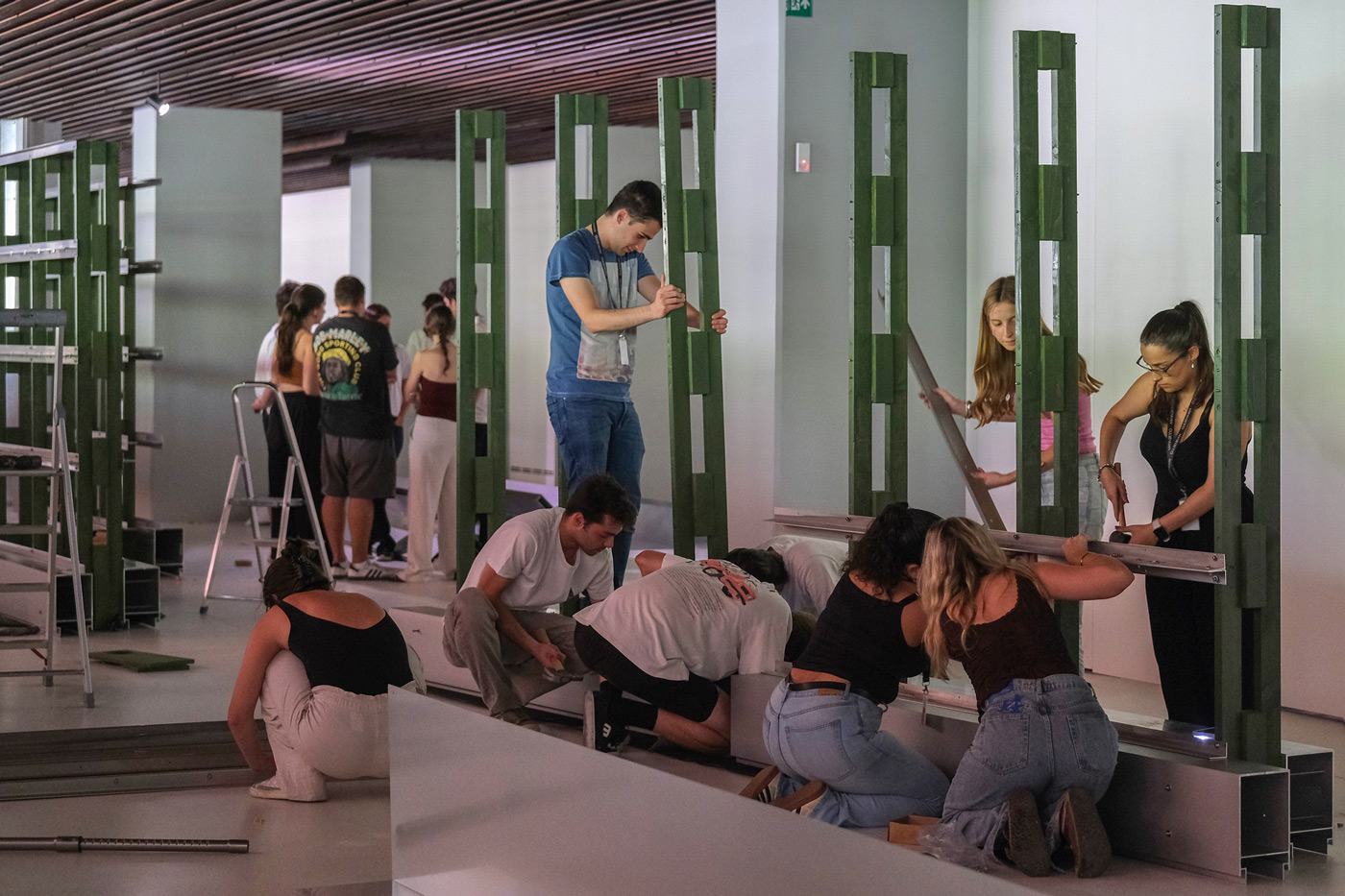
Equally significant is the development of a transnational consortium that connects diverse organisations and contexts, fostering long-term relationships and knowledge exchange beyond the museum. The project has also generated new spatial, curatorial, and pedagogical methodologies, including modular design strategies and role reversals between host and guest. Together, these outcomes demonstrate how institution(ing)s can produce not only critical discourse, but also lasting institutional transformation and shared capacities.
How has the nominated practice changed your methods and ways of working?
Institution(ing)s has fundamentally shifted my methods from project-based production toward process-oriented, collective, and adaptive modes of working. Operating within Centro de Arte Moderna Gulbenkian has required continuous negotiation with institutional structures, making flexibility, responsiveness, and dialogue central to my practice. Rather than defining outcomes in advance, I now work through evolving formats that accommodate contingency, shared authorship, and role reversals between host and guest.
It has also deepened my commitment to embedding critique within practice itself—through attention to working conditions, governance, and collaboration—rather than treating it as a separate discursive layer. Engaging with a diverse consortium has further expanded my approach, foregrounding asymmetries, translation, and long-term relationship-building as key components of how I work.