Associação Acervo da Laje
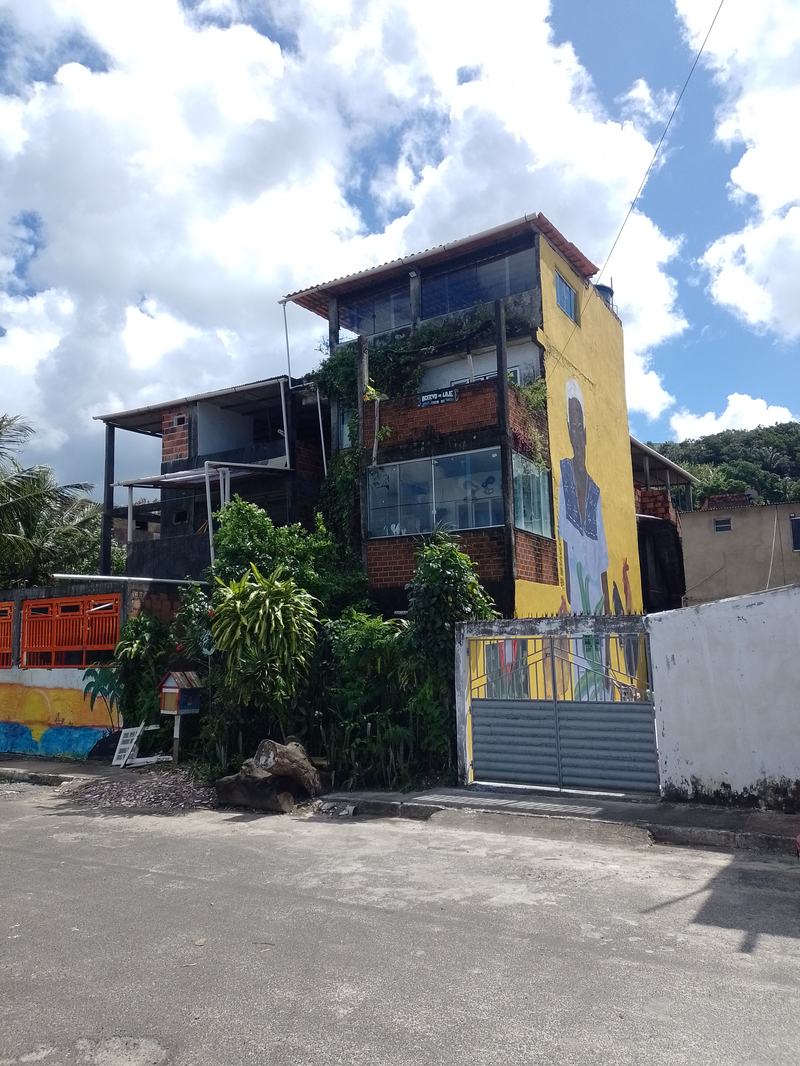
Founded and maintained by the teachers Vilma Santos and José Eduardo Ferreira Santos and their respective families, Acervo da Laje, located in the Subúrbio Ferroviário of Salvador,a peripheral, Black, and poor area of the city, but rich in natural resources, was created from a perspective that brings together education and art as central pillars for the critical, reflective, and aesthetic development of the people who pass through it. It is dedicated to preserving the territory’s artistic and cultural memory through artworks and historical objects, while promoting exhibitions, workshops, rooftop conversations, educational programs, and guided visits. Acervo da Laje also operates as a space for the exhibition and production of art and memory rooted in urban peripheries.
Its facilities include two houses that hold significant art collections, a newspaper archive, the Dona Coleta de Omolu Documentation Center, the Clementina de Jesus Music Room, a technical reserve for artworks, and it currently hosts the exhibition Memories for Dona Antônia.
Name of the director of the institution: Vilma Santos e José Eduardo Ferreira Santos
Name of the practice, initiative or program nominated: Arts education and training
Name and position of the professional who leads the practice: Vilma Santos e José Eduardo Ferreira Santos.
Describe the practice, program, or project, what innovative approach is proposed, and in which core museum activities it applies: conservation, education, collection, exhibition programs, publications, research, accessibility, communication, governance, and sustainability.
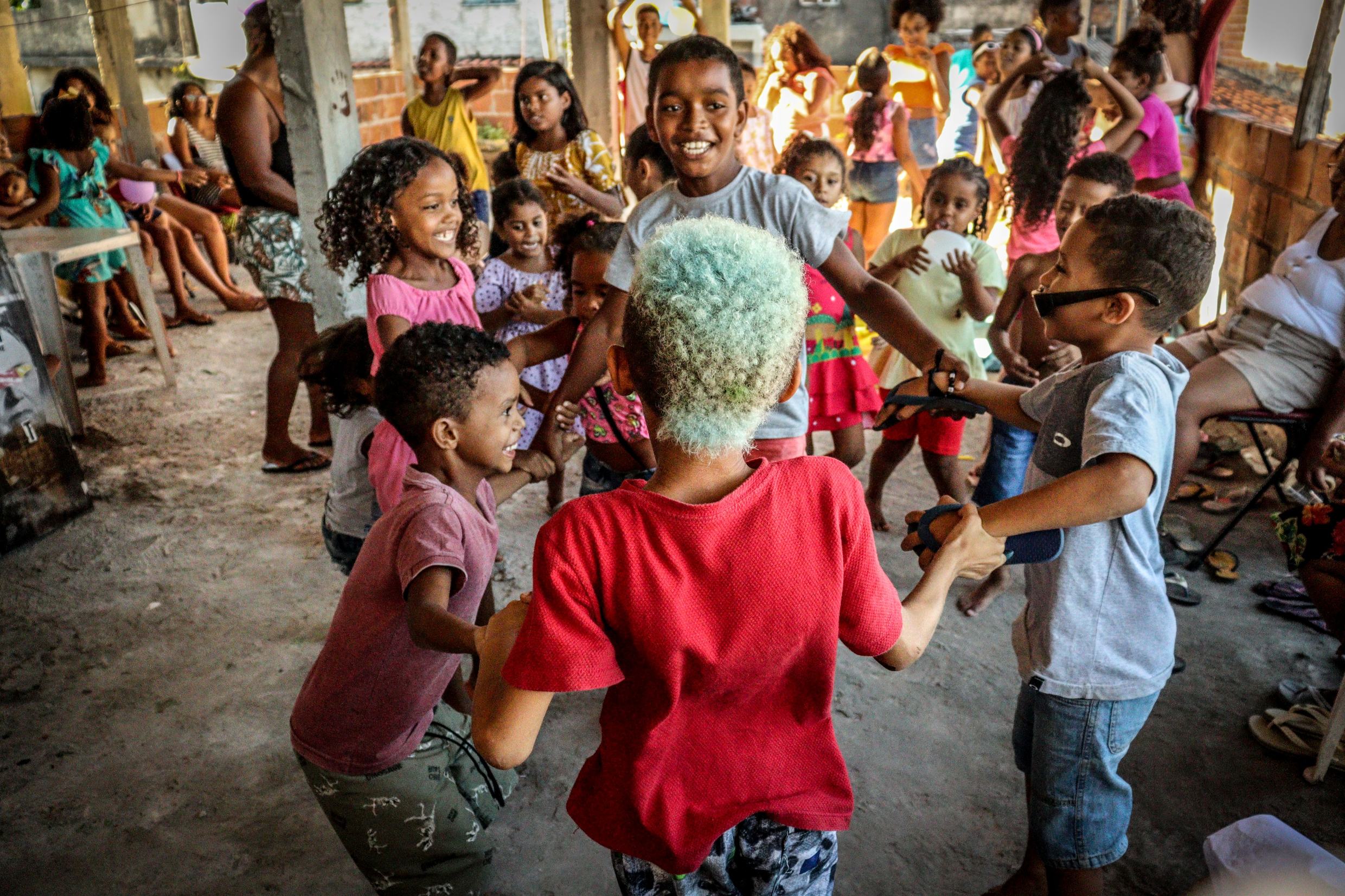
At Acervo da Laje, pedagogical and artistic training is a continuous practice of mediation, care, and collective construction, coordinated by Vilma Santos, co-founder and coordinator of the institution’s educational and training activities. The initiative brings together artists, educators, children, women, and families through situated learning processes responsive to the specificities of the territory and the participating publics. The innovative aspect of this practice lies in integrating artistic training, education, community listening, and an ethics of care. Before each workshop, Vilma meets with the proposing artists to discuss methodology, the use and suitability of spaces, materials, age groups, accessibility, image use, food, health, and forms of welcoming. In this way, the workshop is not understood merely as the transmission of techniques and knowledge, but as a relational pedagogical process adapted to the concrete conditions and specificities of each group.
Our practice also changes according to the public involved. With children, it prioritizes learning rhythms, observation, and experimentation. With women from the territory, the workshops focus on self-care, listening, self-esteem, socialization, and the elaboration of memories linked to everyday life. In this context, a methodology emerges that becomes increasingly developed collectively, in relation to women and their desires and aspirations.
This practice directly applies to the museum’s core activities, especially educational work, mediation, strengthening community bonds, democratizing access, and public programming. It is important that this artistic training be directly connected to pedagogical practices, as together they offer greater effectiveness in teaching and learning for both educators and participants. In this way, artistic training and education are continuous processes at Acervo da Laje and inseparable components of its practice, as they shape experiences through the intersection of educational processes and artistic practices.
Explain in one sentence why you think the project you nominate is outstanding and could serve as an example for the entire community of modern and contemporary art museums.
We are a museum made with, in, and by the community, without intermediaries or exogenous and colonial curatorial practices, but rather through our own curatorships, enchantments, and affective forms of sharing.
Explain why this practice or program is relevant and sustainable in creating meaningful and lasting connections with people, communities, and the museum context with a medium to long-term vision.
This practice is relevant because it creates bonds between the museum, artists, children, women, and families in the territory through ongoing mediation that is attentive to the concrete needs of each audience. The methodology used at Acervo da Laje brings together artistic training, education, care, and community participation, making its space one of coexistence, learning, exchange, and the elaboration of individual and collective memories. It is sustainable because it does not depend on isolated actions, but on an ongoing method of training, follow-up, and adaptation for each workshop, built in dialogue with those who propose it and, in its implementation, with the participants. We are committed to preparing artists to work in an ethical and situated way within the territory, in a model that can also be reproduced in other contexts, while strengthening those who take part in these processes. In the medium and long term, the experience of Acervo da Laje reinforces its social commitment to its territory and community life.
What are the outcomes of the practice you are most proud of?
The creation of lasting bonds between Acervo da Laje, artists, children, women, and families in the territory, as well as the consolidation and recognition of its educational practice based on listening, care, and participation. We especially highlight the training of artists who are better prepared to lead workshops in a situated, sensitive, and ethical way, attentive to different age groups and the needs of diverse audiences. From this, we have built teaching and learning processes that bring together art, education, and everyday experience, resulting in moments of interaction and public presentation of the works produced. In this way, we are building audiences, fostering self-esteem, and strengthening a sense of belonging. We are also proud of the strengthening and protagonism of women, who find in these workshops a space for welcome, listening, socialization, expression, and self-care.
How has the nominated practice changed your methods and ways of working?
Drawing on our previous experience as educators, when we founded Acervo da Laje, instead of designing workshops in a standardized way, we began to develop situated methodologies created in dialogue with artists and participants, taking into account our material and physical structure, different age groups, health-related issues, learning rhythms, and the specific needs of each group. We learned to work in a more relational, ethical, and collaborative way, and this required us, as an institution, to remain open to adjusting our proposals based on concrete experience. As a result, our actions have become noticeably more sensitive, inclusive, and consistent, strengthening the institution as a space for the shared elaboration of memories and experiences.
https://www.instagram.com/acervodalaje/ https://drive.google.com/drive/folders/1HCUmIE-m5tLKs6XzMgQNKtgp2DIbr6ux