Muzeum Sztuki in Łódź
Muzeum Sztuki in Łódź is one of Europe’s oldest museums dedicated to modern and contemporary art and a key institution in the history of the avant-garde in Central and Eastern Europe. Founded in the early 1930s around the pioneering International Collection of Modern Art initiated by the a.r. group, most notably Katarzyna Kobro and Władysław Strzemiński, the museum has maintained a long-standing commitment to experimental artistic practice, critical reflection, and transnational exchange.
Today the museum operates across two main sites, ms¹ and ms², and develops an interdisciplinary programme connecting exhibitions, research, publishing, and public engagement. Its collection includes major holdings of the European avant-garde, postwar neo-avant-garde, conceptual art, and contemporary artistic production from Poland and abroad.
The museum understands the collection not as a fixed canon, but as a living and evolving structure shaped through dialogue with artists, researchers, and audiences. This perspective informs both long-term projects such as the permanent exhibition Ways of Seeing. The Collection of the Muzeum Sztuki in Łódź and recent initiatives that expand collecting beyond market-based acquisition toward relational and solidarity-driven models.
Name of the director of the institution: Daniel Muzyczuk
Name of the practice, initiative or program nominated: Gifts of Friendship: a relational model of collection-building
Name and position of the professional who leads the practice: Daniel Muzyczuk Director
Describe the practice, program, or project, what innovative approach is proposed, and in which core museum activities it applies: conservation, education, collection, exhibition programs, publications, research, accessibility, communication, governance, and sustainability.
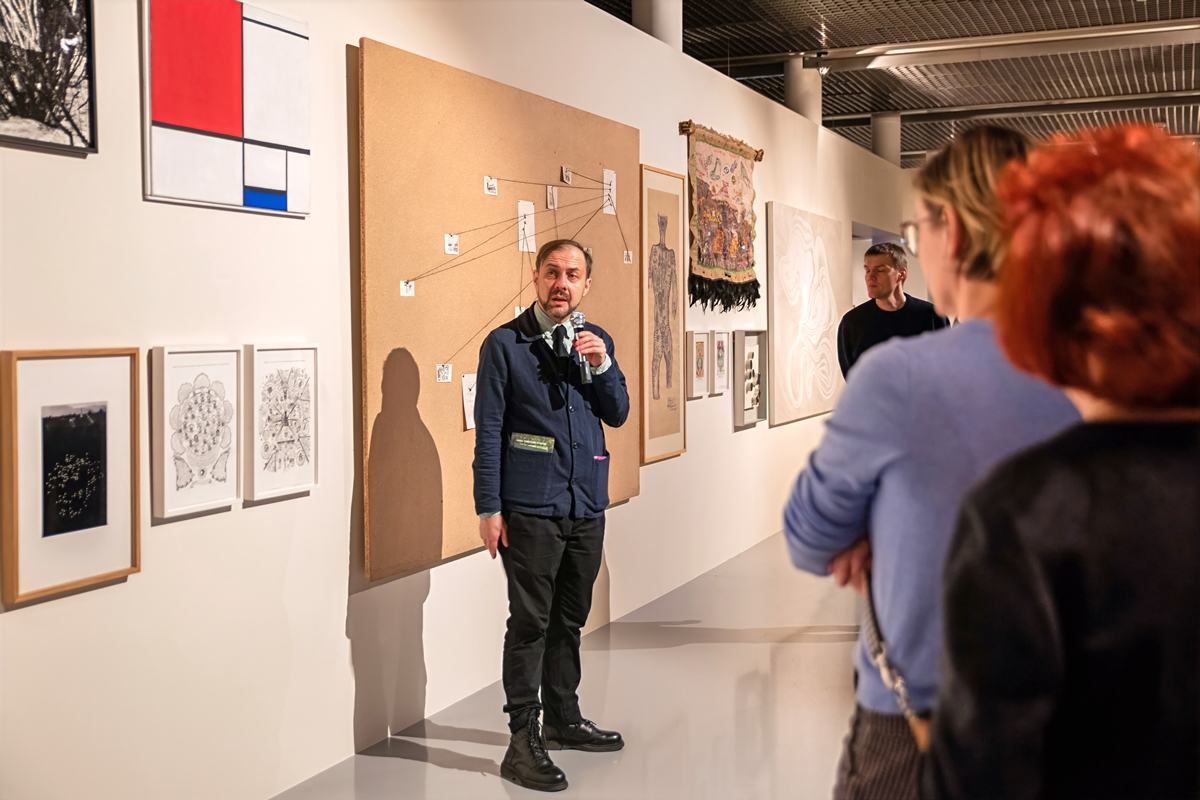
Gifts of Friendship is a collection-building practice developed by the Muzeum Sztuki in Łódź between 2024 and 2026. At a time when many museums face limited acquisition budgets and growing dependence on market-based mechanisms, the project proposes a different model: building a public collection through long-term artistic relationships, institutional trust, and shared responsibility.
The initiative brought nearly 150 donated works by almost 100 artists from different generations and geographic contexts into the museum’s collection. Its significance lies not only in scale, but in method. Rather than treating donations as isolated or supplementary gestures, the museum framed them as part of a coherent institutional strategy grounded in reciprocity, continuity, and collaboration with artists.
This approach is deeply connected to the museum’s own history. Since its founding in 1931, Muzeum Sztuki in Łódź has developed its collection through close cooperation with artists - from the International Collection of Modern Art initiated by the a.r. group, including Kobro and Strzemiński, to later generations of artists who supported the museum’s public mission through acts of contribution and exchange. Gifts of Friendship reactivates this founding principle under contemporary conditions.
The donated works include contributions from artists connected with the museum over many years - among them Liam Gillick, Karin Schneider, and R.H. Quaytman - as well as artists whose practices have entered into dialogue with the museum’s programme more recently, including Jasmina Cibic, Isabelle Cornaro, Veronika Hapchenko, Agata Ingarden, Nikita Kadan, Wendelien van Oldenborgh, Paulina Ołowska, Agnieszka Polska, Mykola Ridnyi, Wilhelm Sasnal, Viktor Timofeev, Julita Wójcik, and Anton Vidokle. The initiative also opened new relationships through first-time contributions from artists including Yane Calovski, Andrea Fraser, Thomas Hirschhorn, João Maria Gusmão, Hassan Khan, Josiah McElheny, and Jeff Preiss.
Artists participated not as external donors, but as partners in shaping the future structure of the collection. The practice linked collection development, curatorial research, exhibitions, communication, and public programming into one institutional process. The accompanying exhibition was not the project itself, but a public interface for an ongoing methodology of collecting.
By foregrounding long-term relationships over transactional acquisition, Gifts of Friendship offers a transferable model for museums working across different economic conditions while strengthening international artistic networks and renewing the idea of the collection as a shared public resource.
Explain in one sentence why you think the project you nominate is outstanding and could serve as an example for the entire community of modern and contemporary art museums.
Gifts of Friendship demonstrates that a museum can build an internationally connected and institutionally meaningful collection through long-term relationships of trust, reciprocity, and collaboration rather than relying primarily on market-based acquisition.
Explain why this practice or program is relevant and sustainable in creating meaningful and lasting connections with people, communities, and the museum context with a medium to long-term vision.
Gifts of Friendship responds to a central challenge facing contemporary museums: how to develop public collections under conditions of financial constraint without giving up institutional ambition or international relevance. The project offers a sustainable answer by grounding collection-building in long-term relationships with artists rather than in short-term acquisition opportunities. Its sustainability is structural rather than symbolic. The practice connects curatorial work, collections management, communication, research, and public engagement into a shared institutional method. Because it is based on trust, continuity, and mutual commitment rather than exceptional funding, it can be adapted by museums working in different economic contexts. In this sense, Gifts of Friendship offers not only a successful local initiative, but also a practical and transferable model for museums seeking alternatives to increasingly market-dependent acquisition systems.
What are the outcomes of the practice you are most proud of?
The most visible outcome of Gifts of Friendship was the incorporation of nearly 150 works by almost 100 artists into the museum’s collection. Equally important, the initiative expanded the museum’s international network, deepened long-term relationships with artists, and made the process of collecting more visible to the public. The project also reactivated a founding principle of the museum - the artist-built collection - and translated it into a contemporary institutional strategy. As a result, collecting became legible not only as an internal administrative function, but as a public, research-driven, and collaborative practice with long-term institutional consequences.
How has the nominated practice changed your methods and ways of working?
Gifts of Friendship changed the museum’s methods by shifting collecting from a largely acquisition-oriented procedure to a long-term relational practice developed across departments and in dialogue with artists. It strengthened collaboration between curatorial, collections, registration, and communication teams, and encouraged the institution to approach artists as ongoing partners in shaping the collection rather than as occasional contributors. The initiative also increased transparency by making the processes behind collection-building more publicly visible. Most importantly, it established a working model that will continue to inform future collecting strategies: historically grounded, internationally oriented, and less dependent on market-based acquisition.