Kunsthaus Baselland
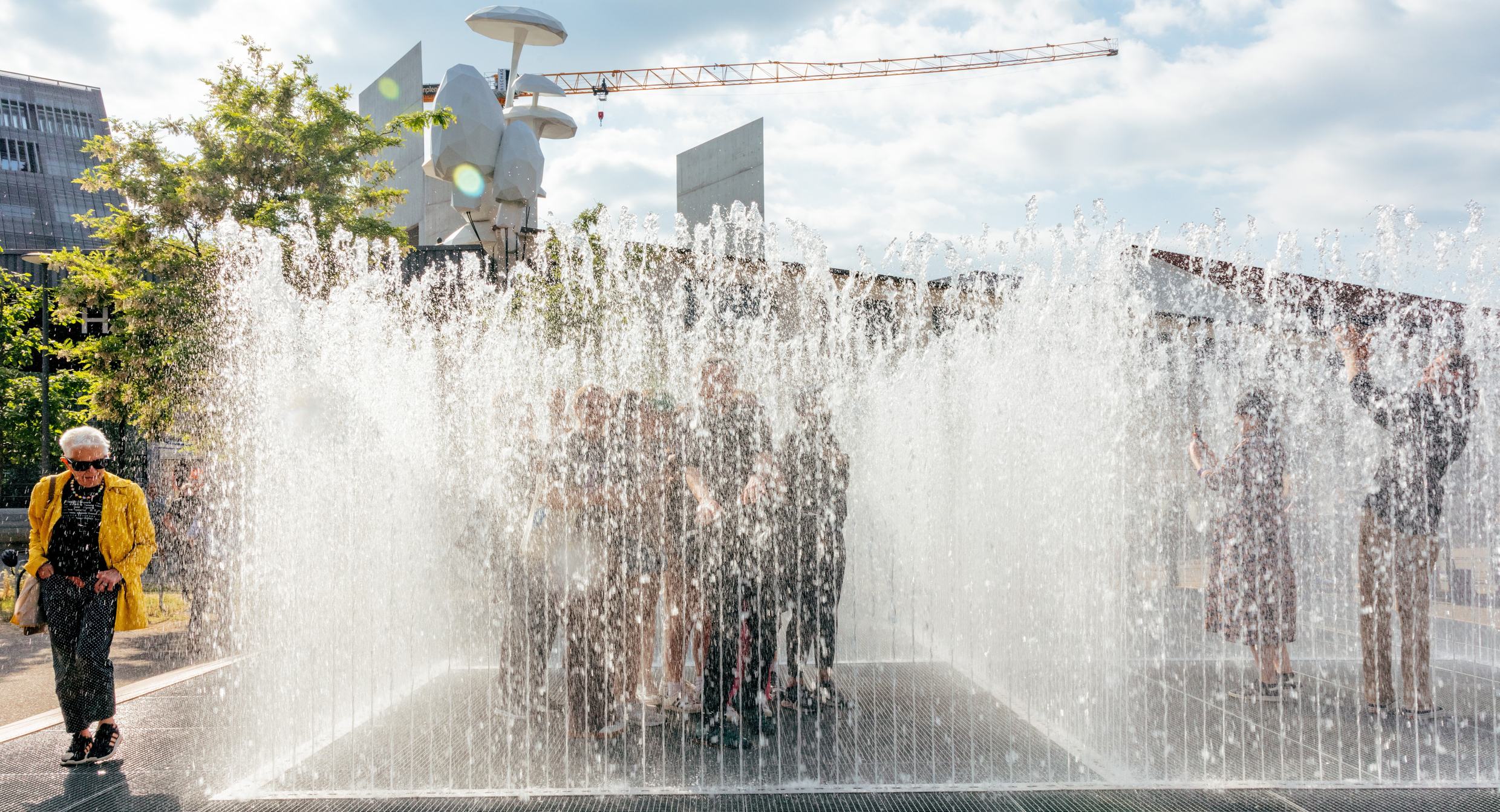
Kunsthaus Baselland is considered one of the leading institutions for contemporary art in the tri-national region of Basel. Designed by Basel-based architects Buchner Bründler, its new building opened in April 2024, after ten years of planning and fundraising, and has alreadyreceived two prominent awards. In this new vibrant environment, the Kunsthaus now operates as part of a wider context and actively contributes to shaping the community on the Dreispitz, which is a huge former industrial area being transformed for fifteen years now into a place for art, culture, studies, living, and leisure.
One of the primary goals of the current director, Ines Goldbach, who took up her position in 2013, and her small team has been to more actively exhibit and promote local art alongside the international artists who were already regularly featured. As a result, the Kunsthaus has become recognized as a significant venue that consistently supports regional artistic production and at the same time enables internationally active artists from different generations to have their first solo exhibitions in Europe or Switzerland. This constant and regular dialogue strengthens the local community through connections and friendships with international colleagues, which often leads to further international invitations being extended to local artists.
Name of the director of the institution: Ines Goldbach
Name of the practice, initiative, or program nominated: Neighboring as an institutional practice
Name and position of the professional who leads the practice: Ines Goldbach, Director
Describe the practice, program, or project, what innovative approach is proposed, and in which core museum activities it applies: conservation, education, collection, exhibition programs, publications, research, accessibility, communication, governance, and sustainability.
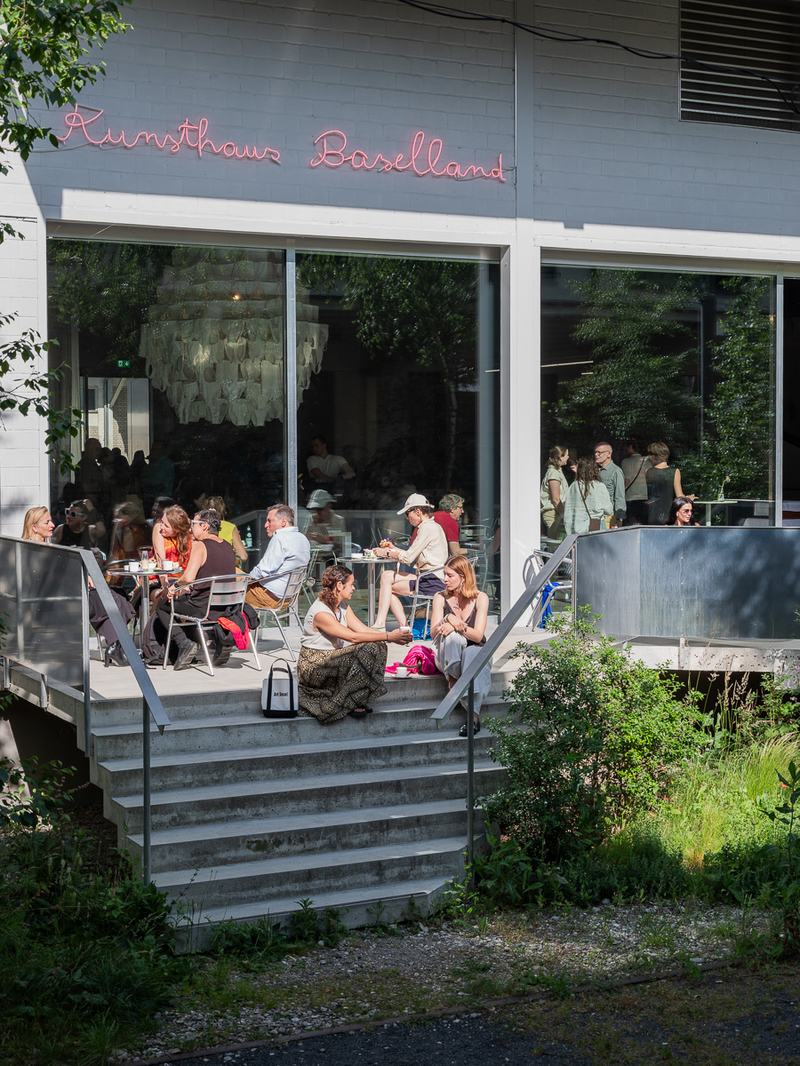
We envision the Kunsthaus as a space where people can come together to experience art and engage with one another. It offers freely accessible areas as well as outreach and education programs tailored to different groups—children, families, schools, adults, people with disabilities. A central concept of the Kunsthaus as a kind of special, enriching neighbor, one that is deeply invested in the local community in which it resides, supporting and bringing together residents, workers, students, and all others active in the area. For me, leading an art institution in a particular place means having a strong commitment to that place and to taking the needs and concerns of artists in that place, that city, that region, into account. And in doing so, tending to the needs and concerns of all those who are active in that environment.
In this context, “neighbouring” refers to actively engaging with the surrounding community. For the Kunsthaus Baselland, a range of initiatives were implemented across various levels to bring this concept to life in a holistic way.
This begins with curatorial decisions to implement ambitious external projects that are accessible to everyone around the clock. It also includes formats such as the ‘video mobile’, in which art is taken to remote locations within the region, fostering direct interaction with local communities.
Furthermore, we run educational projects with neighbouring institutions and develop major collaborations with local organisations. These are reflected in the exhibition programme through events such as the Graduation Exhibition, Mesh, and Art @Freilager Platz.
From the very outset, the foyer was conceived as a space for people to meet and interact. This accessible area, open during regular hours without any obligation to purchase refreshments, invites students from the nearby university, children, local residents, and office workers to linger and browse the open-access library.
Explain in one sentence why you think the project you nominate is outstanding and could serve as an example for the entire community of modern and contemporary art museums.
Preparing an institution for the future means more than just incorporating structural elements that take today’s climate and energy challenges into account: It also means considering the community in which it operates and actively contributing to it wherever possible, thereby ensuring its ongoing relevance to that community.
Explain why this practice or program is relevant and sustainable in creating meaningful and lasting connections with people, communities, and the museum context with a medium to long-term vision.
A statement by Nigerian-born artist Otobong Nkanga, “Care is a form of resistance,” has deeply resonated with us ever since we first encountered it. We believe that this sentiment should guide us, especially in the face of the severe social, political, and health crises of recent years. It underscores the importance of care not only for ourselves and every other individual, but also for what an art institution can and, in our opinion, should represent, namely a fundamental engagement with a place, continually enriched by the works and perspectives of local, national, and international artists. Also a commitment to nurturing the context in which it operates and caring for those who inhabit and work within it—transcending spaces, borders, and differing opinions and attitudes. In other words, to provide a free space.
What are the outcomes of the practice you are most proud of?
As we have only been at our new location for two years, we are delighted that initiatives such as “Art @Freilager-Platz” have already led to a regular collaboration with three neighbouring institutions. Each institution takes turns curating events or installations during the summer in the large square that connects the three. This transforms a space that previously offered little in the way of amenities into a place that fosters interaction among neighbours, students, workers, and visitors.
How has the nominated practice changed your methods and ways of working?
Everyone in the team has their own areas of responsibility and expertise, yet we all depend on one another. This fosters a flat hierarchy and encourages lively exchange between each other. Working this way requires good, open communication and is also highly process-oriented and inclusive.
When the new Kunsthaus was built some years ago, integrating the surrounding area was essential. The three tall towers, which lend the building its stability, not only make it visible to the neighbourhood but also bring natural light into the exhibition spaces, allowing it to influence curatorial decisions. The exterior shapes the interior, subtly altering the atmosphere within the space. At the same time, it opens up visitors’ views to the outside and the surrounding neighbourhood. It is only through light that a space can be fully experienced – or, put another way, it is only through our neighbors that new ideas and inspiration can arise.