Juliana Mendonça do Vale
Conference Report. December 2025
The CIMAM 2025 conference, “Enduring the Game: Expanding New Models of Museum Making” unfolded across a carefully articulated constellation of art spaces in Turin. As a travel grantee, I engaged in the discussions from within the museum where I work, carrying its questions and tensions into an international field. This participation was made possible thanks to the support of CIMAM and The Getty Foundation.
The event opened with Alessandro Sciarroni’s performance Don’t Be Frightened of Turning the Page, which set the tone with striking clarity: a single performer spinning around his own axis. The gesture was simple and persistent. Its emotional and physical precision acted as a reminder that museums, institutions more than two centuries old, often continue circling their founding axis. They move, but their founding logic holds. In the days that followed, the conference positioned itself within the tension between institutional continuity and the desire for structural transformation.
The first keynote, by Françoise Vergès, reframed the museum not as a mere container of objects or a universal repository of world cultures, but as a political and situated institution. She emphasized how territories marked by colonial violence have lived under a dystopian condition for more than two hundred years, making it difficult to discuss “new models” while daily forms of violence persist. Vergès argued for detaching from entrenched philosophical concepts, especially the idea of “humanity” as a universal western category, which limits the imagination of new forms of life. For her, monumental buildings or prestige-driven exhibitions are not necessary, a museum in dialogue with its community can be built anywhere, as she noted, “even the kitchen.” What requires transformation is the world system that sustains current institutional structures.
Vergès’s critique of universalism resonated with the contributions of Rustom Bharucha and Azu Nwagbogu on the second day. Bharucha spoke about Arna Jharna, the Thar Desert Museum in Rajasthan, a project rooted in local community practices. Unlike traditional museums that legitimize objects through distance and vitrines, Arna Jharna understands its activities as extensions of community life, presenting brooms, instruments, and forms of knowledge that remain meaningful only when connected to the territories that generate them. Bharucha showed how site-specific and ecological approaches challenge universalist frameworks, his perspective brings us back to ground, soil, and territory as method.
Nwagbogu expanded the discussion by reframing restitution. Beyond the physical return of objects, he proposed a restitution that restores stories, agency, and imagination. His Home Museum initiative, created within Rapid Response Restitution, invites participants to turn their own homes into museums by photographing everyday objects. Instead of institutionalized collections, he presents a museum where value emerges from relationships between people and things rather than from institutional authority. The Home Museum becomes a political and poetic gesture that breaks hierarchies and shifts the concept of heritage toward the personal and territorial. Restitution, in this view, is a communal reclamation rather than an institutional concession.
After the keynotes, in the afternoon, we visited several exhibition spaces in Turin. Paul McCarthy’s Bang-Bang Room (1992) at Fondazione Sandretto Re Rebaudengo stood out by returning to rotation and collapse. The installation consists of a mechanized room whose walls move forward and backward, with doors that slam and shut with increasing force. Everything suggests exhaustion and repetition, as if space were condemned to reenact the same choreography indefinitely. Nothing happens, and yet everything happens in tension. The image of a space turning around emerged as a recurring metaphor of the conference, revealing the fatigue of institutional models and the scarcity of true shifts in foundational axes.
I also highlight the visit to the collection of the Galleria Civica d’Arte Moderna e Contemporanea (GAM) and its long-term exhibition Living Depot. In recent years, the museum has restructured the way it shows its collection. Living Depot arranges artworks in a way that emulates a storage environment, displaying crates, labels, racks, and showing works that were previously seldom exhibited to the public, in dialogue with the institution’s modern and contemporary collection. The exhibition breaks established hierarchies between public and artwork and dismantles the idea of the museum as a site of irrefutable authority. Living Depot transforms storage into a public arena, enabling the collection to breathe as an ongoing process rather than a static repository.
Throughout its three days, the conference challenged the idea of the museum and its collection as stable or predetermined. It became clear that the museum is a space of relationships and collective negotiation. The discussions reinforced my view of the collection I work with daily, marked by underrepresented narratives and persistent internal hierarchies. The contributions of Vergès, Bharucha, and Nwagbogu raised essential questions: Which histories remain untold? What do we insist on keeping fixed within an institutional model already in crisis? What movements are required for a collection and a museum to endure?
The conference pressed against institutional coordinates, and I leave Turin without answers, only open trajectories. Changing a museum is less about speed than about direction. And if institutions persist in moving in circles, it may be time to consider other orbits.
Biography
Juliana Mendonça do Vale is a researcher at Pinacoteca de São Paulo. With an emphasis on contemporary art and its historical context within exhibitions and cultural institutions, she works closely with the museum's collection, researching, cataloguing, reviewing, and documenting artworks. In 2019, she earned her degree in Visual Arts, specializing in Printmaking, from the University of São Paulo (USP), and she completed her master’s in Museology at the same institution in 2024.
For her Master’s research, Juliana explored the reception and documentation of performance art in Brazilian museums between the 1960s and 1980s, using a comparative approach that included the Pinacoteca and the Museu de Arte Contemporânea da Universidade de São Paulo. She analyzed how institutional decisions, acquisition strategies, exhibition planning, and documentation methods, particularly those shaped by figures such as Walter Zanini, Aracy Amaral, and Fabio Magalhães, contributed to the recognition of performance art as an artistic form. Her research also highlighted the need for specialized protocols to manage time-based and ephemeral artworks.
At the Pinacoteca, Juliana develops projects that connect documentation with broader collection research. In 2025, she contributed to research and documentation of exhibitions based on the museum’s collection and participated in organizing the international seminar titled Identities and Life Stories in Museum Collections, held at the Pinacoteca with the support of the Terra Foundation for American Art.
She also wrote the essay Between Temple and Forum: A Museum in Dialogue with the Present forthcoming in December in the commemorative volume "Pinacoteca de São Paulo: 120 Years" (Act Editora). That same year, she contributed to the Guide for the Preservation of Performance Artworks in Brazilian Public Museums (IBRAM/UnB), providing a case study on Pinacoteca's documentation practices. In 2024, she conducted provenance research for the exhibition Lygia Clark: Project for a Planet.
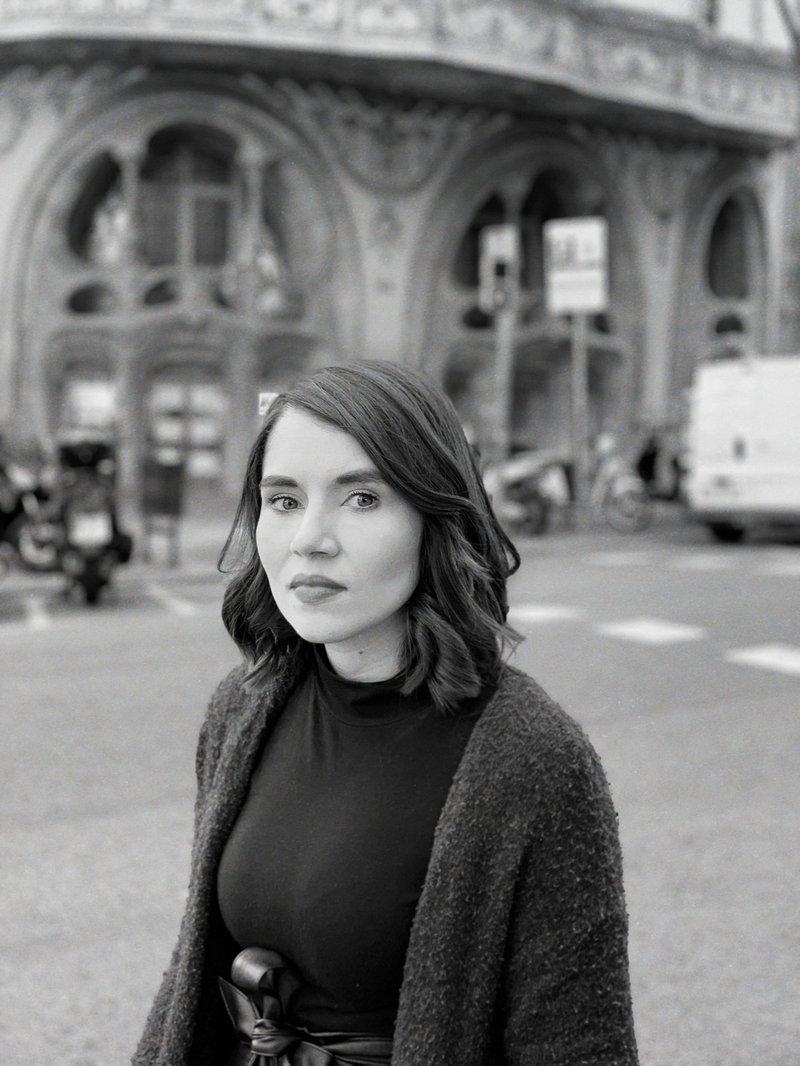
Juliana Mendonça do Vale, Researcher at Pinacoteca de São Paulo, in São Paulo, Brazil, has been awarded by the Getty Foundation.