Julio García Murillo
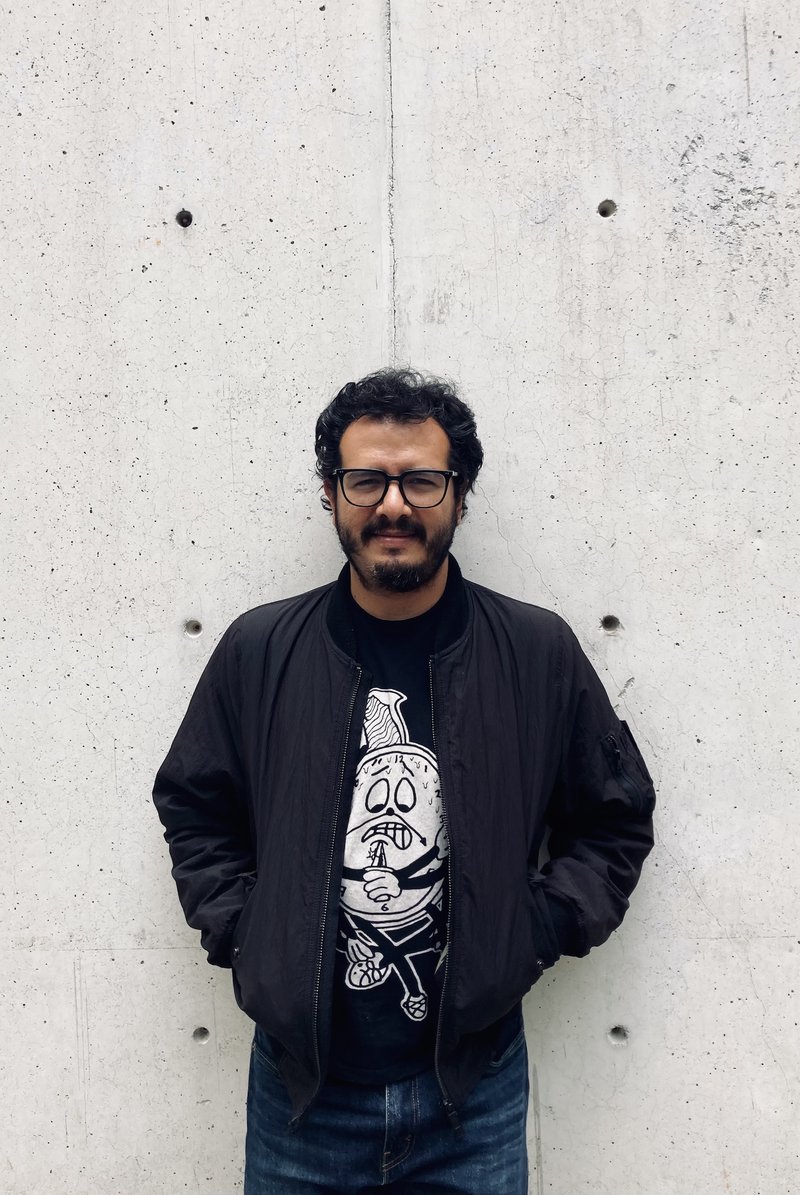
Conference Report. December 2025
I attended the CIMAM 57th Annual Conference Enduring the Game: Expanding New Models of Museum Making held in Turin, Italy, from November 28-30, 2025, thanks to the support of Aimée Labarrère de Servitje.
Beyond the intense program that consumed me for three days, traveling to Turin was a pilgrimage through my own personal mythologies. There were the adolescent remnants of wanting to see the very spot where, legend has it, the stone of madness exploded in the mind of a philosopher who famously defended a horse in the city streets. And then, of course, there were the urban fantasies of arte povera—whose low, almost imperceptible temperature I could finally experience firsthand.
That singular moment when a conference transforms into a full-blown myth-hunting expedition was seamlessly absorbed into the program—almost as if the Content Committee had cast a spell. But, of course, the magic wasn’t just for show: the myths were promptly dismantled by the key questions guiding each day. There was the one that interrogated the positionality of action (“doing less vs. doing differently”), the one that unraveled the intensity of affects assembled by artistic and curatorial practices (“mapping desires”), and the one that pondered the forms of the public and its eloquent figures (all conveniently starting with T: “transactions and transmission. tactics of togetherness”).
The structure was peculiarly fluid and flexible, yet somehow rigorously choreographed: each day’s energies unleashed by a performance, followed by globally resonant keynote lectures, allowing for a playful sequence of variations as the days progressed. Our questions, scattered and simultaneous, found new articulation in the afternoon museum and gallery visits—where the randomness of the bus you boarded opened up fresh networking opportunities and a cascade of experiences.
The opening of the first day, with Alessandro Sciarroni’s performance, was, for me, a moment of both climax and beginning. Suddenly, we were all swept into a kind of ritual: the entire audience fixated on a single point in space, made tangible by Sciarroni’s movements. His careful footwork—accentuated by checkered shorts and, I must admit, some very cozy-looking socks—drew our attention inward, as if we were all orbiting his choreography. Realizing that, for three days, we’d all be striving to see the same thing from our different vantage points was a stroke of genius that kept spinning in my mind.
Assembling synchrony as a starting point allowed for a centrifugal framework of differences. Françoise Vergès’s keynote lecture articulated a kind of checklist of global violence and grievances—a macabre inventory where decolonization processes mean a “removal of,” but also leave behind remnants of terror that, at the slightest provocation, return with the violence and idiocy of common sense. Her approach opened up the possibility of listing divergent temporalities and unresolved tasks. For me, it was singular to hear her cite one of the most relevant Mexican thinkers among her references: Sayak Valencia and her elaboration on “gore capitalism” from the border city of Tijuana. Françoise Vergès’s keynote made me imagine a hypothetical dialogue between Audre Lorde and Andrea Fraser on the critique of tools—or perhaps, the tools of critique themselves.
As a travel grantee, I was swept into a breakout session focused on the ever-elusive question of access and its supposed values. Under the guidance of Justin Randolph Thompson, Co-founder and Director of The Recovery Plan, Florence, we compiled a list of refreshingly simple tactics for reimagining access and choreographing public positionalities: sharing books, translating into plain language or crafting custom translations with help from AI, sharing the process and opening up informal conversations, asking questions, definitively integrating artists, improving services and infrastructure, becoming a meeting point, and counter-pollinating content and practices for divergent audiences –give an A to a B to see if a C emerges.
On the second day, Elizabeth Povinelli’s keynote unfolded as a staging of entangled yeses and nos, good days and bad days, the id and the superego. This pendular logic confronted one of the discursive ailments subtly embedded in curatorial and museum programs: empathy and hope were not presented as desirable attitudes, but rather as extractivist drives –ultimately revealed as forms of porn culture. Preceded by Abdullah Miniawy’s almost hallucinatory and politically engaged apertura and followed by a panel in which Rustom Bharucha’s contribution stood out, highlighting the reworking of relational aesthetics into a form of radical oral history as museological practice at Arna-Jharna: The Desert Museum of Rajasthan. This theme resonated with the award given to Museo Barda del Desierto (Northern Patagonia, Argentina) among the 2025 OMPA Awardees and made me think of the practices at the Museo y Club de Lectura de Sierra Hermosa in Zacatecas, Mexico.
One of the conference’s climactic moments arrived on the third day. After the announcement of the new direction and board of CIMAM — which now includes colleagues, I admire and who are truly top-tier professionals — the keynote by Mariana Mazzucato blew our minds and left us speechless. The audience was so enthralled that marriage proposals were even shouted at her. Her talk produced a nearly Brechtian sense of estrangement as she pointed directly to the conditions of the art sector and its so-called ecosystemic nature—predatory or symbiotic? —as a residue of feudal philanthropy and a stubborn absence from the significant percentages of global nations’ GDPs.
On the other hand, although she touched on countless fascinating topics, one simple phrase echoed for me—resonating with the industrial archaeology of Turin: stating that the cultural sector is not the same as the automotive sector, and that the contemporary austerity mindset—so often used in Mexico as a mask for progressive political stances, with armies lurking behind—will only further impoverish culture by treating it as something accessory, not nearly as important as buying weapons.
These reflections resonate with the work of the Mixe linguist Yásnaya Elena A. Gil, who—within the sectorization of life in modern nation-states—identifies the absurdity of integrating language into the sector of culture.
In a recent interview, the author says:
I try to uphold the idea that language isn’t culture, and everyone has a heart attack, because there are many things that are done with languages from the department or ministry of culture. A non-governmental organization (ngo) surely has a department of language and culture. I’m against that because, for example, language isn’t the same as dance. We’re not dancing all the time; dance has its space, its moment, and its syntax, but you can’t live without language. You need some language system, oral or otherwise, from the moment you wake up in the morning. Whether you’re scolding your dog, sending an email, or participating in a ritual, everything is steeped in language. All your internal or external reasoning happens in a language, even involuntarily when you’re asleep, dreaming.
Language shapes us in a way I compare to territory, which is why I call it a cognitive territory. Defending a language is defending a territory, not folklore. When a language is lost, what disappears is a collective way of existing and thinking, because it’s profoundly personal, individual, but at the same time it can’t exist without the collective, without a community of speakers.”1
The tension opened by Mariana Mazzucato and echoed for me in Yásnaya Elena A. Gil’s words tries to address a concern that this annual conference managed to keep alive in me: the need to reterritorialize languages, practices, and desires beyond imposed divisions, toward a constant contestation of the public as the working material for museums of modern and contemporary art.
Here I’m merely sketching a few points that kept spinning in my mind, but those spins were summoned from the very beginning and accompanied by a magnificent choreography of movements through the city, historic and contemporary venues, and delicious food. And in addition to the above and the city’s constant truffle scent, it was fascinating to witness Norma Nardi’s notes, diagrams, and drawings — a vivid record of the event.
Thank you, CIMAM and Aimée.
Biography
Julio García Murillo is an art historian and curator based in Mexico City. His work explores the intersections of curatorial research, critical and art writing, and public programming, with a particular focus on recent historiography and radical contemporary practices.
He is currently Deputy Director of Public Programs at the Museo Universitario Arte Contemporáneo (MUAC), where he oversees academic, pedagogical, and sound-based initiatives. His projects include co-organizing the conferences Stories of the Blue Night: Sámi, P’urhépecha, and Ayuujk Art and Culture Forum (OCA Norway/MUAC, 2024); Digital Museum: Intelligences and Artifices (Fundación Telefónica/MUAC, 2024); and Unlearning the Modern (Tate/MUAC, 2022). He also coordinated the children’s book Tomar el museo y otros espacios (UNICEF/MUAC, 2023), and was writer and narrator of Gran Hotel Abismo, a podcast on critical theory and contemporary art (MUAC, 2020–2021). He is currently co-curating an exhibition at MUAC focused on the experimental and politically engaged collectives that emerged in Mexico during the 1970s.
As an independent curator, he is currently collaborating with Tijuana-born visual and sound artist Miguel Buenrostro—based in Berlin—on a project exploring sonic diasporas between ethnographic archives and contemporary sound practices. In 2023, the first public iteration of this project was presented under the title Saber a qué suena. Documentales de escucha y excesos sónicos (Casa del Lago, UNAM).
His writing has been published in books, academic journals, exhibition catalogues, and critical magazines.
Julio García Murillo, Deputy Director for Public Programs at Museo Universitario Arte Contemporáneo in Mexico City, Mexico, has been awarded by Aimée Labarrere de Servitje.