Catalina Bergues
Conference Report. December 2025
Relations as Infrastructure: Reflections after CIMAM 2025
Imagining the future of museums is a topic that has gained prominence worldwide and within any cultural institution that is minimally reflective and attuned to its time. Even so, for various reasons, envisioning what lies on the other side still seems to be very difficult. This is a curious fact, considering that we work in the arts and, most of the time, demand creativity and a capacity for innovation from artists — sometimes even unreasonably so. How can we demand this from them if the very institutions that host their work are often rigid and inflexible?
Posing these questions seriously, especially from the so-called Global South, has been a recurring exercise for me, since rethinking museums means acknowledging their colonial pasts and their role in reproducing countless inequalities. Even in Brazil, the vast majority of cultural institutions with historical collections follow formats inherited from Europe, while modern and contemporary art museums tend to adopt models shaped in the United States under liberalism. Thus, rethinking the format of the museum institution, its function and its role seems to be the first step.
Turning to local thinkers such as Abdias Nascimento and Nego Bispo as points of reference may open new possibilities. Approaching the museum from the perspective of the quilombo foregrounds counter-narratives and alternative structural models that fundamentally challenge institutions built on spoliation, domination, and erasure. In a related way, Édouard Glissant’s work helps us shift from the idea of a museum of heritage toward that of a museum of errantry, where identities are not fixed or endlessly reiterated.
The foundations of these ways of thinking are, by nature, incompatible with neoliberalism and capitalism. Yet, through their infiltrations and other means, different models of cultural institutions and ways of making culture have existed and continue to exist in Brazil, such as the Teatro Experimental do Negro in Rio de Janeiro, the Museu dos Quilombos e Favelas Urbanos in Minas Gerais, the Acervo da Laje in Salvador, the Network of Indigenous Museums of Ceará, Quilombaque and Casa do Povo in São Paulo, among many others.
What these initiatives seem to share is the process of dismantling the inherited museum structure. By imagining relations as infrastructure, other institutional forms become possible. Cultural institutions that reproduce rigid hierarchies, shaped by class, gender, racial, and other inequalities, often rely on private capital and operate within competitive logics, blurring the distinction between themselves and corporate models. When this distinction rests primarily on the nature of their product, art risks being reduced to a commodity. If we are still unable to transform the structures we have inherited, how might we begin by transforming relationships?
Arriving at the CIMAM Annual Conference in November of this year reminded me that collaboration and networks of exchange are still possible. Although the majority of participating museums and institutions follow traditional formats, initiatives such as Rustom Bharucha’s museum in India, which questions what is understood as cultural heritage and what should be preserved, or the Bergen Kjott Foundation, led by Eva Rowson and awarded the OMPA 2025, offer compelling reconfigurations of institutional practice, particularly through their rethinking of labor relations and the refusal of hierarchical distinctions between forms of work.
Beyond the initiatives themselves, there was a palpable sense of openness, availability, and exchange. As this was my first time attending an Annual Conference, I was struck by an atmosphere very different from what I had imagined, far from being serious or closed off. I returned nourished by this shared sensibility and by exchanges with people and practitioners from a wide range of countries and institutional contexts. Perhaps the very format of the conference, and of CIMAM itself, fosters relational models that move away from competition.
This was particularly evident in my experience as a Travel Grantee. Rather than an expectation of gratitude, which would only reinforce a paternalistic and self-referential logic, I felt consistently cared for and genuinely listened to. The opportunity to be present was not framed as a concession, but as something actively desired, accompanied by a sincere interest in our perspectives. The grant program thus operates not merely as an outward-facing initiative, but as one of the pillars that constitute the association itself, ensuring a broader representation of voices and lived realities. Perhaps the beginning of an answer lies here: in considering the structure of CIMAM, and by extension its Annual Conference, as a practice that already offers concrete clues toward what museums of the future might become.
Biography
Catalina Bergues is an Argentinian curator raised in Brazil, with a background that bridges Psychology, Visual Arts, and Integrative and Complementary Health Practices. Her work is shaped by an interdisciplinary approach that centers care, collectivity, and cultural practice as tools for well-being and critical reflection. She began her academic path in Psychology at the University of São Paulo, where she was awarded a research grant and presented her research at the University of Münster, Germany. She later pursued a degree in Visual Arts, with research focused on gender and writing in contemporary artistic practices.
After alternating between projects in psychology and art-related fields, she joined Instituto Tomie Ohtake as a curatorial assistant and became curator at the end of 2023. Since then, she has curated both solo and group exhibitions across a variety of formats and institutional contexts.
The year 2025 marks a significant moment in her career, with multiple projects unfolding in different locations. She opened the year with Em Cada Canto, an exhibition built from a private collection that aims to rethink art categories. Due to its strong reception, the show is traveling to Casa Fiat de Cultura in Belo Horizonte. Soon after, she opened Eaux Souterraines, a transnational exhibition developed in collaboration with FRAC Poitou-Charentes in France, addressing ecological, political, and symbolic dimensions of water. The exhibition will open its second chapter at Instituto Tomie Ohtake in November. She has also participated in independent and gallery-based projects and contributed to publications.
In September, she is collaborating on an exhibition at Instituto Tomie Ohtake grounded in the concepts of Édouard Glissant, presenting his private collection in dialogue with contemporary artists from Guadeloupe, Martinique, France, Senegal, India, Argentina, Brazil, and beyond.
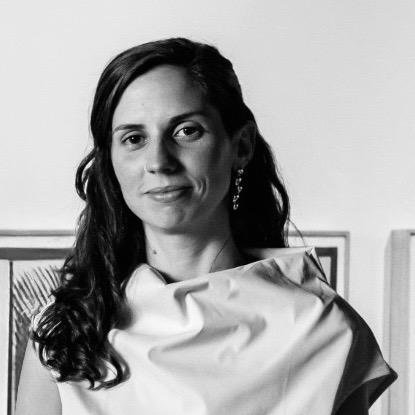
Catalina Bergues, Curator at Instituto Tomie Ohtake in São Paulo, Brazil, has been awarded by the Getty Foundation.