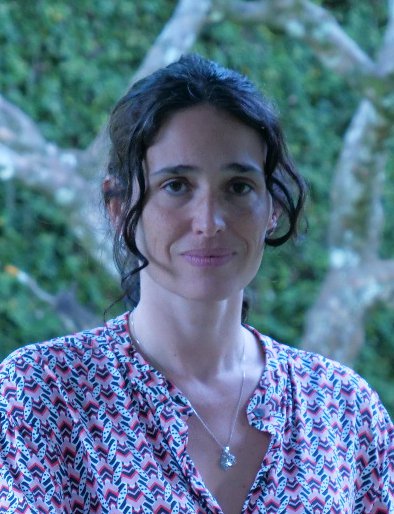
Ana Paula Cohen
Conference Report. December 2025
Opening by Chus Martinez
What is the role of conferences today?
Holding the possibility of collective intelligence
The introduction was an invitation to activate the conference collectively, so that it could happen with relevance in the present time.
Keynote speakers:
Regarding the conceptual organization of the conference, I believe it was extremely important to invite keynote speakers who were not museum directors or curators representing specific institutions. The three scholars were thus able to articulate critical perspectives that were not directly constrained by the agendas and politics of art institutions, which significantly deepened the level of discussion throughout the conference. The fact that they came from different disciplinary backgrounds further enriched the collective process of thinking and exchange.
Françoise Vergès’s keynote was both precise and urgent and, among the three speakers, the one most closely aligned with my own critical framework. Her forceful articulation of the present global situation —understanding the museum as embedded within the same social and political structures— was at once powerful and poetic. (I will quote a few excerpts from her speech, in italics, considering the impact and importance of her voice at the conference)
Global South – dystopia
“The house has been on fire for long time” (for some of us)
Capitalism/ imperialism
No peace since II World War.
Global counter-revolution:
How does a museum resist?
Doing less x doing differently
Looking at fire
Abolishing patriarchy
Fire of environmental disaster
How to breathe? Grada Kilomba – Plantation Memories
Violence as system of late capitalism
Rape – as a colonial wash – domination
Transforms body into flesh
There is no humanism yet
(In relation to the notion of humanism, I was reminded of Paul Preciado’s: “Feminism beyond humanism, ecology beyond the environment”:
“The first machines of the industrial revolution were not the steam engine, the printing press or the guillotine … but the slave laborer of the plantation, the sexual and reproductive worker, and the animal. The first machines of the industrial revolution were living machines. Humanism then invented another body that it would call human: a sovereign, white, heterosexual, healthy, seminal body.
(...) The Renaissance, the Enlightenment, the miracle of the industrial revolution therefore rests on the reduction of slaves and women to the status of animals and on the reduction of the three (slaves, women and animals) to that of (re)productive machines.”)
What is peace?
A vision of peace of capitalism
Lack of recognition must end (Palestina)
Water/land
Slow violence
Food used as political weapon
Palestinians
No water, no food
Lost past and lost future – living in a present that does not belong to them
Global counter revolution and environmental disaster are closely related
Big buildings of museums – we don’t need them
We need practice of love and resistance
------
The second-day keynote, with all due respect for the significant work of Elizabeth Povinelli— her writings, anthropological thinking, and her filmmaking practice as part of the Karrabing Film Collective—struck me as subtly North America–centered. This orientation was not explicit in the content of the lecture itself, but rather embedded in its structural framing, and is likely more perceptible to those speaking from the so-called Global South. Nevertheless, it left me less convinced by the arguments presented.
Several subtle details contributed to this impression. One was the reference to “white people” in general terms, as if whiteness were devoid of any specific ethnic, historical, or geographical grounding, while so-called non-white groups were specified, for instance, as Aboriginal. This asymmetry reflects a structural notion of whiteness as neutral and unmarked which I find problematic.
Another example emerged during the discussion of the notion of “hope,” when the speaker emphasized its urgency “especially now,” referring to the present political situation in the United States, under the presidency of Donald Trump. While I recognize the gravity of this moment, the recent emphasis on the immediacy of the present by U.S.-based intellectuals can give the impression that the violence enacted by the U.S. state—at least since 1945—can only be fully felt or rendered “real” once it is directed toward its own citizens. In this regard, Françoise Vergès’s formulation is particularly resonant: for some of us, “the house has been on fire for a long time.”
Regarding Povinelli’s discussion of “mapping desires,” my own background in working with and thinking alongside the Brazilian psychoanalyst Suely Rolnik—who developed her conceptual framework in dialogue with Deleuze and Guattari—led me to feel that the notion of micropolitics was absent from her approach to desire. According to Rolnik, micropolitics refers to the invisible and unspeakable forces that traverse us, forming a paradigm in constant friction with macropolitics, which operates within the visible and already articulated realm of reality, structured by linear and causal logics. Subjectivity itself can only be understood through the complexity of forces that have not yet been materialized or named—the real—always in tension with macropolitics–reality.
From this perspective, such forces have profoundly shaped the historical colonization of subjectivities since the sixteenth century, imposing a Eurocentric cosmovision upon multiple existing worlds across the planet. This process has entailed the violent repression of peoples’ languages, bodies, ways of living, and relations to the land, as well as of what Rolnik refers to as the “body that knows”—a form of embodied knowledge that remains repressed within the western and westernized colonial unconscious. As Rolnik, following Guattari, argues, micropolitics designates “the strategies of the economy of desire in the social field.”
----------
The third-day keynote, by Mariana Mazzucato was remarkable considering her articulate delivery of ideas, and ability to approach complex subject matter with humor.
Introducing the perspective of an economist into our field was particularly valuable, especially in relation to how public and private funding for art and culture could—and should—be allocated. It is reassuring to see scholars such as Mariana Mazzucato actively engaging with these issues and advocating for more considered investment strategies, both in arts and culture and in environmental issues.
For those of us who have long reflected on and written about the importance of artistic production in contexts such as Brazil—where artworks are often treated primarily as investment assets aimed at immediate profit, while little infrastructure exists to support long-term artistic research, sustained practice, and the production of critical thought—it is troubling to learn, through concrete figures and percentages, that ongoing support for artistic research is no longer a prevailing reality, even in Europe.
One potentially concerning aspect of Mazzucato’s approach— though one that would require a more in-depth engagement with her work to assess fully— is the framing of artistic production as an investment, as it may risk instrumentalizing artistic practice. This concern is particularly familiar in the Brazilian context, where, for at least the past three decades, cultural policy has been shaped by tax-deduction laws that draw little distinction between contemporary art practices and more popular or commercially visible forms of cultural production, which operates according to logics of profit and mass visibility.
“We thus must move away from viewing arts and culture as a cost and toward recognizing them as an investment. They are both a means and an end: a goal of economic policy and a precondition for transformation” (Mazzucato).
While I agree that artistic and cultural practices can function as a precondition for social and political transformation, I would argue for greater caution in specifying what is meant by investment. Art can indeed be understood as an investment when conceived within medium- to long-term horizons; however, it becomes problematic when treated as an immediate investment expected to generate measurable financial returns.
-----
Concerning the talks of guests on the second day
Rustom Bharucha, Azu Nwagbogu, Karen Archey, Francesco Manacorda, Alessandra Ferrini and Onome Ekeh
I would like to highlight:
Rustom Bharucha
I felt that Bharucha presented a compelling example pointing toward alternative ways of “decolonizing” the museum, in which both the land and the symbolic dimensions of everyday objects—such as the broom—are brought to the foreground of the discourse. In this approach, the museum unfolds in close connection with its local context, functioning as a platform for the activation of conversations, oral histories, and exchanges that actively produce knowledge.
His example of an ecological dimension of the museum—one that generated water for an entire year in an extremely arid context, transforming the surrounding landscape through small-scale processes of self-regeneration—was, in my view, a brighten part of our conference.
Alessandra Ferrini
I find it extremely important to claim museums as catalysts of practice-based research, and her academic and artistic approach was essential to bring this point to our discussion.
-----
Performances:
It was inspiring to begin the day with artistic practices that could be fully experienced within the time-based context in which the conference unfolded. Among them, the first performance, by Alessandro Sciarroni, resonated most deeply with my own experience. Its structure, based on circular and repetitive movements and drawing on references to Sufi meditation, brought the audience into the present moment and into a heightened bodily awareness. In doing so, it helped to clear the mind and opened pathways toward forms of knowledge that exceed purely verbal or rational modes of thought. Such a beautiful way of starting the conference!
-------
Regarding the breakout groups, they provided a valuable opportunity for more direct and focused exchanges. However, I found that the first session, which included a mediator, functioned more effectively than the second.
------
Exhibitions (highlights):
At Galleria d'Arte Moderna Torino – GAM:
The room of the collection where Carol Rama (1918–2015), Guglielmo Castelli (1987) and Felice Casorati (1883–1963) were displayed in relation to each other, second floor. This room was an amazing experience of artists from Turin from different generations.
At Castello di Rivoli:
Commissioned work by Oscar Murillo (Colombia, 1986)
“A see of history”, 2025
I'll Be Back Tomorrow, retrospective of Enrico David (Ancona, 1966), curated by Marianna Vecellio
Highlights of works from the collection on display:
Zhanna Kadyrova, Mona Hatoum, Maria Thereza Alves
At Fondazione Sandretto Re Rebaudengo:
Philippe Parreno installation “Fade to black”
At Fondazione Merz:
Push the limits 2 – culture strips to reveal war
A group exhibition featuring several powerful and well-established artists whose work are highly relevant to the present, including Rossella Biscotti, Latifa Echakhch, Dominique Gonzalez-Foerster, Mona Hatoum, and Teresa Margolles.
As I spent longer time in Turin, I went to do further research and visit:
– Archivio Gribaudo – former studio of the artist Gribaudo, designed in 1974, by architecth Andrea Bruno, in collaboration with Gribaudo himself. The house functions as a living archive run by his daughter Paola Gribaudo and the director Lilou Vidal, with a program of intervention from invited contemporary artists.
– Former home and studio of Carol Rama
– studio visit to artist Guglielmo Castelli
– Exhibition: Some stories are made from fragments of other stories (Gribaudo and Mario Garcia Torres), Galleria Franco Noero, curated by Lilou Vidal.
Biography
Ana Paula Cohen is an independent curator, editor, and writer. She completed her PhD, Reconstitution of a Body of Work: Art, Life, Museums and the Different Modes of Inhabiting Them (2020), at the Nucleus of Subjectivity Studies – PUC, São Paulo. From 2017 to 2023, she founded and chaired the postgraduate Program in Curatorial Studies and Practice at FAAP. She was curator-in-residence at the Center for Curatorial Studies – Bard College, New York (2009–2010), co-curator of the 28th Bienal de São Paulo (2008), and co-curator of the Encuentro Internacional de Medellín 07.
She has served as a visiting professor at the California College of the Arts, co-director of PIESP – Independent Program for Artists in São Paulo, and director of the Programa Bolsa Pampulha at Museu da Pampulha.
Cohen has curated several exhibitions, including: Texto by Thiago Honório (Capela do Morumbi, São Paulo); On Cohabitation: Films by Yael Bartana (The Banff Centre for the Arts, Canada); Embodied Archeology of Architecture and Landscape (Tel Aviv Museum); Living Under the Same Roof (Hessel Museum of Art, Bard College, New York); Cildo Meireles (Museu de Antioquia, Colombia); and Telling Histories – An Archive and Three Case Studies (Kunstverein München, Germany).
She has written on the work of numerous artists, including Mabe Bethônico, Yael Bartana, Renata Lucas, Lygia Clark, Goldin & Senneby, Erick Beltrán, and Cildo Meireles. Since 2016, she has been the director of GOA – Independent Program for Artists, together with artist Thiago Honório. Since 2019, she has also led the Artistic Clinic – weekly individual sessions with artists focused on extra-personal and psychoanalytic listening.
Ana Paula Cohen, Independent Curator in São Paulo, Brazil, has been awarded by Terersa Bulgheroni.