From Local Initiatives to Structural Transformation
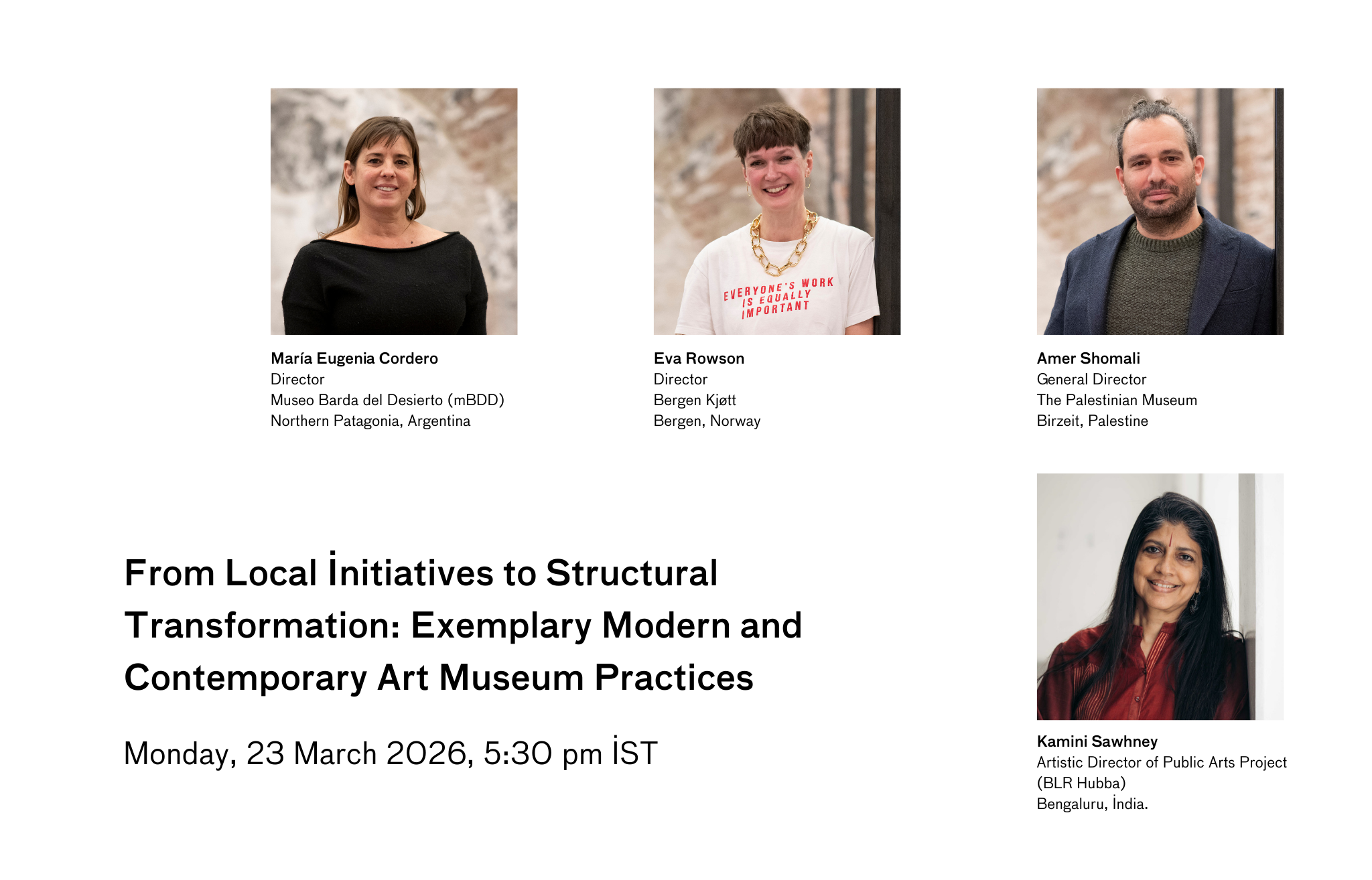
Join the first webinar of 2026 on Monday, 23 March at 5:30 pm IST, and take part in a conversation with the 2025 OMPA-awarded museum practices to explore three museum practices distinguished for their exemplary vision and their capacity to catalyse structural transformation within modern and contemporary art museums worldwide.
From Local Initiatives to Structural Transformation: Exemplary Modern and Contemporary Art Museum Practices
🗓️ Monday, 23 March 2026
- 09:00 am Río Negro, Argentina
- 01:00 pm Bergen, Norway
- 02:00 pm Birzeit, Palestine
- 05:30 pm Bengaluru, India
Register HERE to join the conversation.
How do public institutions ensure that they return value to the societies that sustain them? For museums of modern and contemporary art, that responsibility is not abstract. It lives in education, in genuine engagement, and in the possibility of joy through encounters with contemporary artistic practice.
At their best, museums are not just places where objects are displayed. They are places where people can come together to think about the present and use art as a way to reflect, to question, and to imagine different futures. Art becomes more of a medium through which communities can have conversations that might not otherwise happen.
In that sense, a museum can function as a civic space — a platform for connection and co-creation. And there is no single model. Institutional histories, political contexts, funding structures, and social realities shape how each museum interprets this role. But what matters is whether this commitment is truly embedded within the core of the institution - in its programming, its governance, its relationships with artists and communities, the way it treats its staff, and how it communicates with audiences.
Real innovation happens when an institution rethinks its purpose and mission to respond to the needs and aspirations of the communities it serves. When this alignment occurs, museum practices can resonate beyond their local contexts and inspire others working toward a more socially engaged and responsive museum.
During the conversation, we will review the outstanding practices recognized in 2025 and explore questions such as: how can museums move beyond participation towards genuine processes of co-creation with communities? What criteria should define exemplary museum practices today? And what processes and challenges lie behind the ideas that ultimately become models for others?? And in what ways can practices developed within a specific local context resonate with or inspire institutions operating in different cultural or political environments?
Join the conversation with our invited speakers:
- María Eugenia Cordero, Director, Museo Barda del Desierto (mBDD), Northern Patagonia, Argentina
- Eva Rowson, Director, Bergen Kjøtt, Bergen, Norway
- Amer Shomali, General Director, The Palestinian Museum, Birzeit, Palestine
The webinar will be moderated by CIMAM Board Member and Chair of the Outstanding Museum Practice Award Program, Kamini Sawhney, Artistic Director of Public Arts Project (BLR Hubba), museum management expert, and independent curator based in Bengaluru, India.
This webinar is free of charge and open to the public, and CIMAM membership is not required to attend.
Meet the speakers of this webinar through these interviews conducted during the CIMAM Annual Conference in Turin.
Explore the selected museum practices:
Museo Barda del Desierto (mBDD), Northern Patagonia, Argentina
Name of the practice nominated: mBDD Architectural Project
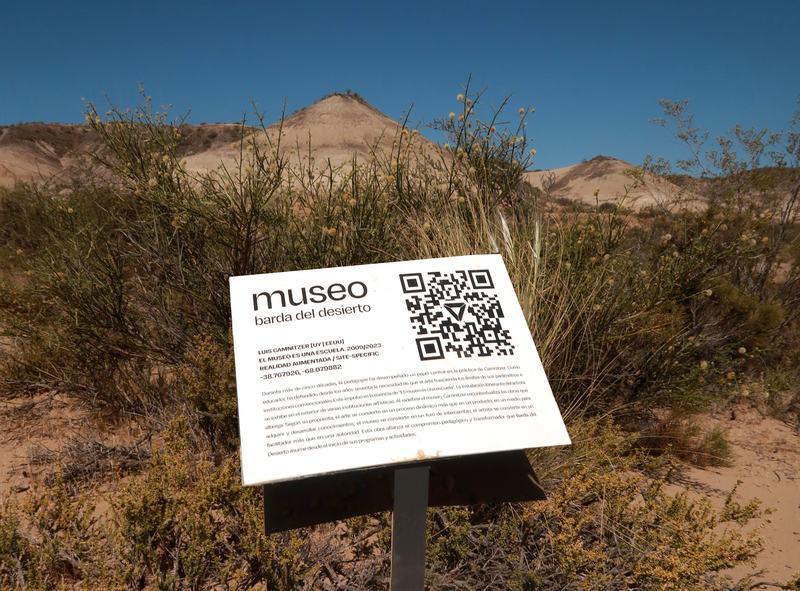
Located in Patagonia, the Museo Barda del Desierto was recognised for its innovative, context-responsive, and ecologically driven vision of what a museum can be. Conceived as a “museum without boundaries,” it explores architecture of diffuse limits and conceives the territory itself as a museum.
The OMPA Committee praised its integration of technology and ecology, its grounding in ecological justice and collective care, and its ambition to minimise environmental impact. Participation lies at the heart of this project. Equally fascinating is the way it brings together technology and ecology, while remaining a dynamic, evolving model rather than a closed system. This quality makes it especially compelling. The notion of a living architecture and a museological vision grounded in ecological justice, collective care, and social sensitivity is central to its practice.
Another remarkable aspect is the inclusion of the artistic and philosophical contribution of Luis Camnitzer, whose post-anthropocenic, forward-looking ideas enrich the museum’s approach, particularly through his work The museum is a school.
Read the nomination submitted by the Museo Barda del Desierto
Bergen Kjøtt Foundation, Bergen, Norway
Name of the practice nominated: GRIP
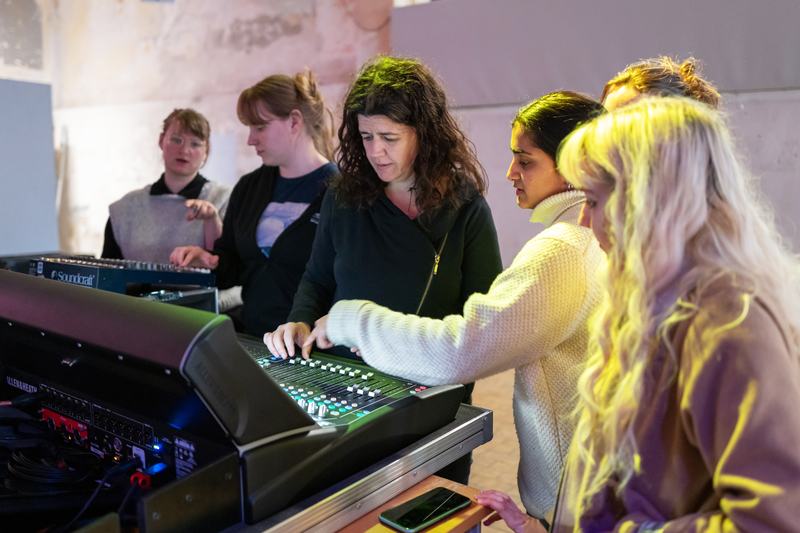
The Bergen Kjøtt project was recognized for its focus on gender equality and inclusiveness for non-binary and transgender people in museum technical work and addressing gender bias in technology to effect structural change within the museum. Bergen Kjøtt, AKKS Bergen, Carte Blanche - The Norwegian national company of contemporary dance, Bergen International Theater, sound technician Irene Bjørke and light technician Maja Bergebakken Sundt.
The Committee emphasised its replicability and practical impact, with potential to influence not only local communities but also broader museum infrastructures. By expanding the scope of best practices in museum to encompass technical roles, Bergen Kjøtt is reshaping institutional culture, ensuring that knowledge transfer and skill development are integral to museum work.
This initiative exemplifies how museums can drive social transformation by creating new spaces of inclusion and equity in the professional field. Such significant structural gestures can streamline and improve institutional dynamics, while also creating new spaces within administration and professional museum teams.
Read the nomination submitted by the Bergen Kjøtt Foundation
The Palestinian Museum, Birzeit, Palestine
Name of the Practice Nominated: Gaza Remains the Story
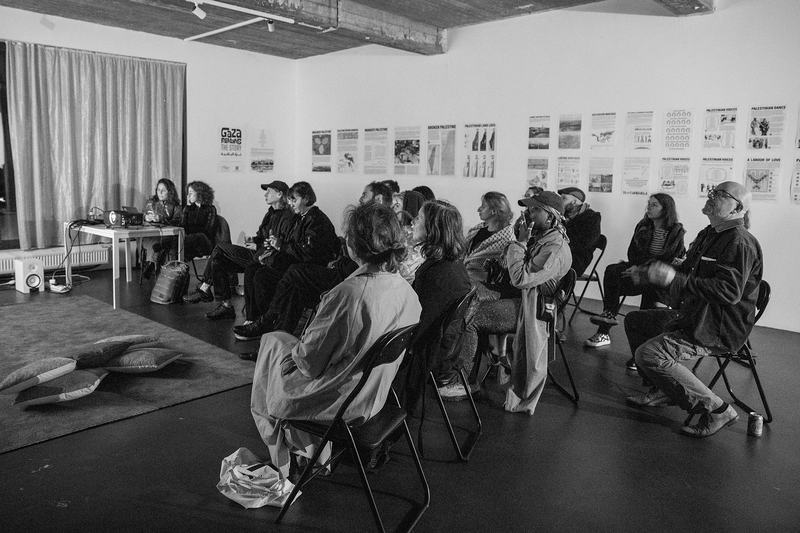
The Committee praised The Palestinian Museum’s ability to redefine the role of museums as spaces of both survival and resistance, playing a vital role in affirming cultural heritage and collective memory. Operating under extreme circumstances, the museum has succeeded in caring for and mobilizing local communities, while also raising visibility for its mission. In many ways, its work reflects the reality of our times: a world in which more and more institutions are compelled to safeguard their heritage, art, and cultural narratives in the face of adversity. The Palestinian Museum embodies the essential foundations of the museum project across civilizations: to preserve a legacy that can speak to future generations. Against all odds, this project transcends the political circumstances that shaped it and redefines how exhibitions can be conceived, creatively adapting to the situation at hand.
By choosing a digital format over a physical one, the museum was able to communicate its vision more effectively and broadly, offering an innovative model as a way to continue fulfilling its mission.
Its adaptive strategies demonstrate how museums can remain vital even under extreme circumstances, offering a model of resilience and empowerment that speaks to the challenges of our times.
Read the nomination submitted by The Palestinian Museum

CIMAM 2026 Rapid Response Webinars are made possible with the support of the Getty Foundation through its Connecting Professionals/Sharing Expertise initiative.