Shabbir Hussain Mustafa
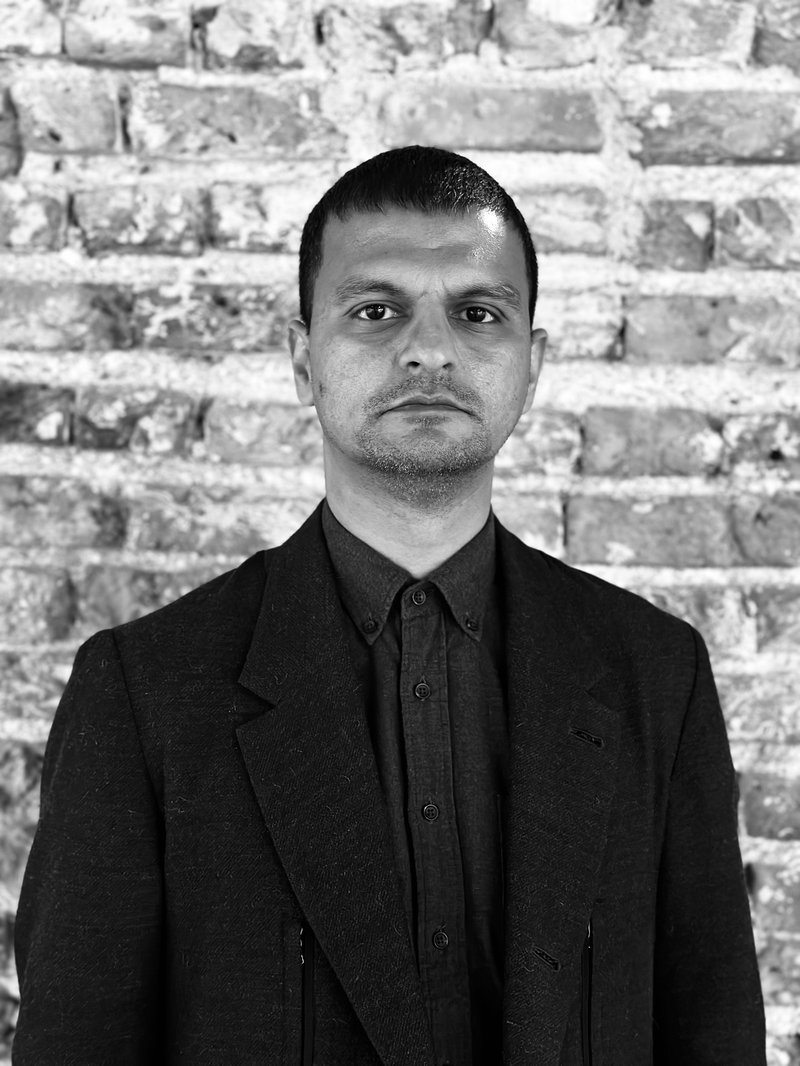
Academic and Professional Background
I was trained as a political scientist with a focus on the history of philosophy and its intersections with contemporary practice. My career has been defined by leadership at the nexus of curatorial strategy, institutional development, and cultural policy.
Over two decades, I have worked to defend and enlarge the space in which museums, artists, and communities can act. That space is never secure: shaped by political agendas, funding structures, institutional hierarchies, and technological systems that reshape knowledge and authorship. My work is to ensure museums retain civic capacity to host difficult conversations, support experimentation, and create frameworks for meaningful public engagement.
I currently serve as Chief Curator of the Singapore Art Museum, directing curatorial research, exhibitions, acquisitions, public programming, and leading the Singapore Biennale Office and the Singapore Pavilion at the Venice Biennale.
From 2023 to 2025, I was Senior Curator and Head of Exhibitions at Guggenheim Abu Dhabi, leading content for a museum in formation in dialogue with international colleagues and government partners. Earlier, I served as Senior Curator and Deputy Director at the National Gallery Singapore.
From 2017-2022, I was a Board Member of Haus der Kulturen der Welt (HKW). That experience affirmed that institutions must insist on their civic role amid authoritarian currents and contested politics.
I am a Sri Lankan with permanent residency in Singapore. This identity has strengthened my practice, shaped as much by culture as by the lived constraints of mobility, and sharpened my commitment to access, equity, solidarity, and public trust.
Motivation statement explaining what encourages you to join the Board of CIMAM
I stand for election to the CIMAM Board at a time when contemporary art museums must defend space for artists and publics to act with freedom, responsibility, and imagination. CIMAM is strongest when it safeguards these conditions globally: resisting censorship, advocating sustainable funding, and addressing the ethical demands of technology. In doing so, it ensures that museums remain not only custodians but civic institutions capable of shaping futures.
My work in Singapore and more recently in Abu Dhabi has centered on navigating shifting political, ecological, and technological realities. These experiences taught me that museums thrive when they act with conviction about their civic role, even under pressure. I see CIMAM as the platform where the field can speak collectively and credibly on these responsibilities.
If elected, I would advance sharper engagement with Asia, Southeast Asia, and West Asia. Rather than treating these regions as peripheral, I want CIMAM to learn from their institutional experiments: governance, funding, and public practice, so that Asia’s insights become generative for the field. I view decolonial thinking as a structural principle, not a theme, and believe CIMAM must learn actively from new and emerging nodes of art outside the territorial West.
I am particularly motivated to rethink forms of institutional knowledge and to contribute to CIMAM’s role as a site of rehearsal, where new civic possibilities are tested. My aim is to serve as a generative partner, listening, learning, and ensuring that CIMAM remains politically alert, and structurally relevant to the challenges museums face today.
Explain how you see the role of CIMAM in advancing contemporary art museums globally
CIMAM’s role in advancing contemporary art museums is not only to convene but to safeguard. As cultural policy is increasingly shaped by political pressure, CIMAM must remain a forum where the field can speak out against violence directed at museum workers, whether through censorship, funding withdrawals, or attacks on intellectual autonomy. These pressures reverberate globally, affecting under-resourced institutions and major museums alike. CIMAM should provide members with collective voice and moral authority, defending the principle that museums are civic spaces of inquiry rather than instruments of ideology.
At the same time, CIMAM must anticipate structural shifts that are reshaping culture. Artificial intelligence and other computational systems bring opportunity but also profound ethical challenges for institutions and contemporary practice: authorship, data, labor, provenance, and environmental cost. CIMAM can host rigorous, plural debates and translate them into guidance standards, ethics charters, and model policies, ensuring adoption is steered by civic, artistic, and public values rather than commercial imperatives.
Equally, CIMAM should strengthen professional capacity and solidarity across contexts, learning actively from practices outside the territorial West. This means amplifying diverse governance models, mobility realities, and funding approaches, and treating them as generative for the field as a whole.
By connecting advocacy to foresight, and standards to solidarity, CIMAM helps museums remain resilient and relevant. Its role is to defend colleagues under immediate pressure while equipping the sector to navigate long-term transformation, so that contemporary art museums continue to operate as spaces of freedom, experimentation, and civic imagination.
How would you help CIMAM advocate for museums in areas such as funding, membership engagement, and strategic initiatives to achieve its mission?
I would bring to CIMAM’s advocacy a perspective shaped by institutional work across Southeast Asia and West Asia, where museums often operate within complex political and cultural frameworks. In such contexts, the challenge is not simply scarcity of resources but how autonomy, sustainability and relevance are negotiated.
My first priority would be to strengthen CIMAM’s voice on structural pressures: censorship, politicization of funding, and threats to professional independence. These are not abstract risks but daily realities for many colleagues. CIMAM must continue to articulate forcefully that museums are civic spaces of inquiry and public trust, and I would support the Board in developing clear positions and amplifying them to policymakers, funders, and the wider cultural sector.
Second, I would encourage CIMAM to deepen membership engagement by thinking from the Global South as a perspective, not simply a geography. There are already many colleagues from these regions within CIMAM, and the next step is to learn structurally from their practices of governance, funding, and public engagement, treating them as generative models for the field as a whole.
Finally, I would support CIMAM in anticipating long-term change. Artificial intelligence and technological systems are reshaping cultural practice and institutional life. CIMAM can be the forum where museums respond collectively to these shifts, ensuring that adoption aligns with civic and ethical values rather than commercial imperatives.
I see my role as helping CIMAM connect advocacy with foresight: amplifying solidarity across the field while equipping museums to navigate the future with conviction.
If elected as a Board Member, what would be your main objectives or areas of action for the next three years for CIMAM to contribute to the sustainable development of the modern and contemporary art museum sector?
If elected, I would propose three key areas of action for CIMAM between 2026 and 2028:
- Defending autonomy and safety. CIMAM should strengthen its capacity to respond to structural pressures: censorship, funding withdrawals, political interference that threaten independence. Beyond statements, this means a rapid-response protocol, a peer/legal support roster, and practical toolkits that help members mitigate risk while upholding civic purpose.
- Rethinking institutional knowledge. CIMAM should move from representation to method, thinking from the Global South as a way of working. I would champion pairing museums across regions to test acquisition policies, commissioning models, and audience strategies under real constraints: political, financial, and infrastructural. Outputs would be shared as open, multilingual guidance on authorship, mobility, and governance that protects autonomy. The aim is structural learning, not case-by-case anecdotes; shared practices that endure. This is work I have advanced in Singapore and Abu Dhabi; I would bring that method to CIMAM.
- Shaping the museum’s response to technological change. Artificial intelligence and other systems are transforming collections, interpretation, and labor. CIMAM should lead with an ethics-first charter, case-based clinics, and a public registry of responsible use: centering transparency, data provenance, artists’ rights, and environmental cost. Adoption must serve civic and artistic values, not commercial imperatives.
Together, these objectives connect advocacy with foresight; building solidarity against immediate threats, embedding structural knowledge across contexts, and equipping museums to remain relevant, intellectually alive, and publicly trusted in the years ahead.