Kamini Sawhney
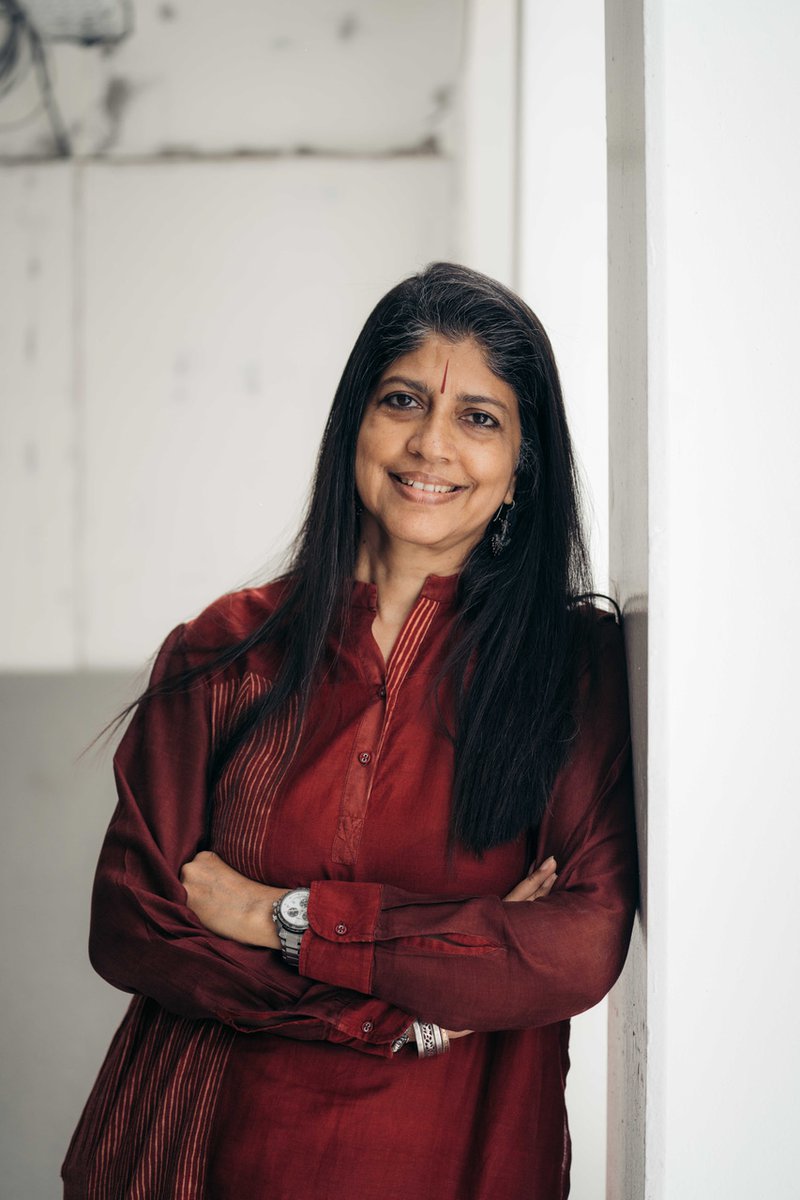
Academic and Professional Background
Artistic Director of the Public Arts Project, Bengaluru Hubba(BLRHubba) - an annual multidisciplinary festival that takes art to public spaces connecting with people in areas they have ownership over, through artworks that respond to the architecture of these sites and the needs of the community. The next iteration presents public installation, video art and experimental tech experiences in 8 key venues by India’s leading contemporary artists.
I serve on the Advisory Board of TRI, a nonprofit art space in Kolkata, and the Board of the South Asian Symphony Foundation. In 2024, I was part of the jury for several key artist and curatorial initiatives, including the Hampi Artist Residencies, the PRAF Artist Residency (Institut Français + Cité internationale des arts).
Until last year I was the founding director of the Museum of Art & Photography, MAP(2019-24), which opened in February 2023 to critical acclaim as an innovative, accessible and inclusive space. At the height of the pandemic I spearheaded the earlier launch of MAP as a digital first museum in December 2020, connecting with the museum with audiences across the world while working with the technology team to develop innovative digital projects.
I have worked towards amplifying the views of the global south at various forums (online and in person) including the MET, Columbia University, the Nelson-Atkin Museum of Art, Museums of Tomorrow Roundtable (MTR), San Francisco, where along with 3 directors I presented at Stanford university on the subject - Can technology transfer systems of power within culture and institutions?
Motivation statement explaining what encourages you to join the Board of CIMAM
CIMAM is a community of professionals in the modern and contemporary art world that provides a space for discussion, debate, interrogation and at the same time a safe space to share moments of crisis, doubt and solutions for possible ways forward. In a world that is facing a crisis on multiple fronts - political, social, technological, museums are experiencing their own set of challenges and CIMAM’s role becomes crucial in this environment. It provides us a platform to collectively explore ways forward that benefit the larger museum ecosystem.
Having experienced the impact of the pandemic as the director of a museum that was digitally very active, the most audacious and innovative ideas have emerged from our conversation with peers and also with leaders in other sectors. This is also a space of listening and learning - learning from each other and in turn passing that on to others in our professional communities so that we complete the circle of shared learning.
Personally I have experienced the comfort of a community of colleagues to reach out to for ideas, collaboration and support and it has been hugely rewarding. I have collaborated with them on projects, invited colleagues to be guest speakers on a Fireside chat (Director’s Cut) that I hosted, attended a curatorial incubator as a speaker and mentor for young curators in the Philippines, all because of this wonderful network of colleagues, many of whom are now friends.
Explain how you see the role of CIMAM in advancing contemporary art museums globally
CIMAM is a unique platform that brings together, specialists from across the globe, who have a shared commitment to modern and contemporary art. This community holds the power to meaningfully support professionals through initiatives such as Museum Watch, to effect change at a policy level for example by setting codes and standards of practices and ultimately to foster relationships that may not otherwise exist.
CIMAM’s role of bringing together leaders in the modern and contemporary art space is needed now more than ever. We have all learnt that during a crisis, nothing holds us strong more than feeling a part of a larger community, with whom to share, debate, find solutions, create and ultimately benefit the entire museum ecosystem. The CIMAM leadership at that time responded admirably, proving to be a rock of stability and calm helping to steer many of us through that difficult period.
Today CIMAM’S role in ensuring that it becomes a platform for diverse voices from across the globe is critical. There is a recognition that we need to grow into an organization that fully reflects the narratives and aspirations of communities from different parts of the world rather than specific geographies that have dominated narratives in the past. CIMAM is rising to the occasion working hard to make sure that we have a polyphony of voices that together explore the journey ahead.
How would you help CIMAM advocate for museums in areas such as funding, membership engagement, and strategic initiatives to achieve its mission?
It has been a privilege to serve on the CIMAM board from 2022 to 2025, gaining valuable insights from fellow members and sharing my experience of the Asian region.
During this tenure, I focused on raising awareness about CIMAM’s work in India, where the contemporary art scene remains underrepresented compared to the country’s rich antiquities heritage. My efforts included engaging collectors and private foundations, introducing them to CIMAM’s role in invigorating the modern and contemporary art dialogue globally, and highlighting the benefits of patronage. I am proud to share that CIMAM has now gained its first Indian patrons, Ashok and Pooja Reddy.
A significant milestone is securing support from Chitra Talwar, yet another Indian patron whose generous donation funded two travel grants for the 2025 conference. Her support has increased participation from India, with more applicants for travel grants than ever before.
In terms of membership engagement,
I’ve worked to communicate CIMAM’s value as an international network providing shared learning, collaboration, and best practices. As a result, Indian institutions and museum professionals are beginning to join CIMAM, driven by the opportunity for growth and connection. The number of Indian applicants for travel grants has dramatically risen, with over six recipients in 2025, compared to none the previous year.
If re-elected, I aim to continue expanding CIMAM’s presence in India, building a strong network of members and patrons who recognise its importance and contributions to the global art community.
If elected as a Board Member, what would be your main objectives or areas of action for the next three years for CIMAM to contribute to the sustainable development of the modern and contemporary art museum sector?
My main objectives for a sustainable development of the modern and contemporary art museum sector:
- Inclusion of diverse voices so that we have a multiplicity of views as we explore the way forward. CIMAM is already looking at several ways in which we can truly reflect different geographies, races, ethnicities and narratives. That would be an area of priority for me.
- Create opportunities for collaboration both formally and informally within the CIMAM community as well as organisations without. This benefits our members where we have a pool of colleagues/institutions to work with who have shared interests. The cross pollination will invigorate our methods and processes and encourage collaboration across collections, knowledge and skills. Collaboration enables us to share learning and costs in an era where resources are shrinking, it is probably the way forward.
- To help build capacity and policies for a robust contemporary art sector in India using the model of CIMAM and the strong community of art professionals that it has grown over the years. There are a handful of contemporary art museums in our country and insufficient contemporary art pedagogy and training. I remember requesting Suhanya Raffel and her colleagues to do a training session with our team as we approached the opening at MAP, providing us the benefit of their recent launch of M+ in Hongkong. The CIMAM community is so generous, let us help each other and flourish from the exchange.