Outstanding Museum Practice Award Winners 2025
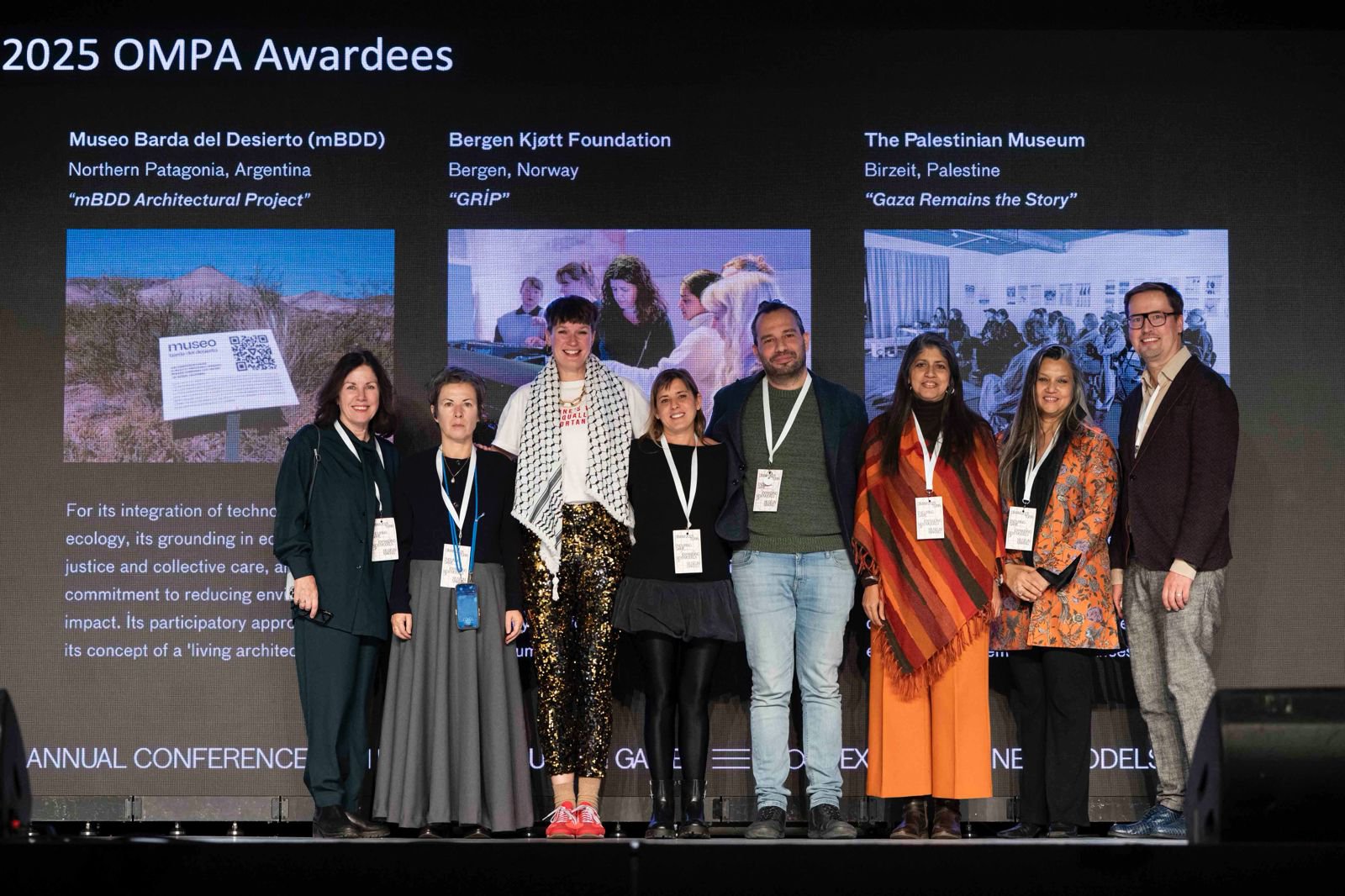
CIMAM Announces the Three Awardees of the 2025 Outstanding Museum Practice Award (OMPA)
November 28, Turin (Italy) — Within the framework of the 57th CIMAM Annual Conference, taking place from November 28–30 in Turin, CIMAM – International Committee for Museums and Collections of Modern Art – announced today the winners of the fifth edition of the Outstanding Museum Practice Award (OMPA) 2025.
This year’s edition received 48 nominations from museums across the globe, reflecting the creativity, innovation, and resilience of institutions working in highly diverse contexts.
Since its creation in 2021, the OMPA has sought to celebrate and highlight exemplary museum practices, recognising projects that can serve as an inspiration for the international museum community. The award aims to honour practices that are not only innovative but also context-sensitive, replicable, sustainable, and capable of fostering lasting structural change.
The OMPA Committee carefully considered these criteria in recognising excellence in the nominated museum practices. After deep consideration and discussion, the Committee identified as the recipients of the Award for 2025 the Museo Barda del Desierto (mBDD) (Northern Patagonia, Argentina), the Bergen Kjøtt Foundation (Bergen, Norway), and The Palestinian Museum (Birzeit, Palestine) for their clearly intentioned and impactful practices that reinforce the core values and purposes of museums through creative collaboration with museum professionals, communities, artists, and the public.
Suzanne Cotter, Director of the Museum of Contemporary Art Australia and Chair of the CIMAM’s OMPA Committee, declares: “We are excited to announce this year's CIMAM Outstanding Museum Practices Award and the inspiring models for museums that are in action across the globe. At a time of immense uncertainty and challenges in the world, the Award is a celebration and a signal of promise for museums as institutions that can make a difference to people and communities and be agents of affirmation and our shared humanity.”
The Committee emphasised that each of the awarded museum practices enacts new and alternative models for how a museum can function in diverse contexts and remain true to the core principles of preservation and display as vital forms of storytelling for people and cultures. Museums remain spaces of cultural memory, for reflecting on the present and imagining our collective futures. Safeguarding this role lies at the heart of the awarded projects.
The 2025 OMPA Committee recognises three museums that embody these values.
Museo Barda del Desierto (mBDD), Northern Patagonia, Argentina
Name of the practice nominated: mBDD Architectural Project
Located in Patagonia, the Museo Barda del Desierto was recognised for its innovative, context-responsive, and ecologically driven vision of what a museum can be. Conceived as a “museum without boundaries,” it explores architecture of diffuse limits and conceives the territory itself as a museum.
The OMPA Committee praised its integration of technology and ecology, its grounding in ecological justice and collective care, and its ambition to minimise environmental impact. Participation lies at the heart of this project. Equally fascinating is the way it brings together technology and ecology, while remaining a dynamic, evolving model rather than a closed system. This quality makes it especially compelling. The notion of a living architecture and a museological vision grounded in ecological justice, collective care, and social sensitivity is central to its practice.
Another remarkable aspect is the inclusion of the artistic and philosophical contribution of Luis Camnitzer, whose post-anthropocenic, forward-looking ideas enrich the museum’s approach, particularly through his work The museum is a school.
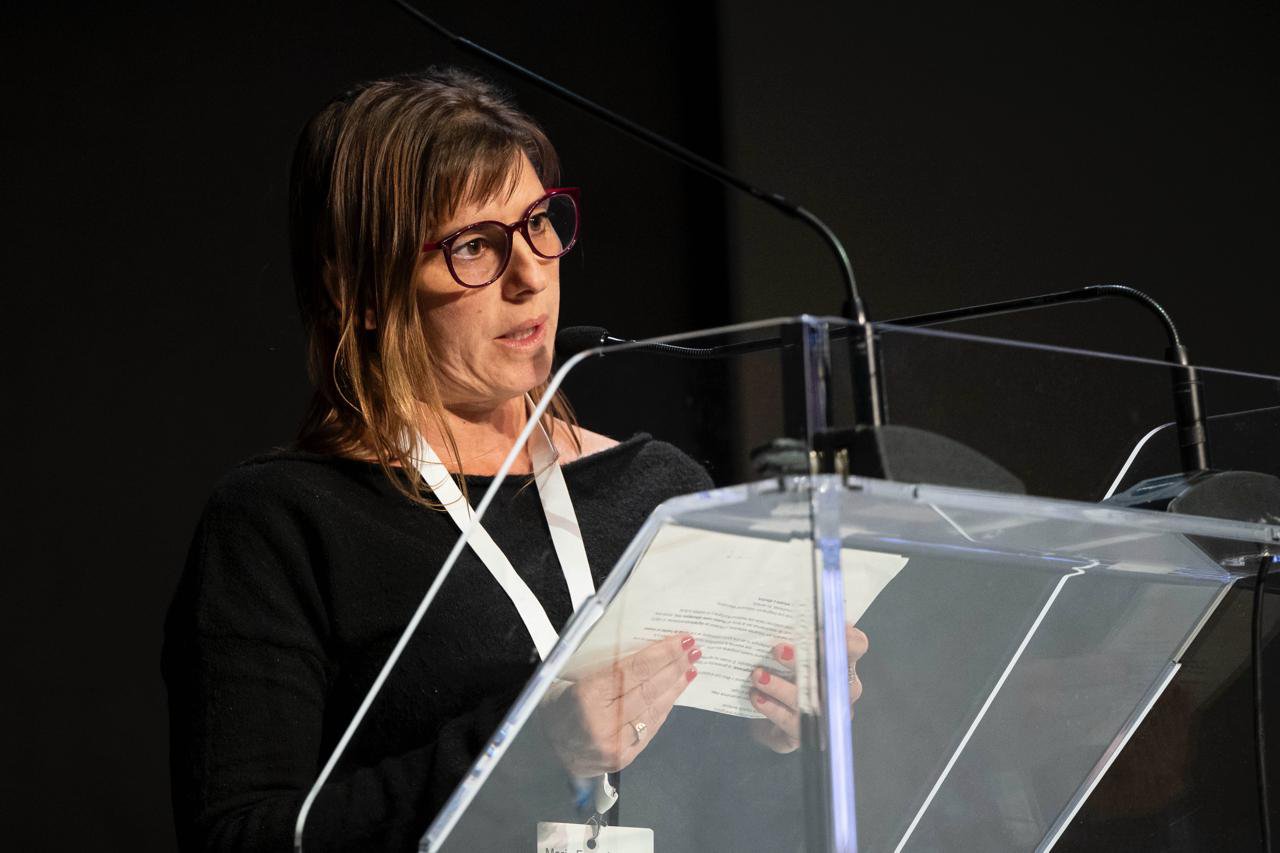
María Eugenia Cordero, Director of the Museo Barda del Desierto (mBDD), was present in Turin to receive the award.
Read the nomination submitted by the Museo Barda del Desierto
Bergen Kjøtt Foundation, Bergen, Norway
Name of the practice nominated: GRIP
The Bergen Kjøtt project was recognized for its focus on gender equality and inclusiveness for non-binary and transgender people in museum technical work and addressing gender bias in technology to effect structural change within the museum. Bergen Kjøtt, AKKS Bergen, Carte Blanche - The Norwegian national company of contemporary dance, Bergen International Theater, sound technician Irene Bjørke and light technician Maja Bergebakken Sundt.
The Committee emphasised its replicability and practical impact, with potential to influence not only local communities but also broader museum infrastructures. By expanding the scope of best practices in museum to encompass technical roles, Bergen Kjøtt is reshaping institutional culture, ensuring that knowledge transfer and skill development are integral to museum work.
This initiative exemplifies how museums can drive social transformation by creating new spaces of inclusion and equity in the professional field. Such significant structural gestures can streamline and improve institutional dynamics, while also creating new spaces within administration and professional museum teams.
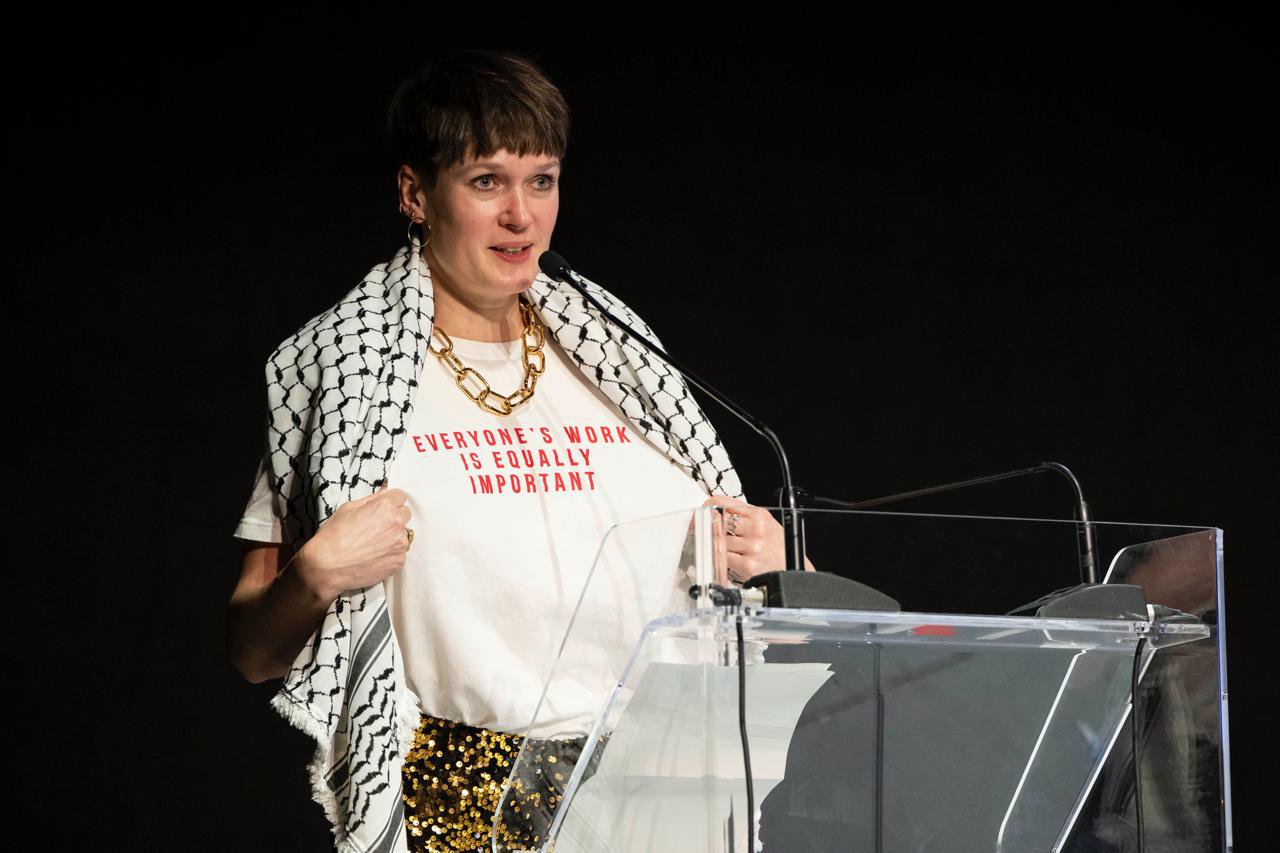
Eva Rowson, Director of Bergen Kjøtt, was present in Turin to receive the award.
Read the nomination submitted by the Bergen Kjøtt Foundation
The Palestinian Museum, Birzeit, Palestine
Name of the Practice Nominated: Gaza Remains the Story
The Committee praised The Palestinian Museum’s ability to redefine the role of museums as spaces of both survival and resistance, playing a vital role in affirming cultural heritage and collective memory. Operating under extreme circumstances, the museum has succeeded in caring for and mobilizing local communities, while also raising visibility for its mission. In many ways, its work reflects the reality of our times: a world in which more and more institutions are compelled to safeguard their heritage, art, and cultural narratives in the face of adversity. The Palestinian Museum embodies the essential foundations of the museum project across civilizations: to preserve a legacy that can speak to future generations. Against all odds, this project transcends the political circumstances that shaped it and redefines how exhibitions can be conceived, creatively adapting to the situation at hand.
By choosing a digital format over a physical one, the museum was able to communicate its vision more effectively and broadly, offering an innovative model as a way to continue fulfilling its mission.
Its adaptive strategies demonstrate how museums can remain vital even under extreme circumstances, offering a model of resilience and empowerment that speaks to the challenges of our times.
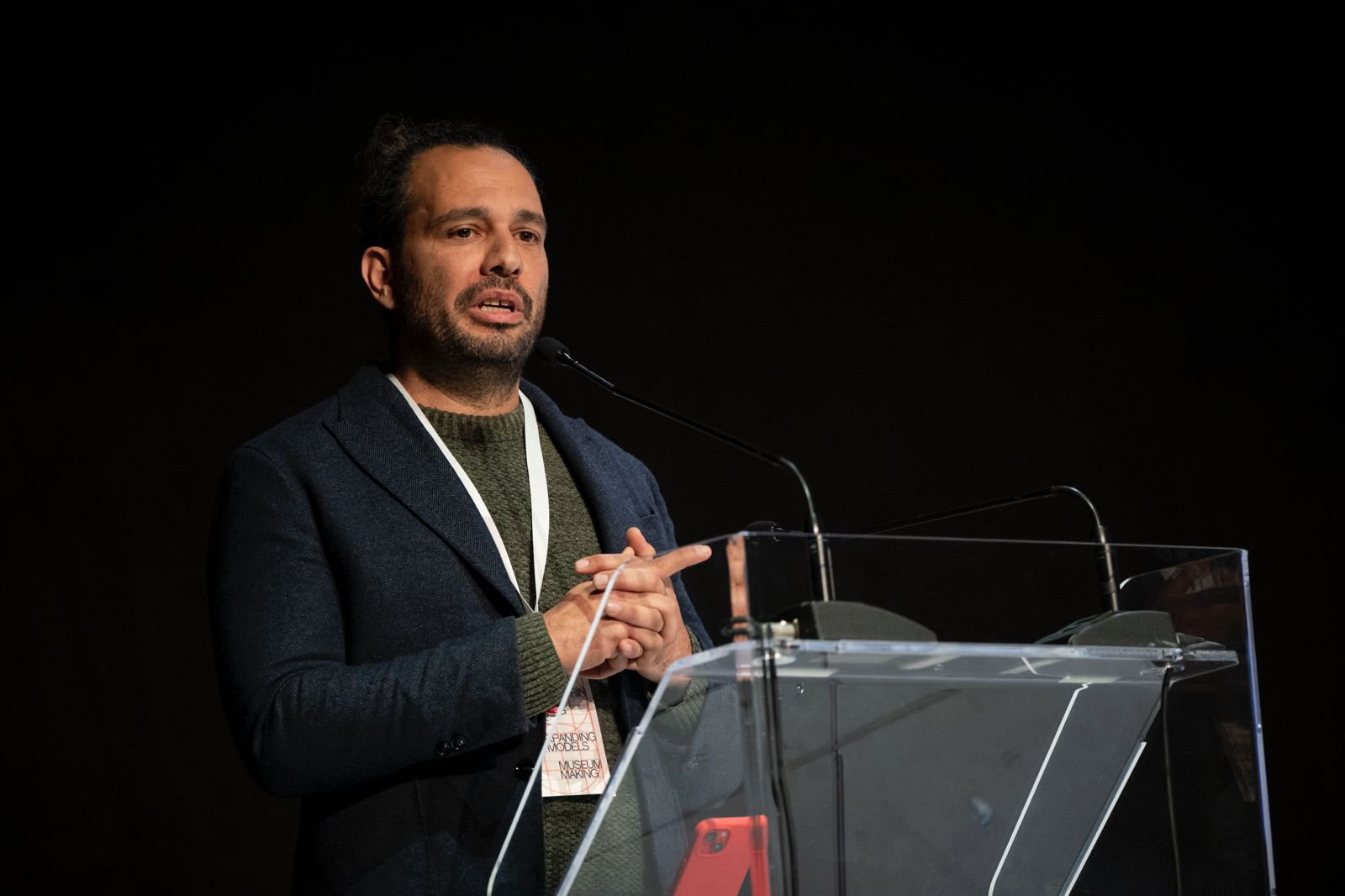
Amer Shomali, General Director, The Palestinian Museum, was present in Turin to receive the award.
Read the nomination submitted by The Palestinian Museum
The 2025 OMPA Awardees demonstrate that museums are not only spaces of preservation but also agents of continuity, creativity, and structural transformation, offering models of possibility for museums globally.
The OMPA Committee warmly thanks all museum professionals who have submitted a nomination showcasing the practices of their institutions. We invite you to explore the 48 nominations received this year, which can offer examples to inspire our international community.
The 2023-25 CIMAM Outstanding Museum Practice Award steering committee consists of CIMAM Board members:
- Suzanne Cotter (Chair), Director, Museum of Contemporary Art Australia, Sydney, Australia.
- Suhanya Raffel, Museum Director, M+, Hong Kong, Hong Kong.
- Joselina Cruz, Director/Curator, Museum of Contemporary Art and Design (MCAD) Manila, Philippines.
- Leevi Haapala, Dean, Academy of Fine Arts, University of Arts, Helsinki, Finland.
- Chus Martinez, Director, Institute Art Gender Nature, Basel, Switzerland.
- Kamini Sawhney, Artistic Director, Public Arts Project, BlrHubba; Museum Management Expert; Independent Curator, Bangalore, India.
About CIMAM’s Outstanding Museum Practice Award:
The CIMAM Outstanding Museum Practice Award recognises the incredible work being done in museums around the world, giving visibility to initiatives that lead to structural transformation within modern and contemporary art museums and are relevant and connected to people, communities, and their specific contexts.
The OMPA is dedicated to promoting excellence in innovation, encouraging public accessibility and exchange, and sustainability within the sector.
Launched in 2021, the Award is based on nominations from the contemporary art museum sector. It aims to give greater visibility to those practices that, independent of scale and level of resources, inspire us through their influence and meaningful contribution to individuals, communities, and their unique environments. Nominating an outstanding practice is an opportunity to celebrate the possibilities of museums that are making a real difference.
About CIMAM
CIMAM – International Committee for Museums and Collections of Modern Art – is an Affiliated Organization of ICOM (the International Council of Museums).
CIMAM is the only global network of modern and contemporary art museum experts in the field. CIMAM members are directors and curators working in modern and contemporary art museums, collections, and archives.
Founded in 1962, CIMAM’s vision is a world where the contribution of museums, collections, and archives of modern and contemporary art to the cultural, social, and economic well-being of society is recognized and respected.
CIMAM's mission is to foster a global network of museums and museum professionals in the field of modern and contemporary art and provide a forum for communication, cooperation, information exchange, and debate on issues of common interest among museums, non-profit collections, and artists, and museum professionals interested in modern and contemporary art to represent their interests in accordance with the ethical principles and values of the ICOM Code of Ethics and CIMAM's Code of Ethics. In addition, CIMAM encourages scientific research related to the field of modern and contemporary art museums to inspire professionals with best practices in the field and to ensure that appropriate ethical and professional standards are established and adhered to.