Staatliche Kunstsammlungen Dresden
The Staatliche Kunstsammlungen Dresden (SKD) are a museum complex with an international profile, comprising altogether fifteen museums. The museums show their treasures at their different locations, some housed in world-renowned, painstakingly reconstructed historical buildings: They are the Green Vault, the Cabinet of Prints, Drawings and Photographs, the Coin Cabinet and the Armoury in Dresden’s Royal Palace; the Porcelain Collection, the Royal Cabinet of Mathematical and Physical Instruments and the Old Masters Picture Gallery in the Semper Building at the Zwinger; the Sculpture Collection with exhibitions in the Semper Building at the Zwinger and at the Albertinum, as a part of the presentation of Romantic to contemporary art.
Name of the practice nominated: Transcultural Academy
Describe the practice, program, or project, what innovative approach is proposed, and in which core museum activities it applies:
What could a Transcultural Academy do for and beyond a 500-year European museum complex of 15 museum collections? Who are its students? What are its limits and possibilities? Why is the museum as a site of transhistoric study beyond borders necessary today?
Over five years, the Transcultural Academy of the Staatliche Kunstsammlungen Dresden (SKD) convened annually, each edition exploring different core inquiries about the museum's role in the 21st century as a site of knowledge production, diaspora, and plural democracy.
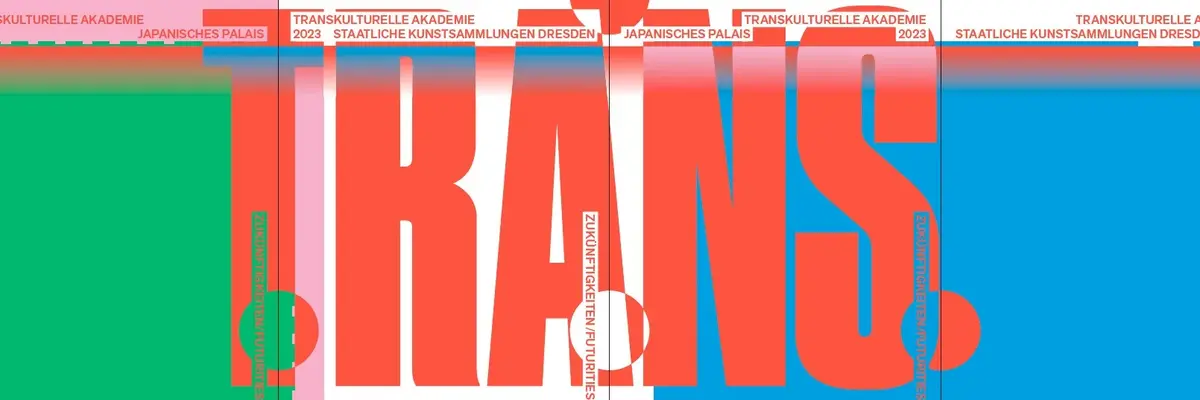
Each edition built upon the previous one. "Academy Towards a Worlded Public" (2022 with the Worlding Public Cultures network) examined notions of worldly, international, cosmopolitan, global, and diasporic in relation to museum collections. "Futurities" (2023) approached collections as witnesses of the past and archaeologies of the future, unsettling historical myths. "Unfinished Publics: Art and Democracy" (2024) investigated different registers of making public as research practices and interventions into collections in times of rising pressures on artistic freedom.
Each edition reimagined infrastructures of collective study through collection-based, process-oriented, and transdisciplinary curricula, working toward what the Design Campus of the Museum of Decorative Arts of SKD suggests as a "deliberate museum" involving citizen assemblies. As a hybrid between museum, university, and art school, the Academy initiated collaborations with institutional, independent, and individual partners across Europe, Asia, Africa, and Latin-America employing diverse formats: seminars, film programs, tutorials, collection walks, screenings, publications as research tools, and exhibitions.
Committed to the idea of the curatorial, the Academy created crucial conditions within and beyond the state museum complex, building a community of several hundred participants across geographies and generations to: (a) 'off-center' (Okwui Enwezor) Euro-centric canonical narratives, (b) initiate conversational communities across different public registers, (c) facilitate radical listening between traditionally trained researchers across 15 museum collections and independent researchers from around the world alongside local publics, and (d) initiate lasting interventions in public collection knowledge-making.
The Transcultural Academy was made possible through public funding from "Museums as sites of democracy" by the Federal Government Commissioner for Culture and Media of Germany, focusing on museum collection education in East Germany during times of rising global fascism. The funding ended in December 2024, and with it, transcultural methodologies of research across the collections will not continue.
Explain in one sentence why you think the project you nominate is outstanding and could serve as an example for the entire community of modern and contemporary art museums.
The Transcultural Academy’s commitment to cross-collections research, transhistoric inquries and conversational methods as knowledge making led to both an important learning process INSIDE as well as OUTSIDE of the museums' collections with long-lasting consequences (e.g., changes / entries in the research data-bank of the museum, transcultural community).
Explain why this practice or program is relevant and sustainable in creating meaningful and lasting connections with people, communities, and the museum context with a medium to long-term vision.
The Transcultural Academy created the conditions for a "learning museum." It is particularly necessary for a state institution with missions of education, research and knowledge production that maintains the archives of the past as cultural heritage and responds to a postmigratory society in deep transformation on a global scale. As a "learning museum," the Transcultural Academy offers a much-needed forum that contains different registers of study, research methods, positionalities, and making public; it unsettles the modernist division of research and exhibition, and mobilizes the collections with all their contexts including artistic virtuosity, art history, injustice, violence and war as focus in provenance research, natural science as well as contemporary cultural studies, artistic practices and curatorial forms.
What are the outcomes of the practice you are most proud of?
The exhibition "We show what we (don't) know," curated by the curatorial trainee Anna-Lisa Reith at the Japanese Palais in conversation with 16 students/artists of the expanded cinema class and the system design class of the art academy in Leipzig. It was an important moment also for the participating museum collections' researchers.
The publication "Futurities" (2023) with about 25 participants in conversation with 15 museum collections, developed with students of the Academy of Visual Arts in Leipzig. It turned the publication into a research tool and display of concrete ideas; it also reflected the impact of 7 October on the limits/possibilities of a Transcultural Academy in a state museum in Germany.
The 12 research interventions as a result of the edition of "Unfinished Publics" (2024) into the permanent collection of Albertinum have led to ongoing exchange as well as changes in the collections' research, including a research on a historic slide collection documenting Palestine before 1948.
The work "Too much past is a dangerous thing" (2023) by Mahshid Mahboubifar, one of the results of the Academy, has been awarded a Förderankauf der Kulturstiftung des Freistaates Sachsen.
How has the nominated practice changed your methods and ways of working?
The Transcultural Academy allowed us to address uneven histories, the colonial legacies of research, untold narratives, and repressed biographies of museum collections as trajectories/histories of knowledge towards a plurality of histories as archaeologies of futures. It helped also inside the museum to shift the authority of institutional knowledge, and in doing so, it showed the incredible capacities of these institutional complexes once they release their spectrum of possibilities.
The Academy also made clear that the "learning museum" needs resources of moderation, coordination, radical listening, and the transformation (not management) of conflict as knowledge processes.