Nelson-Atkins Museum of Art
The Nelson-Atkins Museum of Art invites all people to explore the art in its care, and through its broad collection, the depths and complexities of human experiences. We welcome and provide free access to everyone to enjoy and contemplate artistic creations from 5,000 years ago to present day.
Kansas City, USA.
Name of the practice nominated: Deaf Culture Project
Describe the practice, program, or project, what innovative approach is proposed, and in which core museum activities it applies:
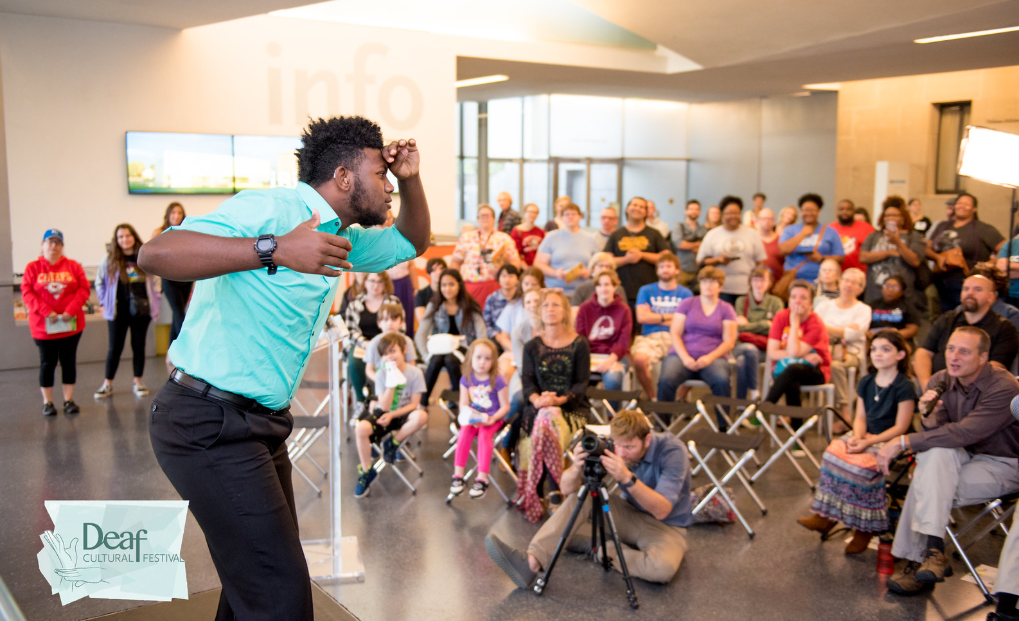
Grounded in equity-centered museum practice and universal design principles, the Deaf Culture Project (DCP) at the Nelson-Atkins Museum of Art offers programs, resources, and services that enable people who are d/Deaf and hard of hearing to rich experiences with art. The centerpiece of the project—the annual Deaf Cultural Festival—is a day-long celebration of the rich history, art, and identities of d/Deaf communities through performances, art-making, and more. Other components offer layered access and include: American Sign Language tours led by a Deaf educator; ASL videos on artworks delivered via a mobile app; and 14 ASL vlogs on visiting the museum.
The Deaf Culture Project was created by collaborative team of museum staff, both hearing and d/Deaf, and community partners from the d/Deaf and hard of hearing community including staff from Museum of Deaf History Art and Culture, the Kansas School for the Deaf, and the Whole Person (a regional disability advocacy and service agency).
A critical piece of the project is staff and volunteer training in Deaf culture and inclusive practice. Front-line staff now have the tools and confidence to create a welcoming and respectful, environment, communication strategies, as well as some basic ASL training. The museum also expanded accommodations to include live event captioning at all major events in our auditorium, as well as assistive listening devices, and ASL interpreters upon request.
DCP was shaped by culturally responsive evaluation, including focus groups and community-based data analysis that revealed unmet needs and assumptions, and summative evaluation that indicated a dramatic shift in perception of the museum. Evaluation is detailed in a chapter in the recent book, Evaluating Accessibility in Museums: A Practical Guide.
This project is a model of equity-centered museum practice—linking accessibility with relationship-building, evaluation, and structural transformation across education, operations, collections, communication, evaluation, and institutional culture. The Deaf Culture Project provides a model for museums seeking to co-create institution-wide access, inclusion, and equity for people who are d/Deaf and hard of hearing in ways that are culturally responsive, relevant, and sustainable.
Explain in one sentence why you think the project you nominate is outstanding and could serve as an example for the entire community of modern and contemporary art museums.
The Deaf Culture Project provides a model for museums seeking to co-create institution-wide access, inclusion, and equity for people who are d/Deaf and hard of hearing in ways that are culturally responsive, relevant, and sustainable.
Explain why this practice or program is relevant and sustainable in creating meaningful and lasting connections with people, communities, and the museum context with a medium to long-term vision.
The Deaf Culture Project is relevant because it was created with—not just for—community members and staff who are d/Deaf or hard of hearing in response to their desire for greater access to art and inclusion in the museum.
Project components reflect the rich art, history, and identities of d/Deaf culture and address the community’s needs and barriers to full participation in the museum. The DCP is sustainable because it fosters authentic, long-term, reciprocal relationships that center access, inclusion, and equity as cultural values, not just legal requirements.
Staff across departments now integrate accessibility planning into their workflow, normalized practices like live captioning, signaling a cultural shift. Its impact is sustained by institutional support from leadership to front-line staff and community trust. The creation of a new ASL hand sign by the d/Deaf community inspired by the museum’s shuttlecock sculptures further demonstrates deep connection, cultural pride, and symbolic belonging.
What are the outcomes of the practice you are most proud of?
We are most proud of the project’s transformation of both public experience and internal culture. Teachers reported that the ASL storytelling vlogs provided vital cultural learning resources, especially in areas with limited access to d/Deaf identity.
Community feedback reshaped our programs—like reducing visual split attention on tours by prioritizing Deaf-led engagement, including training and hiring Deaf educators to lead tours directly in ASL rather than relying on hearing docents with interpreters—and helped us make the museum feel less like a “hearing people place.”
A uniquely created ASL hand sign inspired by the museum’s shuttlecocks symbolized a powerful shift: community members saw themselves in our institution. This lasting impact confirms that access must be embedded, not episodic.
How has the nominated practice changed your methods and ways of working?
The Deaf Culture Project taught us to lead with humility, adaptability, and shared authority. We shifted from designing programs based on assumptions to co-developing them through participatory evaluation and community-led analysis.
The hiring of a Deaf staff member fundamentally reshaped our planning, and her insights prompted us to reconsider terminology, audience definitions, and delivery models. Evaluations weren’t endpoints—they were catalysts for dialogue, accountability, and mid-course correction.
Training on Deaf culture became the baseline for all future staff onboarding, and festival planning became a collaborative, year-round process. A high point was when one of our curators acquired an artwork by Janet Davidson-Hues titled "Signed, Sealed, Delivered" which portrays ASL signs. This Project didn’t just change our programming—it changed our institution.