National Gallery of Canada
Founded in 1880, the Gallery has one of the finest collections of Indigenous and Canadian art in the world, as well as masterworks from numerous other artistic traditions, including European, American and Asian art, contemporary art, prints and drawings, and photography. It is also home to an extensive research library, and archival material that includes numerous fonds and collections of art-related ephemera.
Ottawa, Canada.
Name of the practice nominated: National Engagement Initiative
Describe the practice, program, or project, what innovative approach is proposed, and in which core museum activities it applies:
The National Engagement initiative redefines what a national museum can be in the 21st century: not a place of centralized authority, but a dynamic, collaborative network of relationships, voices and experiences shared across the country and beyond. The Gallery is transforming its approach to its collection-building and programming activities to be collaborative and co-driven with other institutions as well as community leaders with similar mandates and priorities, who are doing significant work within their communities. These multi-year projects allow for the fostering of relationships in more cohesive and sustained ways than traditional short-term exhibitions and loans.
We are reimagining how a national museum connects with communities across the country by listening and developing innovative projects together including newly commissioned public artworks. The initiative serves to build bridges that span a vast geography as well as a diversity of languages, and groups. It serves as a bold reassertion of the Gallery’s core civic purpose through collaborative creation. These include co-acquisitions, co-productions and co-commissions where authorship and stewardship are shared.
The strategic aim is to be relevant on both a hyper local and a global context, and to be imbedded in wider cultural, social and artistic dialogues with peers both in Canada and internationally. We are creating a platform for sharing a wider diversity of knowledges, stories and experiences from communities across the country and beyond. Through these projects we share knowledge and expertise in curatorial, conservation, education and publications; we amplify artistic voices by supporting and elevating groundbreaking projects; we expand access to art across the country with a particular focus on underserved and remote regions; we generate learning and engagement opportunities through mentorship programs and we build community partnerships with a larger network of collaborators beyond art museums and galleries.
Explain in one sentence why you think the project you nominate is outstanding and could serve as an example for the entire community of modern and contemporary art museums.
Started after COVID in 2022, the initiative reflects a shift in how national museums think about collaboration by serving communities in democratic and flexible ways, co-creating projects that are not delivered to communities but rather developed with them.
Explain why this practice or program is relevant and sustainable in creating meaningful and lasting connections with people, communities, and the museum context with a medium to long-term vision.
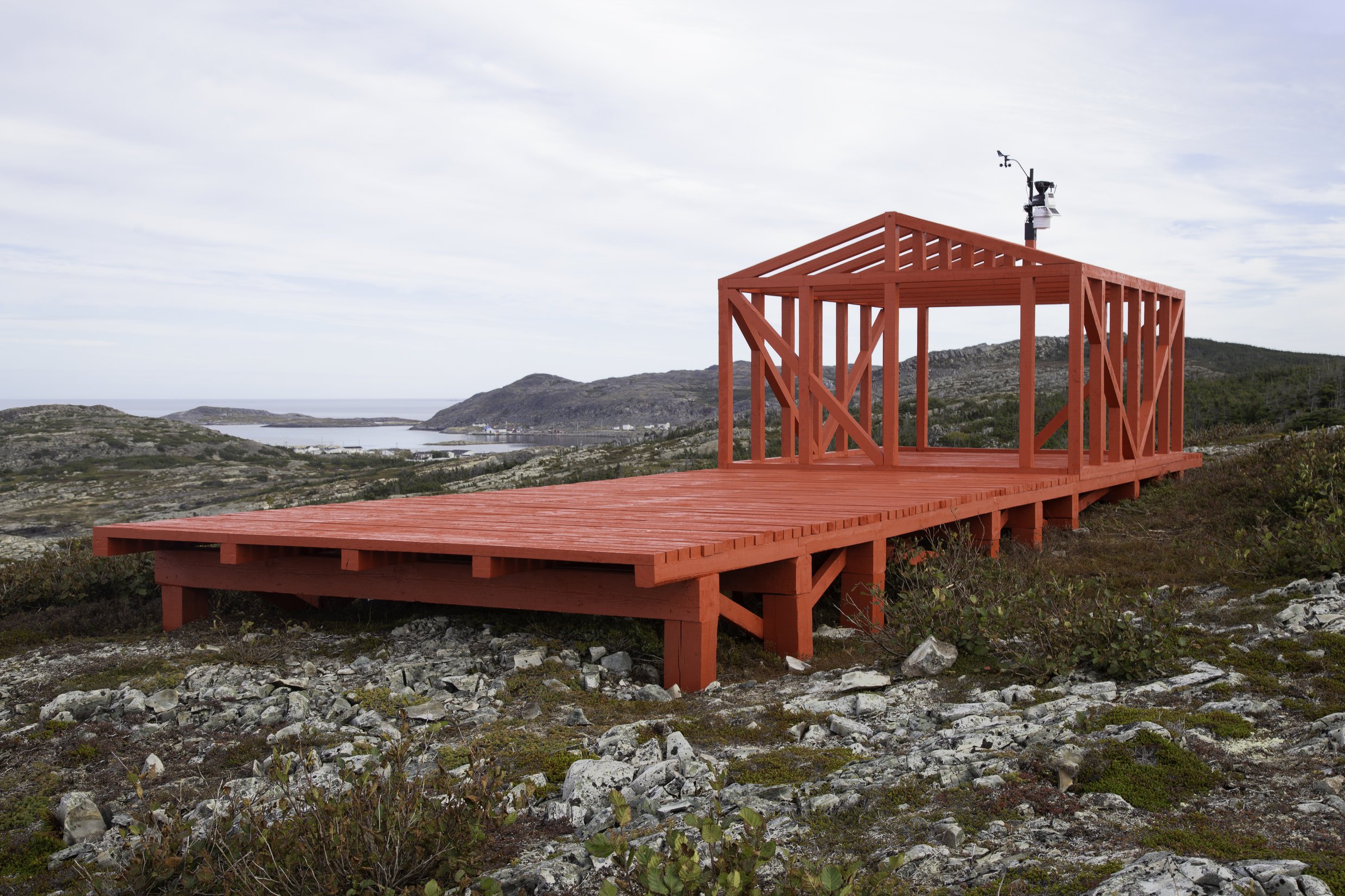
After a nation-wide national listening tour over 70 projects were identified across the country. In 2022 we co-commissioned a large sculptural installation by Liam Gillick with Fogo Island Arts and the World Weather Network, entitled A Variability Quantifier. The work responded to a need of the island community who did not have accurate weather data. Since then, the islanders have taken on the care of the sculpture/weather station and consult the website for weather data daily. It also serves to track how the climate is changing on the North Atlantic. In this case as in many other projects initiated, art is enmeshed with the community. By working with locals to identify needs and aspirations we build experiences that are relevant and meaningful and develop further relationships by organizing community-driven events to animate them on an annual basis.
What are the outcomes of the practice you are most proud of?
In 2023 we co-acquired a major work by Joan Jonas with the Art Gallery of Nova Scotia. The artist has a longstanding relationship with Nova Scotia, having spent her summers in Cape Breton since the 1970s. Her work has been inspired by the place and its people but has yet to be acknowledged in Canada. Moving Off the Land II had its North American debut at MoMA in 2024 and in summer 2025 will be shown in two small community galleries in rural Cape Breton where locals will see the impact the place has had on this celebrated senior artist.
We also worked closely with Canadian artist of Jamaican ancestry Charles Campbell to co-commission and co-produce a new work for the 2024 Toronto Biennial of Art that allowed the artist to fulfill his vision. We also supported a program to connect with local Black communities.
How has the nominated practice changed your methods and ways of working?
Listening to community leaders across the country I believe the museum should focus on sharing its resources and expertise and strive to inspire people who do not have access to or do not feel welcomed in museums. For many, art museums are places that remain inaccessible and neither relevant nor linked to their life experiences. By engaging with hyper local communities, by being open to other perspectives, and exchanging knowledge, the museum can fulfill its national mandate to develop, maintain and make known their collections and to promote knowledge, understanding and appreciation of art.
The National Engagement initiative draws in bold ideas and partnerships and then expands them into collaborative projects that touch every corner of the museum’s work. By sharing resources and the shaping and presenting of the national collection we make art more accessible and relevant to communities including those who have been historically excluded from museums.