Museum of Contemporary Art, Belgrade
Since its foundation in 1965, the Museum of Contemporary Art has based its display policy on the representation of the most relevant artists, periods, movements and tendencies in Yugoslav, Serbian and international art of the 20th century.
Name of the practice nominated: Program Inclusion and museum: “In touch with”, MOCAB, 2019 / “Blue exhibition”, MOCAB, 2023.
Describe the practice, program, or project, what innovative approach is proposed, and in which core museum activities it applies:
The curatorial team of the Museum of Contemporary Art in Belgrade, Senka Ristivojević and Katarina Krstić, launched an inclusive program in 2018 with the aim of making the Yugoslav artistic heritage of the 20th and 21st centuries, preserved by the Museum, more accessible—particularly to people with disabilities, especially blind and visually impaired audiences. The program explores new methodologies for interpreting and mediating art, promoting critical thinking and inclusive engagement, which are key values of contemporary museology.
Traditionally, work with blind and visually impaired individuals in the field of visual arts was limited to tactile drawings and replicas of artworks. However, modern and contemporary art emphasize the importance of multisensory experience that goes beyond visual perception alone. Following the success of the In Touch With exhibition (2018/2019), the Museum realized the Blue Exhibition (2023) as the next step in translating visual language into multisensory formats.
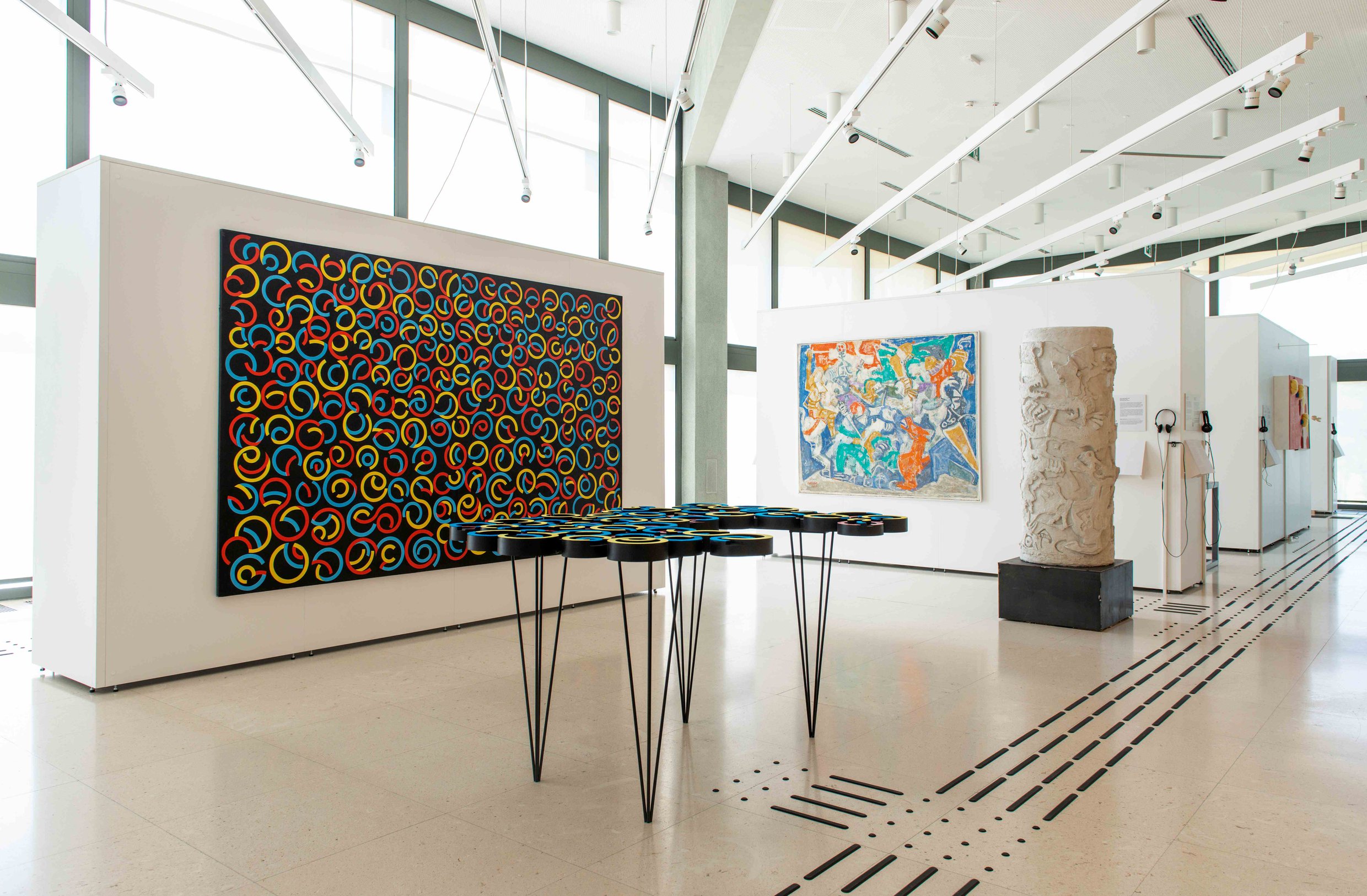
In collaboration with the Faculty of Fine Arts, students from the Sculpture Department, mentored by professors Mrđan Bajić and Radoš Antonijević, created tactile interpretations of selected works from the museum’s collection. The exhibition featured twelve original pieces and twelve reinterpretations, offering visitors the opportunity to experience art through touch, sound, smell, and spatial orientation.
The project also included a unique Unseen Tour, led by blind collaborator Boris Dončić, during which blindfolded visitors experienced art with their entire bodies—fostering empathy and bodily knowledge.
This initiative directly addresses key museum functions: education, collection reinterpretation, innovative communication, accessibility (Braille, tactile paths, audio guides, QR codes), and publishing (catalogs in both standard and Braille alphabets). At the same time, it represents a long-term interdisciplinary research initiative aimed at developing inclusive practices of art interpretation.
Explain in one sentence why you think the project you nominate is outstanding and could serve as an example for the entire community of modern and contemporary art museums.
This on-going project “Inclusion and museum” with two exhibitions until now (“In touch with” MOCAB, 2019 / “Blue exhibition”, MOCAB, 2023.), stands out as an innovative model of inclusive, multisensory museum practice that redefines the experience of modern and contemporary art—fostering empathy, accessibility, and community engagement by enabling interpretation through all senses and making art accessible to diverse audiences regardless of physical, intellectual, or age-related differences.
Explain why this practice or program is relevant and sustainable in creating meaningful and lasting connections with people, communities, and the museum context with a medium to long-term vision.
This inclusive program fosters lasting connections by engaging blind and visually impaired individuals through a new experience offered by contemporary art, emphasizing that art is not exclusively visual but multisensory.
Through collaboration with students, curators, and disability communities, the program builds long-term partnerships and jointly contributes to shaping museum content. It promotes critical thinking, empathy, and equal participation while reexamining traditional approaches to art interpretation.
The sustainability of the program is based on an established methodology, a replicable educational model, and the integration of participants into museum practice. Through continuous community involvement and institutional commitment, the program creates an evolving, inclusive platform that not only changes the way museums communicate with underrepresented audiences but also redefines accessibility as a creative and curatorial strategy within the museum field.
What are the outcomes of the practice you are most proud of?
The outcomes of this practice that we are most proud of include a two-way exchange of knowledge between blind, partially sighted, and sighted visitors, as well as the creation of an accessible, multisensory experience for all visitors, allowing them to deeply connect with contemporary art.
Successful collaboration with students, professors, and disability communities has enabled the building of long-term partnerships and reshaped the role of the museum as an inclusive space. By encouraging critical thinking, empathy, and equal participation, the practice has contributed to breaking down barriers in art interpretation.
This initiative has not only transformed the way the museum communicates with underrepresented groups but also redefined the concept of accessibility as a creative and curatorial strategy within the broader museum context. Ultimately, it has made art accessible to all.
How has the nominated practice changed your methods and ways of working?
The nominated practice has significantly transformed our working methods by introducing a more inclusive, multisensory approach to art interpretation. We integrated touch, sound, and spatial interaction with traditional visual presentations, creating a richer, more holistic experience for diverse audiences, especially for those with visual impairments.
Close collaboration with communities, students, and professors allowed for the development of collaborative, participatory processes that consider different perspectives. This approach has influenced our curatorial strategies and led to new working models where inclusivity and accessibility are no longer seen as supplementary, but as core elements of the museum’s mission.
By adopting these methods, we have built important partnerships and made the museum space more responsive to diverse needs, enhancing the overall museum experience.