Museu Tàpies
The Museu Tàpies was created in 1984 by artist Antoni Tàpies with the aim of promoting the study and knowledge of modern and contemporary art. The Tàpies Museum has a pluralistic and interdisciplinary approach and aims to establish collaborations between specialists from various fields of knowledge in order to contribute to a better understanding of contemporary art and culture.
Name of the practice nominated: Imagining Worlds with PIDs drawing competition. The museum as a space for healing and active listening.
Describe the practice, program, or project, what innovative approach is proposed, and in which core museum activities it applies:
According to the WHO, ‘health is a state of complete physical, mental and social well-being and not merely the absence of disease or infirmity’. Therefore, access to art and culture can play an important role in healing processes. But art in itself does not heal. Often, the healing value lies in mediation actions. The museum's education department conceptualises projects based on the notion of the museum as a place for healing, active listening, creating bonds and exchanging knowledge.
Specifically, a collaboration has been initiated with the PID Foundation, a non-profit organization founded in 2014 as an initiative of a group of professionals dedicated to the care of pediatric patients with Primary Immunodeficiencies (PID) and patient's relatives.
After several working sessions with doctors and staff from the Hospital de la Vall d'Hebron and the PID Foundation, it was decided to organise a drawing competition aimed at people with PID and their families. The idea of the drawing competition was connected with the contents of the Tàpies ongoing exhibition (which includes archival material related to drawing and children's art competitions) while facilitating work at home or in safer spaces.
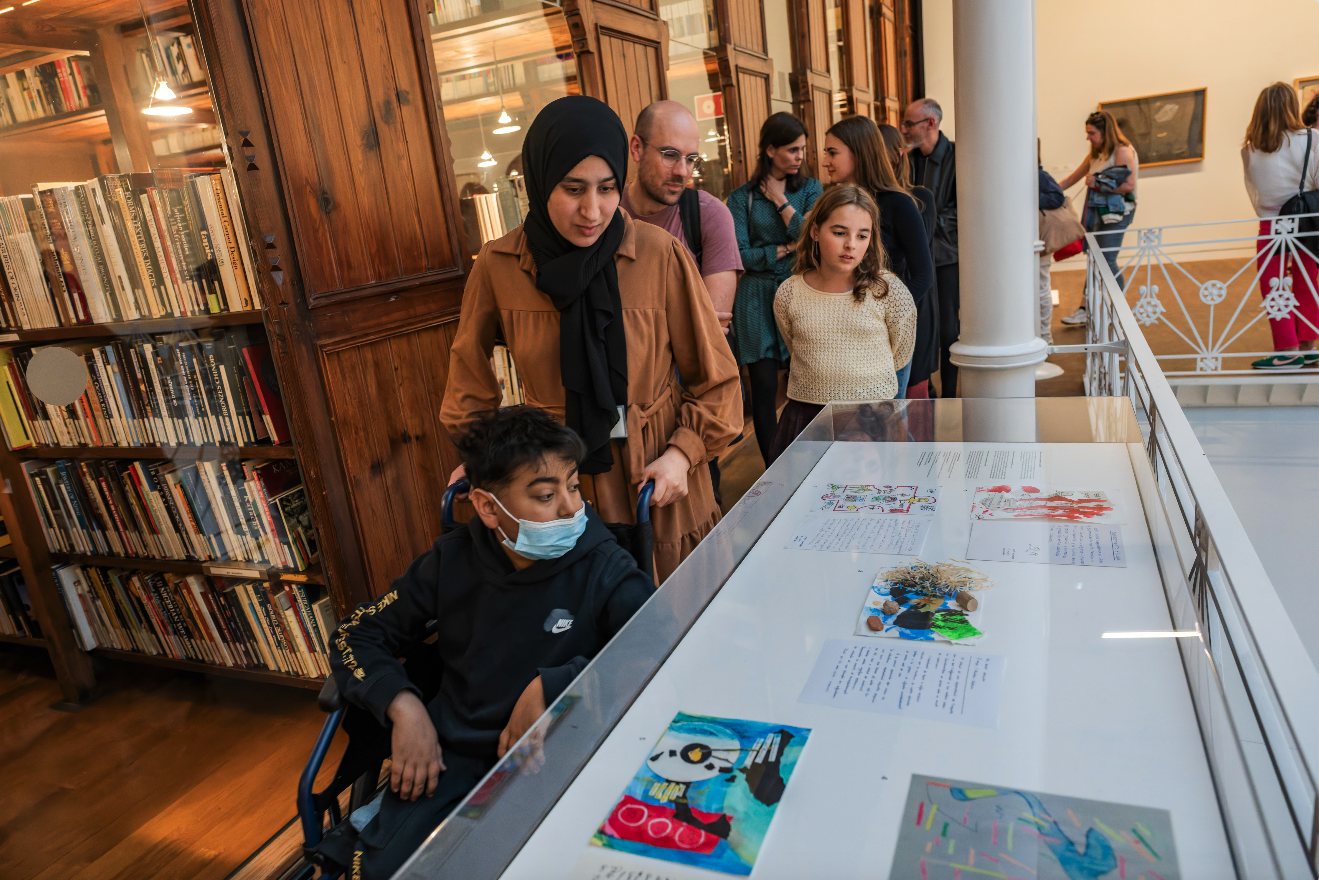
The drawings submitted had to express the experience of illness and connect with the imagery and techniques of Tàpies' work. In addition, an explanatory text of the drawing had to be attached. The winning drawings will be displayed at the exhibition and later at the hospital.
The turning point was the award ceremony. The presentation included a personalised commentary on each work. Thanks to the support of AEDIP (Spanish Association of Primary Immune Deficiencies) and IPOPI (International Patient Organisation for Primary Immunodeficiencies), people from all over Spain were able to travel to the event. In addition, the family of a child who had just undergone surgery was able to connect online.
Explain in one sentence why you think the project you nominate is outstanding and could serve as an example for the entire community of modern and contemporary art museums.
It is a project that has contributed to the emotional well-being of the patients and their families; it has given publicity to a little-known illness; it has transformed the museum's internal working methodologies and has brought new interpretations to the work of Antoni Tàpies.
Explain why this practice or program is relevant and sustainable in creating meaningful and lasting connections with people, communities, and the museum context with a medium to long-term vision.
As expressed by the team of doctors and psychologists, this experience has been very positive for the patients and their families. During the weeks that the process has lasted, they have been able to leave their daily reality, strongly marked by hospital admission and medical treatments, and have been able to express their concerns and reflections through drawing and writing, and share them with the rest of the participants. For the museum team it has also been a very gratifying project because it has added layers of interpretation to the exhibition, but above all because it has deeply moved and transformed them.
‘This work represents my pain and that of my family (...) Even though I am exhausted, I continue to fight,’ shares Lola, a 16-year-old girl with PID that cannot be cured.
What are the outcomes of the practice you are most proud of?
One of the outcomes was the improvement in the well-being of people with PID and their families. The awards ceremony was conceived as a celebration to give a spotlight to each of the people who took part in the competition, immersed in a very tough reality marked by the disease. The event ended with a visit to the exhibition to see the drawings on display and a snack on the terrace of the museum. During this session, the families and the psychologists expressed their great satisfaction with the benefits that the project had brought them. It was moving to see that drawing and writing allowed them to express feelings that are difficult to express in words. The hospital team involved in the project has expressed its commitment to repeat the initiative and to include the practice in the International Congress on Health Communication to be held on October 2025.
How has the nominated practice changed your methods and ways of working?
The process of selecting the drawings and preparing the prize-giving ceremony was carried out with the collaboration of the head of the museum's Collection, Pablo Allepuz, as the prize-winning drawings would be exhibited in the exhibition room following the same curatorial criteria used for the rest of the works and archive materials. This has led to a more cross-departmental working methodology. One of the objectives of Pablo Allepuz, as co-curator of the exhibition, was to add several voices or layers of interpretation to the works. Part of this objective was achieved by showing the results of the competition, while an educational project formed part of the content of the exhibition for a few weeks.