MOMus- Museum of Modern Art- Costakis Collection
MOMus-Museum of Modern Art-Costakis Collection (formerly: State Museum of Contemporary Art) is entrusted with the preservation, study and promotion of (mostly visual) modern art achievements, particularly those connected to the internationally renowned Costakis Collection with works of art from the avant-garde period in the Russian Empire and the Soviet Union (1900-1930), as well as the works of Greek and international artists that represent the art movement of modernism.
Stavroupoli, Greece.
Name of the practice nominated: “A walk together”
Describe the practice, program, or project, what innovative approach is proposed, and in which core museum activities it applies: conservation, education, collection, exhibition programs, publications, research, accessibility, communication, governance, and sustainability.
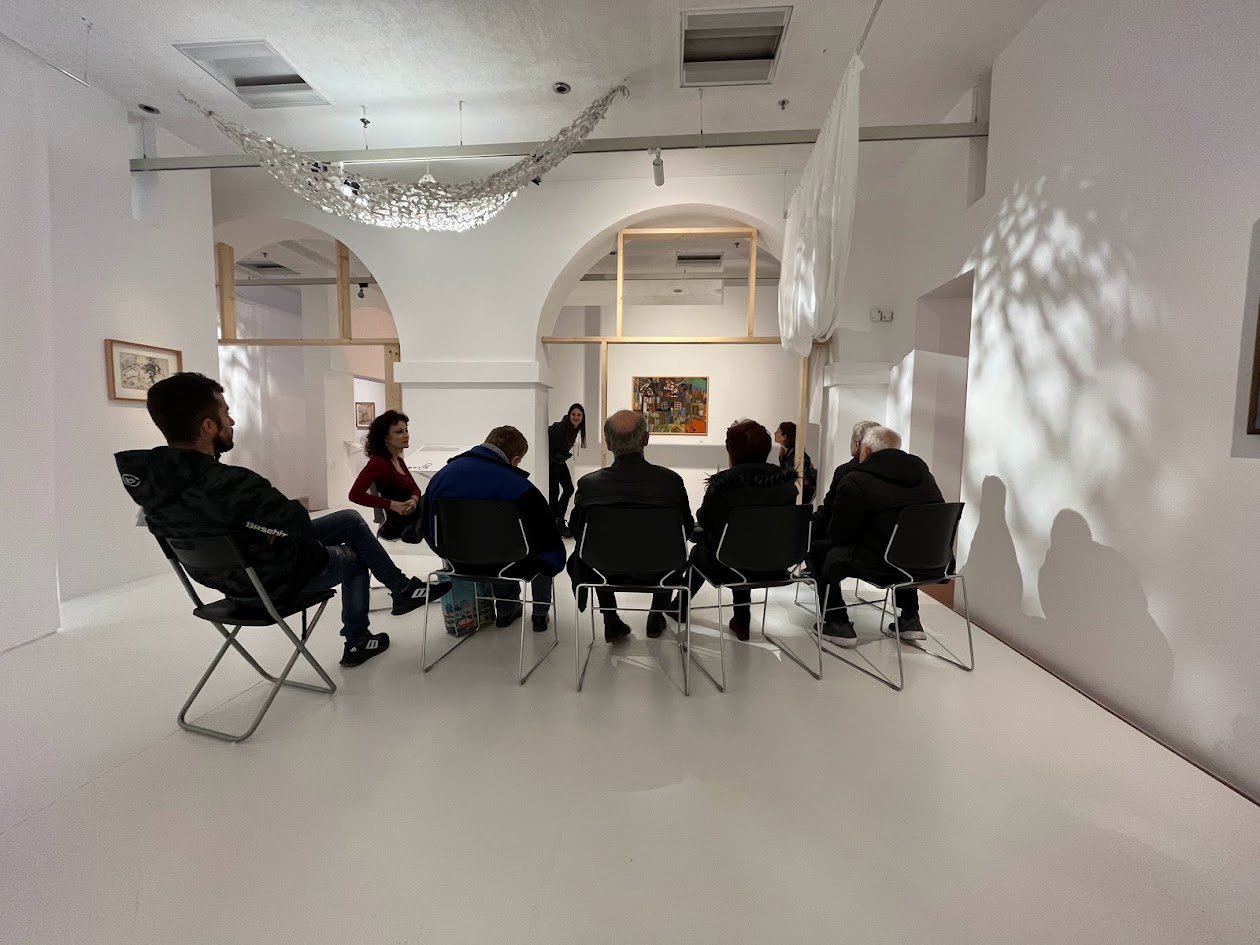
“A walk together” is a museum program being held in MOMus – Museum of Modern Art – Costakis Collection in collaboration with the Special Centre for Prevention and Treatment of Memory Disorders of the Psychiatric Hospital of Thessaloniki. The program is organised in circles of 3–5 meetings and has been systematically carried out for the past three years. Participant groups consist of people with memory disorders and their caregivers, usually family members.
The core design idea of “A walk together” lies in the combination of a slow and collective museum experience along with Art Therapy. Τhe museum experience is based on viewing and discussing the artworks of the permanent “Costakis” collection. The collection includes works of art of the avant-garde period of the Russian Revolution and the Soviet Union from artists such as Liubov Popova, Elena Guro, Kazimir Malevich, Ivan Kliun, Pavel Filonov, Vsevolod Sulimo-Samuillo, Solomon Nikritin etc.
The art therapy part is based on the acknowledgment that the most fundamental thoughts and feelings of all human beings hide in the unconscious and find their expression primarily in images and then perhaps in words. During the meetings, the power of expression is unlocked through a series of drawing, doodling, ink spilling, clay and other artistic activities that derive from the museum’s collection while long discussions on the participants’ artworks, facilitated by the art therapist and the museum educators, conclude each meeting alongside coffee and biscuits.
Explain in one sentence why you think the project you nominate is outstanding and could serve as an example for the entire community of modern and contemporary art museums.
This museum program, infused by art therapy practices, was designed for people with memory disorders. It avoids any memory related activity, while managing to encourage social interaction, emotional connection, stress relief and strong relationship bonding, through modern art, thus transforming the museum into a space of safety, softness and creation.
Explain why this practice or program is relevant and sustainable in creating meaningful and lasting connections with people, communities, and the museum context with a medium to long-term vision.
This program is enhancing the well-being of both older adults/individuals with memory disorders and their caregivers. In this context, the museum serves as an important space for activity, learning, and social interaction, especially in urban areas where opportunities for older adults are often limited, especially in the greek reality.
Our goal is to socially activate participants, to provide opportunities for free and associative expression and to promote connections with other people with shared experiences. The common denominator for the activities and topics to be discussed is to give meaning and value to everyone's experience, with empathy and dignity.
Aiming to improve the quality of life, we focus on a human-centered approach and not so much on actions related to memory performance. We thus place greater emphasis on sharing the experience, the time of relaxation and enjoyment for the person with dementia and for their caregiver, and therefore strengthening the relationship between them in the present and hopefully in the future.
What are the outcomes of the practice you are most proud of?
A new museum reality emerged through this new community which visited us on a regular basis. This community was not used to feeling welcome in a museum of modern art. During the program, both the museum staff and the people with dementia with their caregivers were trained, and practiced ways of co-existing, co-creating, sharing and caring, fostering a new condition of inclusivity which is permanent.
As a result, museum policies shifted in order to mirror these new realities. The equality within the dyad caregiver and person with dementia (both participants enter the shared activity at the same pace) creates different dynamics than those usually experienced in their everyday life. No prior knowledge or developed skills are required in order to engage with the artworks or to approach them creatively.
This way, powerful experiences are fostered, experiences that participants may carry with them and refer to for the rest of their lives. Another outcome we are proud of is the relationships created, the bonding and connection which we experienced and value, as a result of the high level of trust that developed in our meetings and the powerful experiences that we shared.
How has the nominated practice changed your methods and ways of working?
Some of the newly acquired tools or familiar practices revisited and revised through this program relate to the way time and space were processed and shaped to meet the group needs. Active listening, slow art, art therapy, space planning and other museum practices were incorporated and practiced a lot, while the necessity of adaptability and flexibility throughout the process, transformed our general work practices.
The therapeutic value of art emerged and became a solid and indisputable ground on which museum educators and participants could maneuver between roles like beneficiary or facilitator, creator and observer, healthy or unhealthy, as we came to experience all these qualities as group members.
This human-centered and at the same time personalized approach revealed some new paths in our work practices, which enhance the dynamics of groups, empower positive museum experience and invigorate the sense of self, regardless of specific team characteristics, age or other distinctions.