MO Museum
MO Museum, a personal initiative of Lithuanian scientists and philanthropists Danguolė and Viktoras Butkus, functioned as an art museum without walls for close to ten years. The collection of around 6 000 modern and contemporary pieces contains major Lithuanian artworks from the 1960s to this day.
Name of the practice nominated: Cultural education programme at the MO Museum
Describe the practice, program, or project, what innovative approach is proposed, and in which core museum activities it applies:
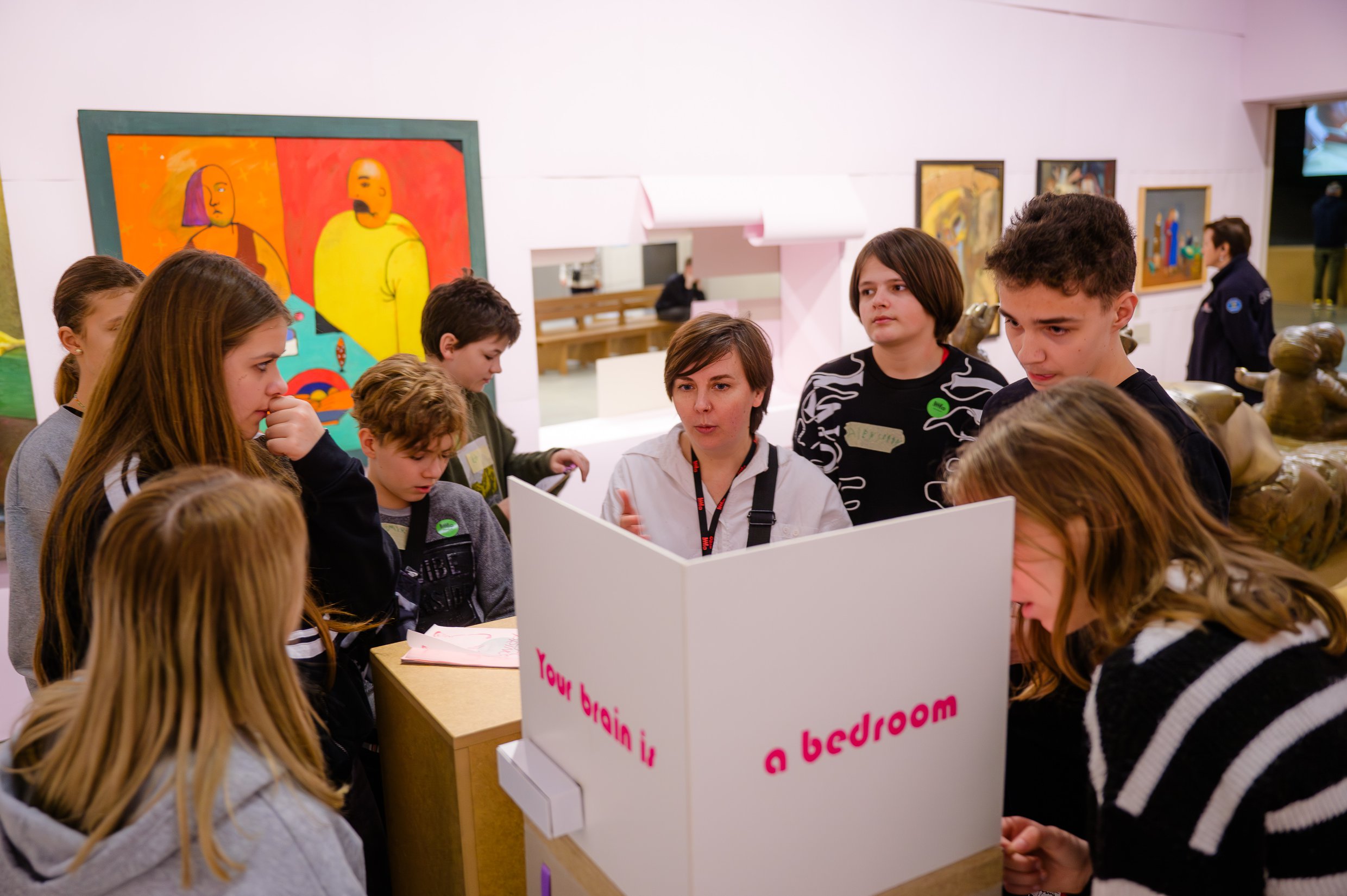
Cultural education is one of the core functions at MO Museum, shaping both our activities and the way we operate. It is not an add-on, but a strategic approach for deep social impact, guiding our programming, partnerships, community engagement, and the way we evaluate success. We have developed a cohesive educational model that fosters emotional literacy, critical and creative thinking, and social inclusion for schoolchildren, teachers, seniors, and other groups. The model is built on three key innovations:
- combining art and psychology, particularly through emotion-focused sessions co-developed with psychologists to address the urgent issue of loneliness and psychological vulnerability among schoolchildren and older adults;
- long-term work with teachers, including training certified by the Ministry of Education, a national community of over 6,000 teachers, and more than 700 teachers who have already completed 40-hour training programmes; and
- the systemic, longitudinal integration of Visual Thinking Strategy (VTS) into formal education.
We are embedding VTS into the formal curriculum on a wide scale through the Millennium School Programme as well as a pilot project with a full-year long VTS practice in the classroom learning in autumn 2025. Further, partnerships with the British Council and Kazickas Family Foundation enable us to reach ethnic minority and underprivileged youth, bridging social bubbles for greater inclusion and sense of belonging.
Our “Thinking lessons for life” campaign, launched in April 2025, was the first in Lithuania to position cultural education as a vital force in both public life and formal schooling. It aligns with the UNESCO Framework for Culture and Arts Education (2024), which affirms culture’s role in building resilient societies.
We are currently piloting scalable, adaptable educational projects, supported by an impact evaluation framework. These efforts demonstrate how museums can serve as spaces of belonging, reflection, and resilience in times of social fragmentation.
Explain in one sentence why you think the project you nominate is outstanding and could serve as an example for the entire community of modern and contemporary art museums.
MO Museum demonstrates how cultural education can lead to cross-sectoral partnerships and collaborations, building bridges and bringing cultural relevance to the fields of formal education, health, and social welfare.
Explain why this practice or program is relevant and sustainable in creating meaningful and lasting connections with people, communities, and the museum context with a medium to long-term vision.
MO Museum’s approach is relevant and sustainable because it addresses urgent societal needs – emotional resilience, critical thinking, and belonging – through cultural education that is structurally embedded and evidence-based. Rather than short-term outreach, we build longterm partnerships with schools, teachers, and communities, integrating our methods into national education programs like the Millennium Schools Programme. Our model evolves through research, impact measurement, and collaboration with psychologists, educators, and policymakers. This ensures that our practice stays adaptable while staying relevant to the everyday experiences of our audiences. By aligning with international frameworks such as UNESCO Framework for Culture and Arts Education, MO Museum’s work is both locally grounded and globally relevant, positioning museums as infrastructures capable of supporting learning and well-being throughout life.
What are the outcomes of the practice you are most proud of?
Strengthened role in mental well-being. Building on WHO’s recognition of the arts’ underexplored preventive (rather than therapeutic) potential, MO educators with psychological training lead programmes that build emotional literacy and psychological wellbeing. This model is used not only with schoolchildren but has been adapted for seniors: a 2024 project with 150 participants was a success and will continue in Vilnius.
Long-term engagement with teachers. Over 700 teachers across Lithuania have been trained in VTS through 40-hour programmes. They represent a wide range of subjects – from physics and chemistry to literature, history etc. – and include teachers from ethnic minority and vocational schools. VTS is becoming a sustainable, embedded practice in formal schooling, with our work continuing further.
Systemic integration into formal education. Through the Millennium Schools Programme, VTS is now used in classrooms across 18 municipalities, marking a shift from outreach to structural impact.
How has the nominated practice changed your methods and ways of working?
This practice has fundamentally shifted how we understand the museum’s role. Education for us is a shared responsibility that shapes our decision-making, partnerships, and long-term strategy. We co-develop programmes with educators, teachers, psychologists, and researchers, incorporating evaluation and reflection into the design process. This has introduced new skills and ways of working, from measuring impact to piloting adaptable models across different communities. We’ve also built closer relationships with schools and partners, treating them not as audiences but as collaborators. Internally, the focus on meaningful outcomes has made us more reflective, responsive, and aligned across teams. Most importantly, this work has redefined our purpose: we do not see ourselves as presenters of culture, but as active contributors to civic and emotional development.