Kiran Nadar Musem of Art (KNMA)
Established at the initiative of the avid art collector Kiran Nadar, the Kiran Nadar Museum of Art (KNMA) opened its doors to the public in January 2010, as the first private museum of art exhibiting Modern and contemporary works from India and the sub-continent. Located in the heart of New Delhi, India’s capital city, KNMA as a non-commercial, not-for-profit organization intends to exemplify the dynamic relationship between art and culture through its exhibitions, publications, educational, and public programs.
Name of the practice nominated: Young Artists of Our Times
Describe the practice, program, or project, what innovative approach is proposed, and in which core museum activities it applies:
One of Kiran Nadar Museum of Art’s key mandates during its 15 years of existence has been to organically engage with a plurality of artistic voices and audiences. Its unique and sustained association with younger cultural producers in South Asia began in 2019 through a long-term and multi-part program titled Young Artists of Our Times (YAOT.) This program opened up explorations of the museum as a polyphonous form with a variety of 83 makers and thinkers. Its evolving, shape-shifting endeavour encompasses exhibitions, publications, projects, clubs, libraries, and public art interventions. Led by Akansha Rastogi, Senior Curator at KNMA, YAOT explores a range of artistic processes that approach the idea of ‘youth’ as a sensory body. In its multiple manifestations, the program engages with ‘youthfulness’ as a transformative, restless, and critical space of inquiry and experimentation. Moving beyond the young as an age, YAOT presents a larger conceptual framework to dwell on the urgencies of an unresolved present.
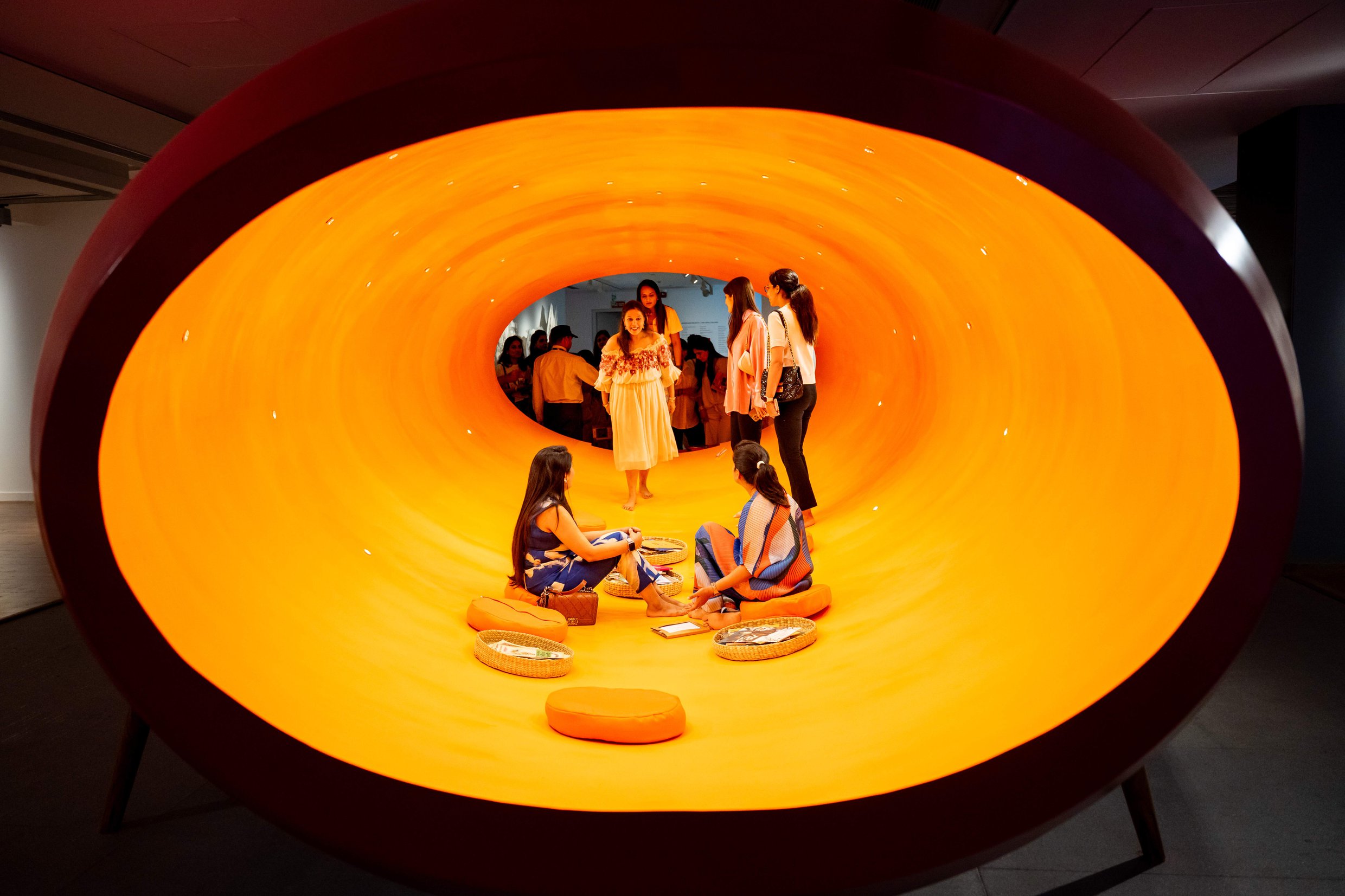
YAOT activates sensory in novel ways, bringing new audiences and peripheral voices outside the mainstream to KNMA. For instance, Smell Assembly, with anthropologists Ishita Dey and Mohammad Sayeed, explored the concept of ‘smell-work’ and its politics in conversation with local domestic workers’ associations, cab drivers’ associations, perfume-making communities, spice-makers, and fish sellers. Summer’s Children, a self-published artist’ book by Anpu Varkey, was transformed into a spatial experience, inviting visitors to revisit the nostalgia of one’s childhood. The conversation on the overwhelming side of childhood has evolved stupendously in Very Small Feelings (coorganised with Samdani Art Foundation in 2023), where the participatory acts of sharing stories, unrecognised emotions, and fears animated the museum. These interventions came together as a large and open exhibition format highlighting pedagogical experiments by forgotten and undervalued artist-educators in South Asia who spent lifetimes working with young learners. We see YAOT as a pathway beyond the KNMA’s usual programming to shed light on the unknown and undocumented practices that are crucial to re-orienting our perceptions of art and its ecosystem.
Explain in one sentence why you think the project you nominate is outstanding and could serve as an example for the entire community of modern and contemporary art museums.
Young Artists of Our Times brings together practices that are outliers, who linger and transform the larger vision of the museum.
Explain why this practice or program is relevant and sustainable in creating meaningful and lasting connections with people, communities, and the museum context with a medium to long-term vision.
YAOT foregrounds the subcultures to rethink binaries of - artist and non-artist, art and non-art. For instance, a forthcoming project in the YAOT series focuses on zines and comics, with work by thousands of makers from the region presented in the form of a public library. This will make KNMA the biggest archive of contemporary homemade, low-cost zines and comics. As a collector and publisher of such stories, YAOT further invests in making the museum the keeper of those encounters, regionally as well as internationally. It aims to activate and redefine the role of a museum in engaging with living artists and creative practices rather than focusing on the collection of canonically recognised artists and artworks.
What are the outcomes of the practice you are most proud of?
YAOT has successfully built a new language of interactivity and participation inside KNMA programming. Moving beyond the museum's collection, it connected us with new creators and more than 18,000 visitors in ways we never expected. From gathering a community of Artist- Mothers who felt seen and heard in an institutional space in 'Looking with Other Mothers' program, to repeat student visitors to the 'Very Small Feelings' who have written about their experiences in college journals, the YAOT has surpassed the experiences of the museum. Its provocations have made us connect with the public. Other manifestations of YAOT include "Right to Laziness…No, Strike that! Sidewalking with the Man Saying Sorry," which included numerous figures and characters that speak to the structure, form, and process of an apology. It also engaged with the changing idea of work, particularly care work, in cultural solidarity with protest movements and networks of collective survival.
How has the nominated practice changed your methods and ways of working?
KNMA has made a significant imprint on the South Asian cultural landscape as a growing and evolving institution. It has been collecting, exhibiting, programming, and educating through both conventional and alternative expressions of modern and contemporary art. Situated in a mall, we will be moving to our independent building in 2027. As we prepare for this transition, we face a set of unique challenges concerning curating, operations, programming, and audience creation. It is in this context our work with Young Artists of Our Times prepared us with dynamic methods to reimagine the role and scope of KNMA as a space of gathering. Over the past six years, it has taught us the importance of acts of softness and care in the museum world. It also made us aware of the power of episodic formats, intergenerational conversations, regional solidarities, and more. In short, it offered us an opportunity to think of museum-making and artmaking in the present tense.
Official Website: https://www.knma.in/very-small-feelings