(GAMeC) Galleria d’Arte Moderna e Contemporanea di Bergamo
The Bergamo Gallery of Modern and Contemporary Art was opened in 1991. A virtuous model of shared public-private management, the museum is housed in the spaces of the former Monastero delle Dimesse e delle Servite, whose restoration was carried out in the late 1980s and early 1990s by Studio Gregotti Associati.
Diversified programming over the years has made it a multifaceted space capable of engaging diverse audiences with targeted activities. With its 1,500 square meters of exhibition space, GAMeC is a place that welcomes modern and contemporary art in all its forms.
Receiving donations and promoting acquisitions, GAMeC develops and promotes the modern and contemporary art collection of the city of Bergamo, which includes works by Italian and international twentieth-century artists as well as works by contemporary artists.
Name of the practice nominated: Thinking Like a Mountain – The Orobie Biennal
Describe the practice, program, or project, what innovative approach is proposed, and in which core museum activities it applies:
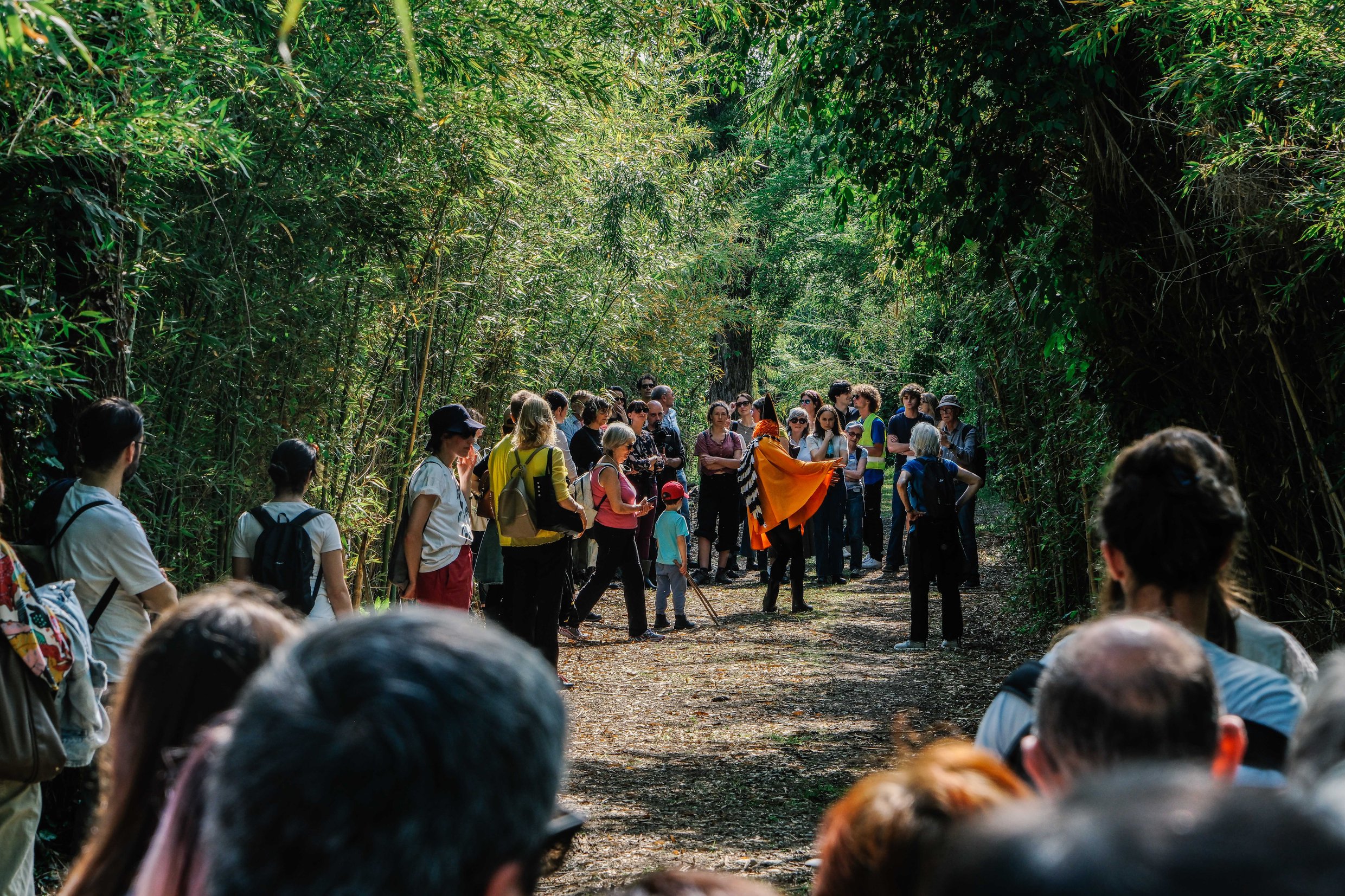
Thinking Like a Mountain – The Orobie Biennal is a widespread experimental program carried out over 2024–2025, developing interdisciplinary artistic projects arising from encounters between local communities and artists of various generations and backgrounds, with the museum as cultural and creative mediator. The term “biennal” refers to the Biennial program and differs from the usual “biennale” concept insofar as it unfolds over the course of a two-year period, rather than occurring every two years within a limited timeframe, like biennialstraditionally do. One of the goals of the project is to contribute in practical terms to ongoing debate on the rethinking of traditional biennial formats, adopting the museum’s perspective and focusing on sustainability and a long-term community involvement. On these premises, we envisioned and developed a project closely intertwined with regional realities, working across diverse contexts: from the pre-Alpine areas and the towns of the Bergamo Valley to small mountain villages such as Vertova in Val Seriana, Gerosa in Val Brembilla, and Sottochiesa in Val Taleggio. The program involves numerous areas of museum activity:
- The Education Department has been involved in mediation efforts right from the early stages, as well as in the development of workshops and participatory activities for different audiences, and in the creation of shared educational methodologies through training courses conceived for museum staff, partner organizations, and the general public.
- The Exhibitions Office has overseen productions in close collaboration with local public institutions, companies, associations, volunteer groups, and other stakeholders.
- The Editorial Department is working on the creation of an online magazine with contents spanning a wide range of topics, approached from a transdisciplinary and interspecies perspective.
- The accessibility observatory monitored the project’s development, promoting the idea of a decentralized, inclusive museum open to new forms of engagement.
Explain in one sentence why you think the project you nominate is outstanding and could serve as an example for the entire community of modern and contemporary art museums.
Thinking Like a Mountain does not aim to "bring art to the people," but to allow art to emerge from real encounters, responding to territorial needs rather than external impositions, which means that at every stage—from concept development to economic analysis and execution—the project centered on the relationship between local communities, artists, and the institution, without imposing projects from the outside, thereby creating a true working methodology which let the institution establish new forms of dialogue with local inhabitants and let the artists connect directly with the audiences of their work, often involving them in the production process.
Explain why this practice or program is relevant and sustainable in creating meaningful and lasting connections with people, communities, and the museum context with a medium to long-term vision.
Its extended timeframe is one of the core aspects of this project—along with its variable scale and understanding of territoriality as value—enabling strong, lasting connections capable of regenerating over time. Project timelines were stretched to allow genuine contact between the institution, artists, and local actors (associations, volunteer groups, senior centers, schools, loggers, mountaineers, forest rangers, alpine herders…) ensuring each work phase respected all those involved. Artistic interventions emerged responding to specific community requests: engaging particular groups, intervening in dismissed areas, enhancing contexts, rebuilding old structures, promoting ancient traditions, or highlighting local realities… To ensure full community participation and respect for local context and resources, economic aspects were always shared between the museum and communities—not through pre-funded budgets, but through co-production forms.
What are the outcomes of the practice you are most proud of?
We are proud of having built authentic bonds with regional communities (including supporting companies) and participating artists, prioritizing what we see as a strategic function of a modern and contemporary art museums: mediation. We think of Gabriel Chaile building his oven with the Vertova seniors and pensioners’ club, then organizing a grand village bread-baking party; of Sonia Boyce working with Bergamo Conservatory students to perform folk songs in Piazza Vecchia, involving passersby; of EX. redesigning an abandoned bivouac along the Orobie high mountain trail with CAI volunteers; of Cecilia Bengolea translating former linen mill workers’ knowledge and memories in Villà D’Almé into dance. Local territorial resources and knowledge—including those of valley and mountain communities—have thus been enriched through encounters with new perspectives from other contexts. We have also learned from artists to view ecosystems through different lenses—both human and “more-than human”— with renewed sensitivity.
How has the nominated practice changed your methods and ways of working?
Thinking Like a Mountain has radically shifted our daily working approach. Previously, our work was structured vertically and split into roles and expertise. Here, we found ourselves working much more as a team, with constant sharing, updates, and reviews, opening our meetings to a variety of external actors, exchanging visions, experiences, and strategies. These are practices museums and institutions all too often don’t make time for, yet ones essential to fostering lasting relationships and a shared vision of art as a common space. From the outset, we aimed to work “with” rather than “on” the territory, connecting artistic practices with social needs, local knowledge, and shared planning. We are already applying this methodology in view of the Museum’s new premises opening in 2027 through Galassia: a transdisciplinary working group engaging in a critical, interdisciplinary rereading of the Museum’s collection—a collective, participatory process redefining the museum’s identity and role in a contemporary context.
Official Website: https://pensarecomeunamontagna.gamec.it/