CHAT (Centre for Heritage, Arts and Textile)
CHAT (Centre for Heritage, Arts and Textile) is Hong Kong's textile heritage museum located on 2/F of The Mills, the former cotton-spinning mills of Nan Fung Textiles in Tsuen Wan. Opened in March 2019, CHAT offers new knowledge while nurturing ideas and talents through exhibitions, workshops and community programmes. Committed to preserving local tangible and intangible textile heritage, CHAT invites everyone to experience the innovative spirit of Hong Kong’s textile industry and engage in new dialogues and inspirational journeys that interweave heritage, arts and textile.
Name of the practice nominated: Accessibility Docent Training Programme
Describe the practice, program, or project, what innovative approach is proposed, and in which core museum activities it applies:
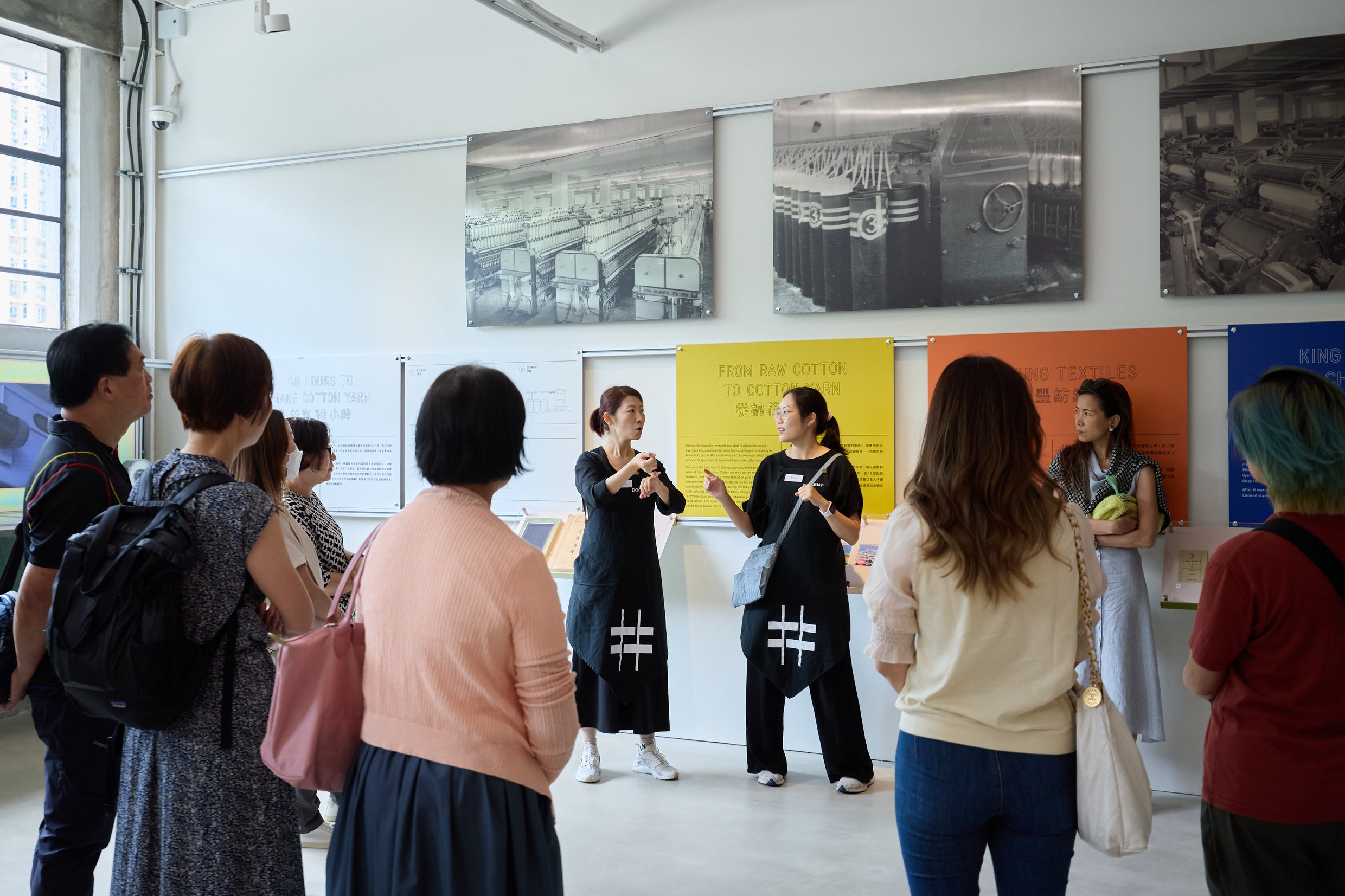
CHAT’s Accessibility Docent Training Programme is a pioneering cross-disciplinary initiative that integrates education, collection, accessibility, and communication within a museum context. Its mission is to train Deaf, hard-of-hearing, and hearing individuals to collaboratively lead innovative and inclusive museum experiences. Central to this programme is a sign bilingual design, equipping docents to deliver engaging, interactive, and multisensory tours in both Hong Kong Sign Language and Cantonese. Sign language’s dynamic use of body movements, facial expressions, and spatial elements enriches the storytelling, making the exploration of Hong Kong’s textile industrial history more accessible and enjoyable for all visitors.
Docent trainees are selected through an open call, with equal representation of Deaf and hearing participants chosen based on their passion and sign language proficiency. This bilingual and bicultural approach is essential for fostering effective communication and collaboration among trainees with diverse needs. The comprehensive training with 6 sessions in two months, led by both Deaf and hearing experts including museum staff, university educators, artists and social service practitioners—ensures a high-quality and representational learning experience supported by ongoing evaluation.
The programme’s first edition, launched in 2024, focused on the five key steps of industrial cotton spinning featured in CHAT’s permanent exhibition. In 2025, the scope expanded to include local craftsmanship, highlighting stories of former Deaf textile workers and showcasing three unique textile embellishment techniques in Hong Kong. Through vivid performances in a role play format and tactile interactions, each docent duo work in harmony to bring these narratives to life in sign bilingual format, broadening visitors’ appreciation of textile heritage and arts via diverse senses.
Explain in one sentence why you think the project you nominate is outstanding and could serve as an example for the entire community of modern and contemporary art museums.
The programme is Hong Kong's first initiative inviting individuals with diverse needs to collaborate and develop new methodologies for contemporary arts appreciation, bridging the gap in museum experiences by demonstrating that accessibility is a collaborative effort where everyone can be content creators and service providers.
Explain why this practice or program is relevant and sustainable in creating meaningful and lasting connections with people, communities, and the museum context with a medium to long-term vision.
Central to its objectives is the empowerment of people, including individuals with disabilities, by nurturing them into professional exhibition docents and providing platforms for them to share their expertise publicly. Ultimately, the programme aspires to generate a sustained educational impact by dismantling physical and language barriers, thereby for CHAT to take the lead in fostering a more inclusive society that bridges Hong Kong’s industrial heritage, contemporary art, and design, while nurturing imagination, empathy, resilience, and well-being within the community and beyond.
What are the outcomes of the practice you are most proud of?
The most rewarding outcomes of this programme stem from the profound emotional connections forged between participants and our accessibility docents. Particularly moving moments are when participants express heartfelt gratitude, often concluding tours with round applause and a gesture of thanks in Hong Kong Sign Language that they just learnt from the tour. One docent recounted receiving a hug from a participant, a tangible expression of appreciation that powerfully illustrates the impact of the tour. Numerous written testimonials collected through emails and post-tour surveys consistently reveal how deeply impressed and emotionally moved participants are by the guided tours. These responses underscore the distinctive and compelling nature of this inclusive approach, which fosters empathy and understanding in ways rarely achieved by other programmes. Collectively, these outcomes highlight the transformative potential of accessibility-focused initiatives, demonstrating their ability not only to educate but also to leave meaningful and lasting impressions on diverse audiences.
How has the nominated practice changed your methods and ways of working?
The programme has fundamentally transformed our curatorial approach by fostering a highly collaborative and iterative framework to development. We actively gather and evaluate feedback from all stakeholders, including tutors and the working team, trained docents and tour participants at every stage. Employing summative, ongoing, and remedial evaluations including the pre- and post-training surveys and comprehensive stakeholder input, it ensures continuous quality improvement and adaptability. Regular updates to content, tour structure, and materials based on their feedback enable early problem resolution, uphold and promote a responsive, community-centered approach.
This ongoing feedback loop has shifted our curation practices toward a dynamic and stakeholder-driven model, resulting in significant enhancements across exhibition interpretation, scripting, route planning, timing, tactile props, and facilitation. The responsive and collaborative methodology guarantees the programme to remain relevant, accessible, and impactful, fostering a culture of co-learning that aligns with CHAT’s mission to serve as a textile culture museum for all.
Official Website: https://www.mill6chat.org/