Blackitude Museum
The Blackitude Museum is a private ethnographic institution. It is located in the city center of Yaoundé behind the Presidential Tribune on the Boulevard du 20 Mai, in the Central Region of Cameroon. The Blackitude Museum is a cultural institution that embodies the richness and diversity of Cameroonian culture. The museum project was born in March 1998 thanks to the commitment of Her Majesty Ngo Nab Fô I Nana Agnès Sunjio, founder of the museum. As part of the Bahouoc royal family, she meticulously protected and preserved the collections of art objects that were bequeathed to her by her father and by the kings of other chieftainships.
Name of the practice nominated: Watch – Art.
Describe the practice, program, or project, what innovative approach is proposed, and in which core museum activities it applies:
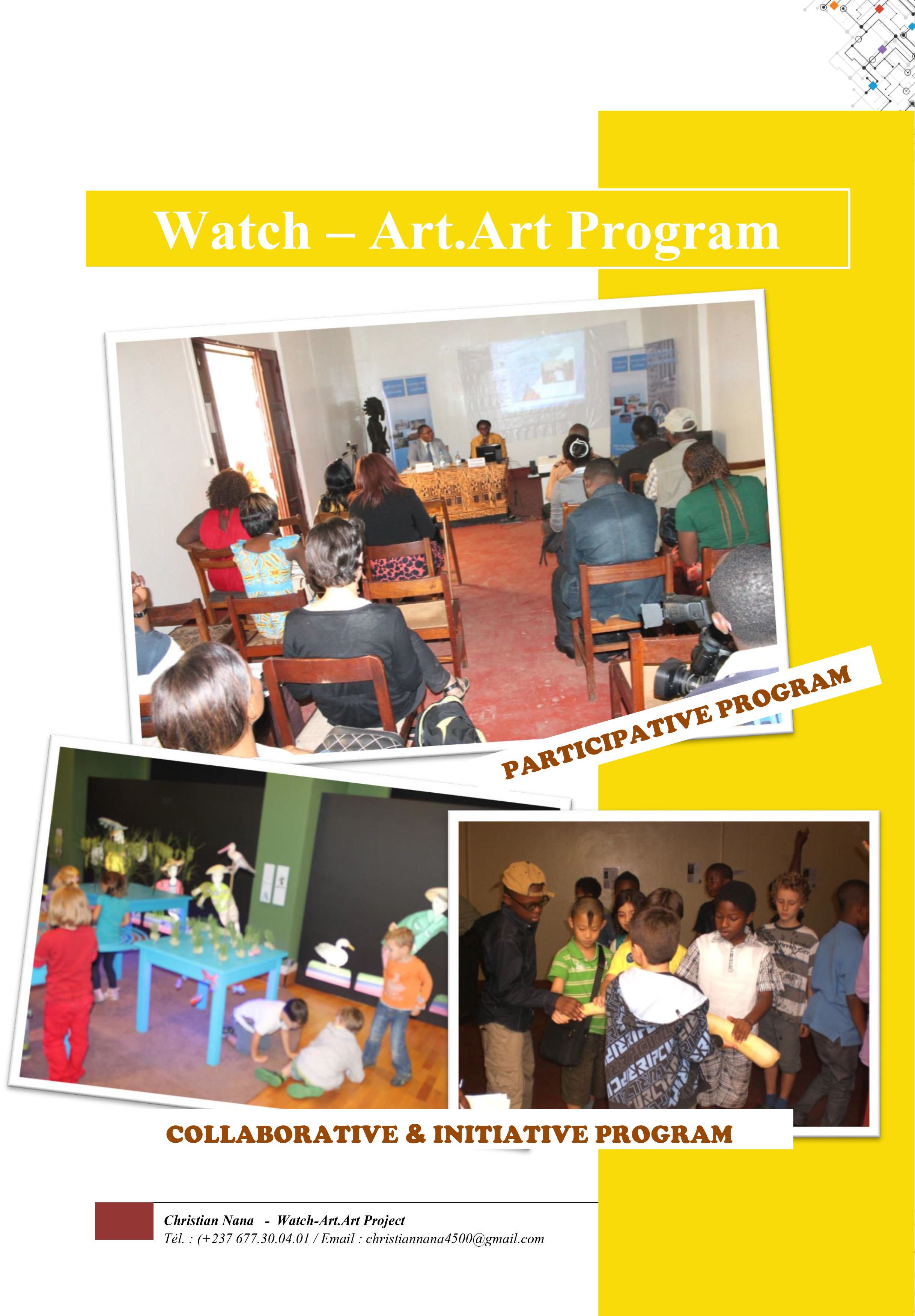
Watch – Art. Art is a participatory and creative sharing program centered around works of art from yesterday and today, taking into account the different universes, fields, and currents of artistic expression.
Through the triptychs;
- Watch to contemplate, touch, and appreciate,
- Watch to be inspired and think,
- Watch to connect and project,
Because here, through this program, we intend to foster and facilitate contact with works of art, the creative community, and communities, and to build a new narrative. This stems from the observation that the programs developed by museums in Africa, and in Cameroon in particular, are unattractive, lacking in innovation, and less connected to current realities and aspirations, whether among young audiences who find this environment very cold, local communities who feel less involved, or artists and creators who are increasingly less integrated into programs and activities—hence the raison d'être of this program and platform.
Explain in one sentence why you think the project you nominate is outstanding and could serve as an example for the entire community of modern and contemporary art museums.
Watch – Art. Art is this program that allows the public in general and young people in particular to be better equipped on the works and artifacts of Cameroonian museums, to awaken their sense of creation and creativity, to preserve and share the history and memory around these works and the different communities, to promote and facilitate new narratives and more attractive stories. Watch – Art. Art uses the channels and tools of our time to better impact and disseminate its discourse.
Explain why this practice or program is relevant and sustainable in creating meaningful and lasting connections with people, communities, and the museum context with a medium to long-term vision.
Watch – Art. Art is a relevant program for several reasons, as it involves and questions several artistic disciplines and practices to better understand, preserve, and connect with our artifacts and parts of our communities' history by our public in general and our youth in particular. This interaction between young audiences, the local community, and the artistic and creative community is an important approach that aims to bring this target audience closer to their art, an art they find hostile and with which they do not recognize themselves, do not identify, and do not understand the codes of different practices. The aim here is to break down these taboos and barriers and make the work of museums in Cameroon more attractive by producing more engaging content and narratives around these artifacts that integrate the tools of our time, namely digital technology, new technologies, and artificial intelligence, to address sustainability.
What are the outcomes of the practice you are most proud of?
Through this Watch – Art. Art program, we have focused on the visual and contact approach to artifacts found in museums, the creation of contemporary works and content inspired by these artifacts, and more attractive, lustrous, and communicative narratives that our audiences will recognize and identify with better. Through more sophisticated designs, we are moving from artifacts and materials protected in their use in African museums to new, contemporary and more vibrant specimens. This is the unique feature of this program. The digital dimension is more accomplished and attractive, allowing us to connect our audience to the artifacts and to the various societies and local communities. It is this educational and playful dimension that we are most proud of today.
How has the nominated practice changed your methods and ways of working?
This opportunity and possibility to compete for this type of award and distinction is more than just an encouragement for us, professionals and practitioners, to think, develop, and propose best practices and innovative solutions that allow us to better combine and share our daily work and reflections on the duty of remembrance and this connection with the world of contemporary artistic creation. To facilitate its understanding and dissemination by as many people as possible. Watch – Art. Art is a perfect illustration that both integrates and questions the curatorial scope of a program, involving local communities, artists, and artisans to enable better appropriation and consumption of research work that also leverages new contemporary communication tools and channels; this is the spirit of Watch – Art.
Official Website: https://museospace.org/interview-christian-nana